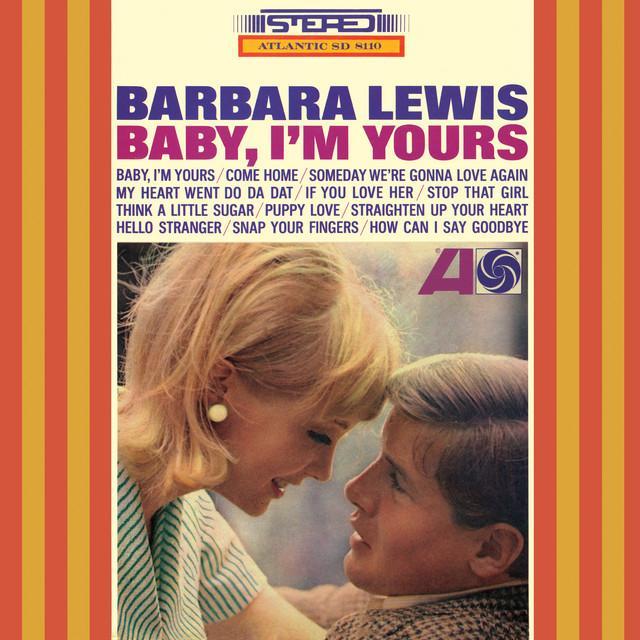
Baby, I'm Yours by Barbara Lewis
A love song built on forever
The meaning of Baby, I'm Yours Barbara Lewis comes down to one simple idea: total, joyful devotion. The singer is not flirting, hesitating, or testing the relationship. They are making a promise that feels absolute. In plain terms, the song says love is not temporary. It is meant to last beyond ordinary time.
"Baby, I'm Yours" - Barbara Lewis
And I'll be yours until the stars fall from the sky
Yours until the rivers all run dry
Loading lyrics...
Unable to load lyrics
We're unable to display the lyrics at this time. Please try again later.
That promise is why the song still feels powerful. Written by Van McCoy and released by Barbara Lewis in 1965 as the title track of her album, the single became one of her signature hits, reaching No. 11 on the Billboard Hot 100 and No. 5 on the R&B chart, according to widely cited chart histories. Factually, it was produced by Bert Berns and Ollie McLaughlin, with McCoy also singing background vocals on the record.
Watch the official Baby, I'm Yours
music video
How the lyrics turn devotion into something huge
The lyric strategy is very clear. Instead of saying “I love you” in a plain way, the song uses impossible images to show how long that love will last. The narrator keeps measuring love against things that should never happen, like stars falling or rivers drying up.
Short phrases such as until the stars fall
and rivers all run dry
make the feeling sound bigger than daily life. The point is not realism. The point is scale. The song uses giant, almost fairy-tale images to say this bond feels endless.
Another line pushes that idea even further with until the end of time
. It is a classic pop image, but Barbara Lewis sings it with such softness that it feels sincere rather than dramatic. They are not trying to impress the listener with poetry alone. They are trying to reassure the person they love.
The chorus is a vow, not a pickup line
At the center of the song is the repeated phrase Baby I'm yours
. That line matters because it can sound possessive on paper, but here it lands more like a willing surrender. The narrator is choosing commitment.
Interpretation: the chorus works as a vow. Instead of asking for love back, the singer offers themselves first. That makes the song feel emotionally generous. Even when the language is bold, the mood stays tender.
There is also a strong sense of consistency in the verse about staying close and keeping the partner happy. The song moves from cosmic language to everyday loyalty. In other words, forever-love is not just about grand statements. It is also about showing up.
I'm gonna stay right here
by your side
Do my best
to keep you satisfied
That short passage connects the fantasy to real behavior. The narrator will not only love endlessly; they will act lovingly in the present.
Barbara Lewis makes the promise feel intimate
A big reason the song lasts is Lewis's voice. She was known for a soft, intimate singing style, and that matters here. A louder singer could have turned the song into a huge declaration. Lewis makes it feel close, personal, and believable.
There is useful context behind that performance. Lewis later said she did not fully believe in the song at first and felt she had not given her best vocal early on. She recalled that Ollie McLaughlin pushed her to redo it, and one final take became the keeper. That story helps explain why the finished vocal sounds both controlled and emotionally focused: it has polish, but it also has a spark of determination.
Interpretation: that tension may be part of the magic. The song is about surrender, yet Lewis sings it with care and self-possession. So the record feels sweet without becoming weak.
Why the arrangement supports the meaning
The production is elegant and warm. The original recording featured a full arrangement with horns, rhythm section, piano, guitar, percussion, and background vocals. Rather than overwhelming Lewis, the band frames her. The result is a lush soul-pop sound that lets the vow feel grand while keeping the vocal at the center.
The rhythm is steady and unhurried. That matters because the song is not about panic or heartbreak. It is about certainty. The orchestral touches and backing voices give the track a dreamy glow, almost like a promise floating in the air.
Van McCoy's role is also notable. Before he became famous for later work like “The Hustle,” he was already a strong writer and arranger. Here, his writing balances simplicity and sweep. The hook is easy to remember, but the imagery gives it size.
A 1960s love song that keeps returning
The song's long afterlife says a lot about its meaning. It has been covered by artists in pop, country, disco, and soul, including Peter and Gordon, Jody Miller, Linda Lewis, Debby Boone, Tanya Tucker, and Cher. It has also appeared in films and TV shows such as The Bridges of Madison County, The Wire, Schitt's Creek, and Baby Driver.
Why does it travel so well? Because its message is universal. Nearly every era understands the fantasy of a love that stays unchanged. The song does not depend on slang, fashion, or a complicated story. It survives because the feeling is direct.
The strongest reading of the song
The clearest reading is that this is a song about chosen loyalty. The narrator is not trapped. They are glad to belong to someone. That is an important difference.
Interpretation: there is also a deeper emotional reading. The impossible images may suggest that ordinary words are not enough. When someone feels secure in love, language often stretches toward exaggeration because everyday speech seems too small.
That is the heart of the meaning of Baby, I'm Yours Barbara Lewis: love described as both eternal and practical. The song promises forever, but it also promises presence, care, and steadiness right now.
Why it still sounds fresh today
Modern listeners may hear the title and expect something old-fashioned. But the emotional core is still easy to understand. The song is short, clear, and free of cynicism. It says commitment can be comforting, not limiting.
That is why Barbara Lewis's recording still feels special. It turns a simple promise into something glowing and memorable. The record is romantic, but it is also calm. It believes love can endure, and for two and a half minutes, it makes that belief sound real.
Disclaimer: This interpretation separates documented facts about the song from critical reading. Meaning can vary from listener to listener.








