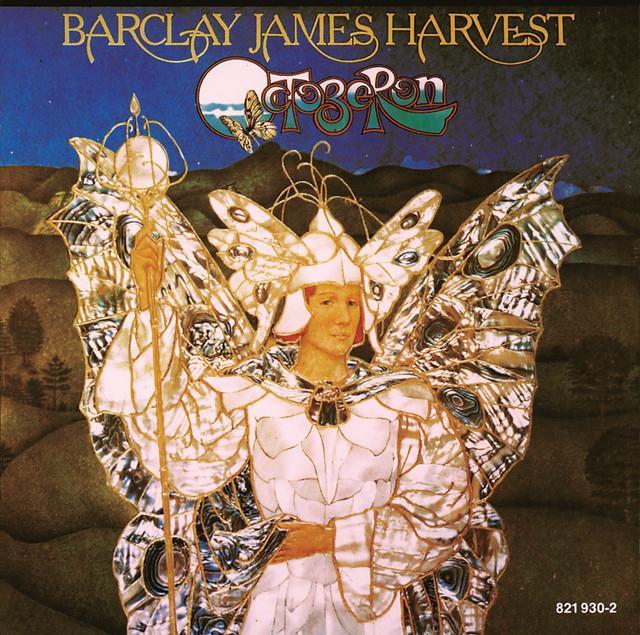
Why ‘May Day’ by Barclay James Harvest Still Unsettles
The meaning of May Day Barclay James Harvest comes down to one chilling idea: what happens when a person can no longer trust public reality. Written by John Lees, the song follows a narrator who feels the ground shifting under them, then finds that even basic truths are being argued away.
"May Day" - Barclay James Harvest
The sheer realities of life are rushing by
I am looking out at life and I don't know what's wrong or right
Loading lyrics...
Unable to load lyrics
We're unable to display the lyrics at this time. Please try again later.
Rather than tell a simple story of madness, the lyric suggests something larger. It shows a world where authority, social pressure, and repeated messages can make people doubt what they know. That is why the song still feels sharp today.
A Distress Call Hidden in Plain Sight
The title itself matters. “Mayday” is a well-known distress signal, so even before the verses begin, the song signals emergency. That gives the listener a frame: this is not just confusion, but a cry for help.
The opening image is one of collapse. When the narrator says the rock is sinking into sand, the song presents stability turning unreliable. The phrase slowly sinking
captures that loss of footing without needing to say more.
Interpretation: this is not only personal anxiety. It can also point to social disorientation, where old certainties no longer hold.

Watch the official May Day
music video
When Basic Truth Stops Feeling Basic
A central part of the song is the repeated question about whether it is night or day. On the surface, that sounds absurd. But that absurdity is the point.
The narrator asks strangers for a simple answer and gets disbelief, avoidance, or correction. Soon, the song moves from uncertainty into coercion. The world around them insists that opposites can switch places, and if they resist, they are treated as irrational.
One of the song’s sharpest moments comes when public certainty overrules personal sight. The phrases black and white
and blinding night
suggest official proof on one side and lived experience on the other. The tension is not just “am I wrong?” but “what if the system decides what truth is?”
A Narrative of Social Pressure
The lyrics build in stages:
- The narrator feels unstable and unsure.
- They ask others to confirm reality.
- Society answers with mockery or contradiction.
- Institutions step in to “treat” disagreement.
- By the end, the narrator seems to grasp how the system works.
That middle section is where the song becomes especially unsettling. The line about treatment suggests that dissent is being medicalized. In other words, disagreement is not debated; it is diagnosed.
Is there something inbetween?Did it change so fastor was it just a dream?
This brief moment matters because it shows the narrator trying to find a middle ground. They are not presented as stubborn. They are searching for coherence.
The Real Target: Manipulated Perception
The most direct clue arrives near the end, when the narrator claims they now know what is wrong and right: it is what you hear
, what you read, and what people say. That is a bleak conclusion.
In plain terms, the song argues that perception can be shaped by messages repeated through public channels. Today, listeners might think of media spin, propaganda, or groupthink. The lyric predates current debates, but its idea feels familiar.
Interpretation: “May Day” can be heard as a warning about information control. It shows how language can be twisted until ordinary people stop trusting their own senses.
How the Sound Supports the Meaning
Barclay James Harvest were known for melodic progressive rock with orchestral color, and that style suits this song’s theme. Even without quoting production notes, the band’s approach often mixed polished arrangement with uneasy emotion, creating a thoughtful rather than chaotic tension.
That matters here. The song’s meaning is stronger because the music likely does not explode into pure disorder. Instead, the controlled structure mirrors a world where confusion is organized. The listener hears a composed band backing a lyric about distorted truth, which makes the contradiction more eerie.
John Lees’s writing often balanced introspection with social commentary, and this lyric does both. It starts inside one person’s mind, then widens into a picture of institutional pressure and public compliance.
The Ending Is the Coldest Twist
The final verse changes the angle. Now the narrator sees another man asking the same question they once asked. A “party man” invites that person away, promising something new.
This scene suggests recruitment or conversion. The confused outsider is not simply helped; they are absorbed. That gives the song a circular ending. The system does not just silence doubt. It reproduces itself.
That is why the closing image lands so hard. The narrator may have learned how the world works, but the lesson is grim. They have not escaped the machine; they have recognized it.
Why the Song Still Connects
For many listeners, the meaning of May Day Barclay James Harvest lies in its mix of psychology and politics. It speaks to anyone who has felt gaslit by a culture, a crowd, or an institution.
Its best reading may be the simplest one: the song is about the fear of losing reality when everyone else claims to own it. The details are vivid, but the message is broad enough to keep traveling across decades.
Final Thought
“May Day” remains powerful because it turns a basic question into a crisis of truth. It starts with uncertainty, then reveals a society ready to punish anyone who sees differently.
Disclaimer: This interpretation is based on the lyrics provided and general knowledge of Barclay James Harvest’s style. As with many songs, listeners may reasonably hear different meanings in it.







