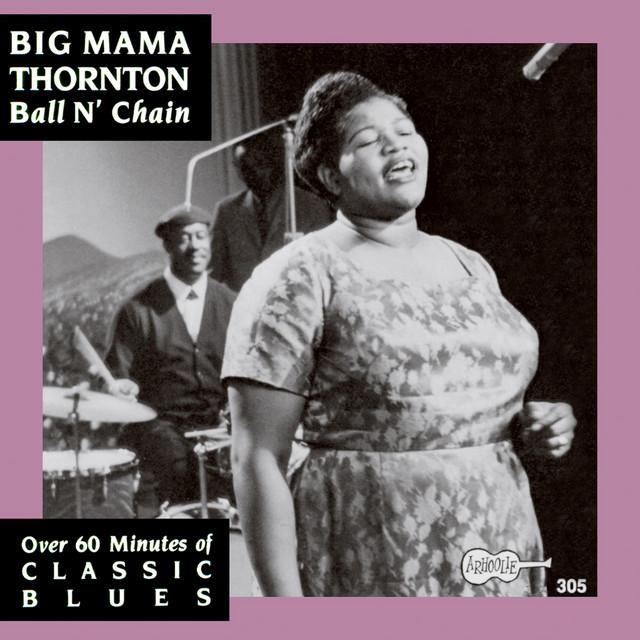
Big Mama Thornton’s Sharpest Put-Down
The meaning of Hound Dog Big Mama Thornton starts with a door being shut, not opened. This is a blues song about spotting a user, naming him clearly, and refusing to carry him anymore.
"Hound Dog" - Big Mama Thornton
Provided by LyricFindYou ain't nothing but a hound dog
Been snoopin' 'round the door
You ain't nothing but a hound dogLoading...Loading lyrics...
Unable to load lyrics
We're unable to display the lyrics at this time. Please try again later.
The Real Target Behind the Title
At first glance, the song can sound like a novelty because of the animal image. But in context, the title is an insult aimed at a man who hangs around, takes what he can get, and gives little back. The phrase hound dog
is less about a pet than a freeloader.
Factually, the song was written by Jerry Leiber and Mike Stoller for Thornton, recorded in Los Angeles in 1952, and released in 1953 on Peacock. It became a major R&B hit, spending 14 weeks on the Billboard R&B chart, with seven at No. 1, according to this song history.
Interpretation: The core message is female refusal. They hear a woman who has already done the emotional math and is done making excuses.
Watch the official Hound Dog
music video
A Breakup Song With Teeth
The singer does not sound confused or heartbroken in the usual way. Even when the song mentions pain, it frames that hurt as proof that the relationship is over. When Thornton sings about someone who has made me feel so blue
, she is not asking for change. She is building the case for eviction.
That is why the repeated warning about not feeding him matters. The image of care, food, and shelter points to a man who wants support more than love. The line about looking for a home
makes the complaint direct: he is not after intimacy, only comfort.
You can wag your tail
But I ain't gonna feed you
no more
In plain terms, charm no longer works. Flattery, begging, and fake sweetness have lost their power.
Why the “High-Class” Claim Matters
One of the smartest details in the song is the attack on status. The man says he is high-class
, but the singer sees through the act. That contrast turns the song from a simple insult into a critique of performance.
He is not just lazy. He is also pretending to be better than he is. The reply exposes that bluff. In blues terms, this is a put-down song, but it is also a truth-telling song. The speaker rejects both his dependence and his image-making.
Interpretation: This verse gives the song a social edge. It suggests that style, talk, and swagger mean nothing without honesty or responsibility.
How Thornton’s Voice Changes the Meaning
Thornton’s version matters because her delivery makes the song bigger, rougher, and more commanding than the words on paper alone. According to American Songwriter, Leiber and Stoller wrote it quickly for Thornton, and she turned it into a fierce performance shaped by her own feel and phrasing.
Her voice does not merely sing the complaint. It growls, snaps, and talks back. That matters because the meaning of Hound Dog Big Mama Thornton lives in attitude as much as in lyric. She sounds amused, angry, and fully in control.
Research on the original recording also notes that Thornton added spoken interjections and hollers of her own, helping create the song’s famous force. That makes the performance feel less like a neat studio reading and more like a live confrontation caught on tape.
The Sound: Spare, Dirty, and Powerful
A big reason the record still hits hard is its arrangement. Instead of burying the singer under flashy extras, the track stays lean: guitar, bass, drums, and voice. That spare setup leaves room for Thornton’s vocal attack to dominate.
The groove is rooted in twelve-bar blues, but it also has a rolling, dancing pulse that reviewers at the time described as rocking. Guitar lines jab rather than decorate. The drums keep the track moving forward like a warning that will not soften.
This is important to meaning. A smoother arrangement could have made the song playful. Thornton’s version sounds too raw for that. The band backs her like witnesses.
The solo that keeps the argument alive
During the instrumental break, Thornton keeps talking and calling out. That section is not a pause from the story. It extends the scene. The music becomes part of the dismissal, as if the room itself agrees with her.
More Than an Elvis Prequel
Many listeners first meet “Hound Dog” through Elvis Presley, but Thornton’s original has a different point, tone, and emotional center. Presley’s hit version came later and followed a more cleaned-up rewrite path that removed much of the original’s adult tension.
Thornton’s record is about a woman rejecting a no-good man. It is sharper, more sexual, and more specific. It also carries historical weight. The original was later honored by the Grammy Hall of Fame, the Rock and Roll Hall of Fame, and the National Recording Registry.
That legacy matters because it restores the song’s original voice. Thornton was not warming up the stage for someone else. They were making a defining record in early rock and R&B history.
What the Song Finally Says
In the end, the song’s power comes from how little doubt it leaves. The speaker identifies a pattern, names it, and ends it. There is pain in the background, but there is no weakness in the conclusion.
Interpretation: The meaning of Hound Dog Big Mama Thornton is not just about calling somebody a bad name. It is about refusing to mother a man who mistakes access for love and dependence for romance. Thornton turns that refusal into something triumphant.
For modern listeners, that is why the song still feels alive. It is funny, tough, and brutally clear.
Disclaimer: This interpretation separates documented facts about the recording and release from critical reading of the lyrics and performance. Song meaning can remain open to listener perspective.








