
Simulation Swarm by Big Thief: Meaning and Memory
Big Thief's "Simulation Swarm" feels both cosmic and deeply personal. For many listeners, the meaning of Simulation Swarm Big Thief lies in how it joins private grief, romantic longing, and modern alienation into one rushing, emotional vision.
"Simulation Swarm" - Big Thief
I didn't know how to stay
You believe she can see through
Loading lyrics...
Unable to load lyrics
We're unable to display the lyrics at this time. Please try again later.
Released as part of Dragon New Warm Mountain I Believe in You, the song was written by Adrianne Lenker and became one of the band's most discussed tracks from that era. Critics often praised its emotional intensity and guitar work, while listeners connected to its strange but tender imagery. Even when the lyrics seem dreamlike, the feeling is clear: they are reaching for a person, a memory, and maybe a form of peace.
What the Song Seems to Be Reaching For
At its core, the song appears to be about trying to hold onto love inside a fractured world. The opening lines move through unstable images and bodily tension, as if the speaker cannot find solid ground. That instability matters, because it sets up the song's main emotional turn: from confusion toward connection.
Interpretation: the song suggests that love is not neat or logical. It survives in flashes, symbols, and remembered scenes. When the lyric returns to once again
, it sounds less like repetition for its own sake and more like a plea for renewal.
The emotional center arrives when the song shifts from surreal images to direct desire. In the chorus, the speaker is stuck high above the world in a cold, artificial space, yet they want touch, surrender, and reunion. That tension between distance and closeness gives the song its power.
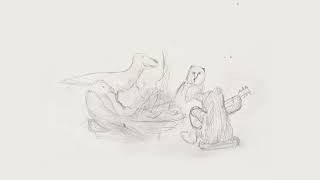
Watch the official Simulation Swarm
music video
The "Simulation Swarm" Image Explained
The title phrase is one of the clearest clues to the song's meaning. The scene on the 31st floor
, with the drone of fluorescence
, sounds like life inside a synthetic, mechanical system. It evokes offices, hospitals, apartment towers, or any bright modern place where people can feel cut off from real feeling.
Interpretation: "simulation swarm" may describe a world that is overstimulating but emotionally thin. The speaker is surrounded by noise, systems, and forms to fill out, yet what they want is simple and human: to touch someone, stop fighting, and walk beside them.
That is why the line about refusing war matters so much. It changes the song from observation to decision. They do not want to keep living defensively; they want to disarm emotionally.
Love, Loss, and Family Memory
One of the most moving passages turns away from the urban, fluorescent setting and enters memory. The song recalls a room, a mother, a child, and an almost sacred domestic space. These details make the song feel lived-in rather than abstract.
The mention of Little Andy
is especially important. Big Thief have not turned the song into a simple explanatory narrative, so listeners should be careful not to flatten it into biography. Still, interpretation strongly suggests that this section touches grief, absence, or a lost family possibility.
The question of return is what gives that passage its ache. The song does not only mourn; it imagines renewal. When the lyric says river of light
, it frames the loved one as something guiding, flowing, and bigger than death or distance.
How the Song Moves From Chaos to Surrender
A useful way to read the track is as a short emotional journey:
- The speaker begins in confusion and bodily strain.
- Strange visions and symbols pile up, suggesting overwhelm.
- Memory breaks through, bringing family and loss into focus.
- The chorus turns toward touch, peace, and reunion.
That final move is why the closing wish feels so strong. The desire to walk you to the shore
carries comfort, not drama. Shores often suggest crossing points, endings, or safe arrival. In this song, it sounds like escorting someone out of fear and into rest.
How the Music Carries the Meaning
The song's sound is crucial to understanding it. On Dragon New Warm Mountain I Believe in You, Big Thief worked across multiple studios and styles, building a record known for its range and organic feel. Within that wide album, "Simulation Swarm" stands out for its warm, live-band intimacy and its bright, singing guitar lines.
The arrangement mirrors the lyric's emotional split. Lenker's voice stays close and fragile, while the instruments shimmer and surge around her. The guitar solo, in particular, feels like emotional speech after language starts to fail. It lifts the song out of the fluorescent room and into something almost transcendent.
Interpretation: the production makes the song feel both earthly and spiritual. The listener hears the buzz of modern life, but also the possibility of breaking through it.
Why the Song Connects So Deeply
Part of the reason listeners return to this track is that it never explains itself too neatly. It gives concrete details, but it leaves room for personal meaning. People can hear romance in it, grief in it, or a spiritual search inside it.
That openness is not vagueness. It is craft. Lenker often writes in a way that lets symbols hold more than one truth at once, and Big Thief's performance keeps those truths emotionally grounded.
A Final Reading of "Simulation Swarm"
The meaning of Simulation Swarm Big Thief is best understood as a song about choosing love and tenderness inside a world that feels artificial, wounded, and overwhelming. Its images of memory, family, light, and surrender all point toward the same hope: that real connection can still be found.
In that sense, the song is not just about confusion. It is about emerging from confusion with open arms.
Disclaimer: This interpretation is based on the lyrics, the recording, and public context around the song. As with most Big Thief songs, ambiguity is part of the art, so other readings may also be valid.







