Why 'Raindrops' Still Feels So Free
The meaning of Raindrops Keep Fallin' On My Head B.J. Thomas comes down to a simple but lasting idea: problems are real, but they do not get the final word. The song never pretends life is perfect. Instead, it turns frustration into a shrug, a smile, and a small act of freedom.
"Raindrops Keep Fallin' On My Head" - B.J. Thomas
And just like the guy whose feet are too big for his bed
Nothing seems to fit
Loading lyrics...
Unable to load lyrics
We're unable to display the lyrics at this time. Please try again later.
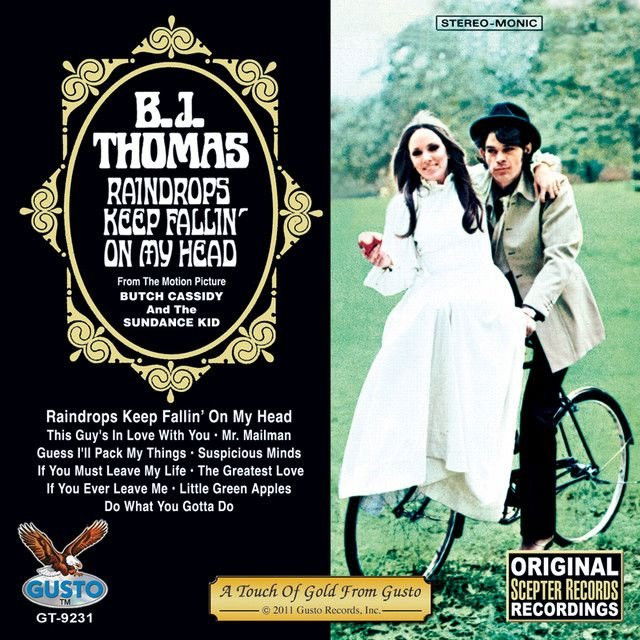
First released in 1969 and strongly linked to Butch Cassidy and the Sundance Kid, the song was written by Burt Bacharach and Hal David, with B.J. Thomas delivering the hit vocal performance. It went on to win the Academy Award for Best Original Song and became one of the era's most recognizable pop standards.
A Sunny Song About Unfriendly Weather
At the center of the lyric is a person dealing with setbacks. The opening image, raindrops keep fallin'
, sounds ordinary, but it quickly becomes a metaphor for bad luck that will not let up. Things feel awkward, off-balance, and hard to control.
Yet the song does not sink into self-pity. That is the key to its power. The narrator admits that life is irritating, then chooses a lighter attitude. Instead of treating hardship like a tragedy, they answer it with wit.
That humor shows up in lines about things not fitting and in the playful complaint to the sun, including sleeping on the job
. The world feels unfair, but the song frames that unfairness in a way that sounds charming rather than crushed.

Watch the official Raindrops Keep Fallin' On My Head
music video
The Real Message Hides in the Chorus
The chorus carries the emotional core. The rain is still there, but the narrator refuses to let it define their state of mind. When the lyric says crying's not for me
, it is less a denial of emotion than a statement of posture. They are choosing endurance.
That leads to the song's most memorable idea: Because I'm free
. In context, freedom does not mean total control over life. It means emotional independence. The singer cannot stop the weather, but they can decide how much power it has over their spirit.
Interpretation: This is why the song still feels modern. It describes a mindset many listeners recognize: when circumstances are messy, dignity can come from refusing to let every setback become despair.
How the Verses Build That Outlook
The lyric moves in a clear sequence:
- Trouble keeps arriving.
- The narrator notices the mismatch between self and world.
- They joke about cosmic unfairness.
- They land on a private kind of optimism.
That optimism appears in the promise that happiness steps up to greet me
. The line matters because it is not grand or dramatic. It suggests hope is on its way, even if slowly. The song trusts that gloom is temporary.
Won't defeat me, it won't be long
'Till happiness steps up to greet me
This brief moment is the emotional pivot. The song moves from annoyance to resilience, not by changing reality, but by changing perspective.
Rain, Sun, and Freedom as Symbols
The song uses simple images, which is part of why it works so well.
Rain as repeated trouble
Rain stands for the daily problems nobody can fully avoid: disappointment, delay, bad luck, and emotional fatigue. It is not one dramatic disaster. It is the drip-drip-drip of ordinary frustration.
The sun as a comic authority
When the singer talks to the sun, the song gives frustration a playful target. It sounds like they are filing a complaint with the universe. That makes the song feel human. People often joke when they are trying not to break.
Freedom as inner control
The biggest symbol is freedom. Not political freedom, and not even material freedom. It is the freedom to stay unbroken inside. That idea turns a light pop song into a subtle anthem of resilience.
Why the Music Makes the Meaning Work
Burt Bacharach's writing is crucial here. The melody glides instead of dragging, and the arrangement keeps the mood buoyant. Rather than making the rain sound heavy, the production gives it bounce.
That contrast matters. If the track were slow and gloomy, the lyric might sound defeated. But the easy rhythm, warm orchestration, and B.J. Thomas's relaxed phrasing make the message believable. They sound like someone who has decided not to panic.
Thomas's vocal is especially important. He does not oversing the frustration. He keeps it conversational, which makes the song's optimism feel earned instead of forced. The result is a performance that sounds casual on the surface but emotionally disciplined underneath.
Why the Song Connected So Deeply
Part of the song's long life comes from timing. Released at the end of the 1960s, it offered listeners a softer, more personal kind of hope. It was not trying to change the whole world. It was trying to survive a hard day with style.
That helps explain why the song crossed generations. Children hear a catchy tune. Adults hear a philosophy. The message is humble but durable: life will keep raining, and people can still choose not to live soaked in defeat.
A Final Read on Its Meaning
So what is the meaning of Raindrops Keep Fallin' On My Head B.J. Thomas? At heart, it is about meeting adversity with grace, humor, and emotional freedom. The song accepts that trouble is constant, but it insists that worry does not have to be.
Interpretation: Some listeners may hear it as simple optimism, while others may hear a deeper statement about self-possession. Both readings fit the lyric and the performance.
Disclaimer: Song meanings are interpretive. This reading is based on the lyrics, recording, and widely known historical context, but listeners may connect with the song in different ways.









