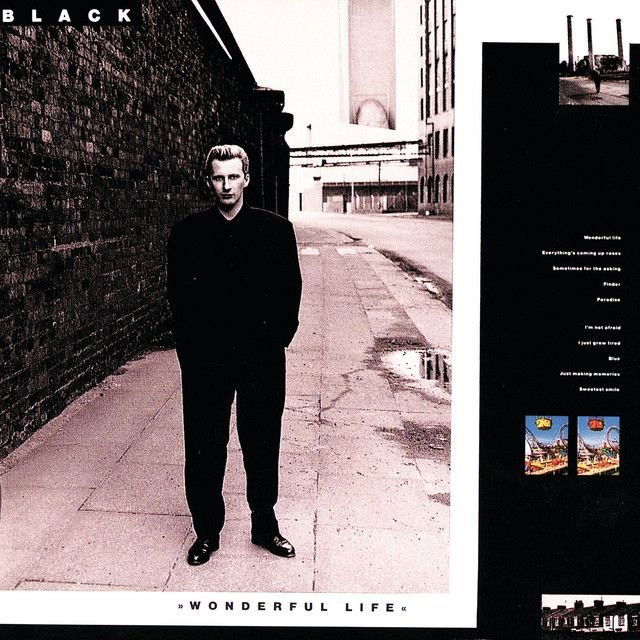
Why Black's 'Wonderful Life' Feels So Sad
The meaning of Wonderful Life Black becomes clearer once they look past the title. On the surface, the song sounds warm and reassuring. But under that polished pop melody is a lonely voice trying to stay upright when life feels unfair.
"Wonderful Life" - Black
The sunshine fills my hair
And dreams hang in the air
Loading lyrics...
Unable to load lyrics
We're unable to display the lyrics at this time. Please try again later.
That contrast is not accidental. According to the song's documented background, Colin Vearncombe said he was being ironic when he wrote it, and that many listeners took it at face value. That single detail explains why the song still lands so strongly: it sounds like comfort, but it is really about survival.
A Bright Scene With a Dark Center
The verses open with sea, sunshine, gulls, and open sky. Those details suggest freedom and beauty. Yet the emotional center is isolation.
The singer keeps returning to being alone, and that matters more than the scenery. When they hear phrases like on my own again
and up straight in the sunshine
, the song seems to show someone forcing composure in public while feeling empty inside.
Interpretation: The setting is bright so the sadness hits harder. Instead of using rain or darkness, the lyric places pain in daylight. That makes the loneliness feel exposed rather than hidden.

Watch the official Wonderful Life
music video
The Chorus Is a Mask, Not a Simple Celebration
The chorus is the song's most famous part, built around wonderful, wonderful life
. Heard alone, it sounds grateful. Heard with the verses, it sounds more complicated.
The singer has just described unfairness, social hostility, and a need for connection. Then comes a line that says there is no need to run and hide
. That can be heard as encouragement, but it can also sound like self-talk from someone trying to hold themselves together.
No need to laugh and cry
It's a wonderful, wonderful life
Interpretation: This is the song's emotional trick. The chorus may be sincere in part, but it also feels like a defense against despair. They are not announcing joy so much as repeating a phrase that helps them keep going.
Loneliness Drives the Whole Song
At its heart, this is a song about wanting companionship. The clearest emotional line is the repeated need for a friend. That request gives the track its real weight.
Instead of presenting heartbreak in a dramatic way, the lyric stays plain and direct. The phrase I need a friend
is simple, but that simplicity makes it believable. There is no clever disguise around the pain.
Another key moment is the suggestion that others seem to hate you
just for existing. That line introduces social alienation. The singer is not only alone; they also feel judged or rejected by the world around them.
What the Story Seems to Be Doing
The song does not tell a complex plot, but it does move through a clear emotional pattern:
- It starts in a beautiful outdoor space.
- It reveals that beauty does not fix inner pain.
- It admits loneliness and the desire for a friend.
- It answers that pain with a repeated, almost stubborn refrain.
That structure is why the song feels both soothing and wounded. The beauty is real, but it does not erase the ache.
The Sound Makes the Meaning Stronger
Part of the meaning of Wonderful Life Black comes from its arrangement. The record was written by Colin Vearncombe and produced by Dave "Dix" Dickie, and it appeared on Black's 1987 debut album Wonderful Life. The recording features a smooth pop foundation with fretless bass, drums, keyboards, saxophone, brass, and backing vocals.
That mix matters because nothing in the production is loud or aggressive. The groove is calm, almost elegant. The vocal delivery is restrained too, which keeps the sadness from turning melodramatic.
Interpretation: The music sounds graceful because the singer is trying to carry pain with dignity. The arrangement gives them emotional distance, and that distance is exactly what makes the song hurt.
Context Changes the Way the Lyrics Read
The song's release history also helps explain its long life. It was first released in 1986, then re-issued in 1987 and became a major international hit, reaching the UK Top 10 and charting strongly across Europe and Australia. That wide success makes sense because the song speaks in broad emotional terms: loneliness, pride, endurance, and the wish for human closeness.
There is also an important gap between public reception and author intent. Many listeners heard the title and chorus as uplifting. But Vearncombe's own comment about irony suggests the song was born from hardship, not comfort.
That tension may be the reason the track remains so memorable. People can hear hope in it, sadness in it, or both at once.
Why It Still Connects
"Wonderful Life" lasts because it captures a feeling many people know but cannot always name: acting steady while quietly struggling. The song's speaker stands in the light, not the shadows. That image turns private pain into something visible and human.
For some listeners, the chorus becomes a sincere reminder to endure. For others, it sounds like bitter irony. Both readings fit the song because Black built it on that exact contradiction.
Final Take on the Song's Message
The meaning of Wonderful Life Black is not that life is easy or purely beautiful. It is that beauty and sadness can exist at the same time. A person can stand in sunshine, see magic everywhere, and still feel deeply alone.
That is why the song feels bittersweet instead of simply sad. It offers no full solution, only a fragile kind of poise. And sometimes that is what survival sounds like.
Disclaimer: This interpretation is based on the lyrics, recorded performance, and documented artist comments. As with any song, listeners may hear meanings that differ from the writer's original intent.







