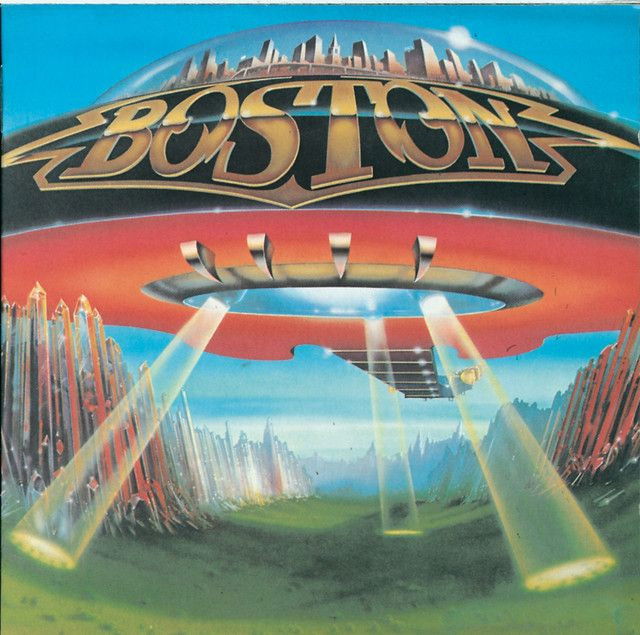
Why Boston's Saddest Ballad Still Hits Hard
The meaning of A Man I'll Never Be Boston comes down to one hard truth: the song captures what it feels like to be loved for a version of yourself you cannot become. It is not loud with anger. Instead, it is weary, honest, and full of emotional defeat.
"A Man I'll Never Be" - Boston
You'd turn and walk away
Disappearing way back in your dreams
Loading lyrics...
Unable to load lyrics
We're unable to display the lyrics at this time. Please try again later.
Released as a single from Don't Look Back in 1978, the song came from a band famous for huge guitars and sky-high hooks. Yet this track turns that polished Boston sound into something more vulnerable. Tom Scholz wrote it, and its sadness stands out even more because it sits on an album linked to one of the band’s most hopeful hits.
The Heart of the Song Is a Gap
At the center of the lyric is a gap between appearance and reality. The speaker thinks the other person sees someone dependable, strong, and complete. But inside, they feel broken down and unable to reach that image.
That tension appears early when the speaker holds back the truth, fearing honesty would make the other person leave. The song suggests silence is not kindness; it is self-protection. When they mention turn and walk away
, the idea is not just rejection. It is the fear that truth will end the relationship.
Then the chorus names the problem clearly with a man I'll never be
. That line is simple, but it carries the whole song. The person looking at them is seeing hope, potential, maybe even a fantasy. The speaker sees failure.

Watch the official A Man I'll Never Be
music video
Who Is Speaking, and to Whom?
The narrator speaks in first person, but the emotional setup is easy to follow. They are talking to someone close, likely a romantic partner, though the song can also be heard more broadly.
Interpretation: On one level, this is a relationship song about disappointing someone who believes in you. On another level, it is about identity itself. The “you” could stand for a partner, family, fans, or anyone projecting strength onto a person who feels they are running out of it.
That is why lines built around you look up at me
matter so much. The issue is not that the other person is cruel. The issue is that their faith becomes its own kind of pressure.
How the Verses Build the Pain
The song moves in a clear emotional arc:
- The speaker hides what they really feel.
- They admit the other person sees an idealized version of them.
- They wish they could become that person.
- They confess they are weakening, not growing.
The middle of the song is especially painful because it is not cynical. The speaker truly wants to become worthy of the other person’s belief. When they say find a way
, they are not mocking hope. They are reaching for it and failing.
Later, the emotional floor drops even lower with I can't get any stronger
. That line drew notice from critics because it sharply contrasts with the confidence found elsewhere on Don't Look Back. As summarized by the research provided from Rolling Stone commentary, Tim Emerson contrasted the album’s title track as “optimistic about the road that lies ahead” with this song’s exhausted outlook.
A Dark Mirror to Don't Look Back
That album context matters. Boston’s second album, Don't Look Back (1978), was a major release, and the title track became a huge hit. Research provided here notes that the single reached No. 4 on the Billboard Hot 100, while the album sold millions in the United States. In that setting, “A Man I’ll Never Be” feels like the emotional shadow of Boston’s brighter side.
Where “Don’t Look Back” pushes forward, this song stalls out. Where other Boston tracks often sound triumphant, this one sounds cornered.
Interpretation: That contrast may be one reason the song lasts. It shows Boston was not only a band of escape and uplift. They could also turn arena rock into a confession about limits.
Critic Greil Marcus, according to the research supplied, called “A Man I’ll Never Be” one of three masterpieces on the album. That kind of praise makes sense because the song stretches the band’s emotional range without losing their signature sound.
Why the Music Makes the Message Bigger
Boston’s production style is central to the meaning. Scholz was the band’s main songwriter and producer, known for layered guitars and careful studio control. In this song, that polished approach does not soften the sadness. It magnifies it.
The arrangement rises like a power ballad, but the lyric keeps collapsing inward. That contrast is powerful. Brad Delp’s vocal does not sound cold or theatrical. He sings the lines with strain and grace, making the speaker sound both proud and defeated.
The guitars also matter. Instead of pure swagger, they create space and lift, almost as if the track is trying to become the heroic self the lyric says is impossible. The result is moving: the music reaches upward while the words admit they cannot climb any higher
.
A Few Key Symbols in Plain View
The song does not use heavy metaphor, but it repeats a few strong ideas:
- Dreams: They suggest projection, illusion, and wishful thinking.
- Strength: A measure of emotional endurance, now nearly gone.
- Height: A symbol of achievement the speaker cannot reach.
- Sight: The other person “sees” someone the speaker does not recognize.
Because the imagery is simple, the feeling lands fast. There is no puzzle-box writing here. The power comes from directness.
Why the Song Still Connects
The reason this track endures is easy to recognize. Many people know what it feels like when someone believes in them more than they believe in themselves. That can feel loving, but it can also feel heartbreaking.
So the meaning of A Man I'll Never Be Boston is not just sadness. It is the pain of being measured against an ideal made partly by love and partly by illusion. Boston turns that private fear into a sweeping rock ballad, and that tension is what makes it memorable.
Disclaimer: This interpretation separates documented facts from critical reading. Like many songs, “A Man I’ll Never Be” can support more than one meaning depending on the listener.







