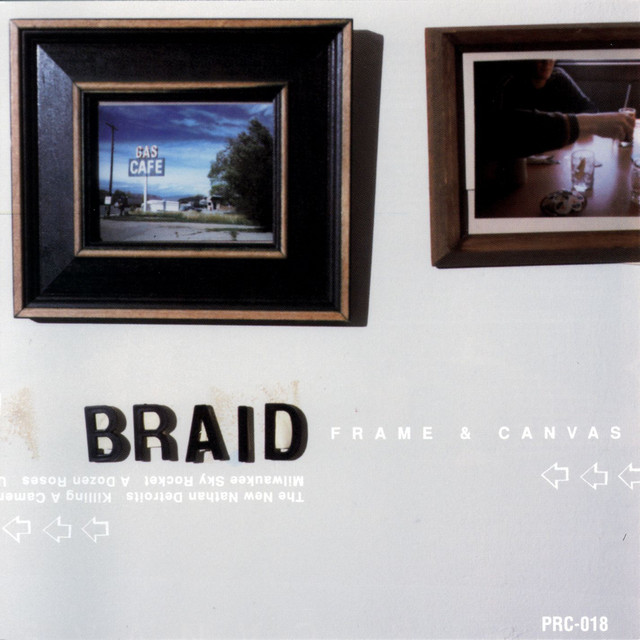
Why 'A Dozen Roses' Still Hurts
The meaning of A Dozen Roses Braid comes down to a painful mix of desire, confusion, and emotional self-awareness. The song captures a speaker who still feels pulled toward someone, even while admitting that the relationship may already be broken or impossible to hold together.
"A Dozen Roses" - Braid
And I don't know where you are
Maybe I don't know what I'm doing
Loading lyrics...
Unable to load lyrics
We're unable to display the lyrics at this time. Please try again later.
Braid were one of the key bands in the 1990s Midwestern emo and indie rock scene, known for mixing jagged guitars with very personal, fragmented lyrics. That context matters here: this song does not tell a neat story. Instead, it sounds like memory arriving in flashes, with romance, guilt, and loneliness all colliding at once.
A Love Gesture With No Clear Destination
The opening image sets the whole mood. The speaker has a dozen roses in the car
, but they do not know where the other person is. That is a strong symbol: love is present, but it has nowhere to land.
From there, the song moves between attraction and doubt. When the other person is described as moving like a movie
, the line suggests glamour and distance at the same time. They are vivid and magnetic, but also hard to reach, almost unreal.
Interpretation: This makes the song feel less like a stable romance and more like a chase after an ideal. The speaker is not simply in love; they are trapped inside an image of love that keeps slipping away.

Watch the official A Dozen Roses
music video
The Verses Build a Mind in Conflict
One of the most revealing details is the line about trying to keep a conscience clean. The speaker seems aware that desire alone is not enough. They may have made mistakes, or they may be trying to avoid repeating them.
Then the song throws in phrases about a destructive personality and the bitterness that follows. Even without a full explanation, the emotional direction is clear. They are saying that drama, chaos, or emotional storms may feel exciting, but they also leave damage behind.
That is why the song feels so tense. It is not just about missing someone. It is about knowing that the relationship may carry its own form of harm.
Why the Chorus Feels So Uneasy
The chorus is the emotional center of the track. The repeated phrase Heaven hits me hard
sounds positive at first, but the rest of the section undercuts that comfort. Heaven is not calm here. It arrives like impact.
The nearby contrasts—newness, news, and even the darker image of a noose—turn the chorus into a picture of emotional overload. Pleasure, panic, and bad information all get tangled together. The speaker seems to ask whether anyone has ever had a kind of heaven that was truly clear.
Interpretation: In this song, “heaven” may mean those brief, intense highs of romance that feel perfect in the moment but do not last. The question is whether that feeling was ever real, or only briefly convincing.
Confession, Distance, and the Fear of Being Alone
Later, the speaker says they wrote a letter, which sounds like an attempt at honesty. A confession usually means something has gone unsaid for too long. They seem to believe things could have been better, which adds regret to the song’s emotional mix.
The memories that follow are intimate but fragile. They remember touch, half-formed affection, and a voice heard over the phone. The phrase I already miss you
is simple, but it lands hard because it comes with the feeling that absence has already taken over.
By the time the song reaches the admission about pretending not to be alone, the emotional truth is out. This is not just romantic nostalgia. It is loneliness trying to disguise itself.
The Radio Image Explains the Whole Song
The recurring image Static made old radio
is one of the song’s best clues. Static suggests interference, weak connection, and messages that do not come through cleanly. Radio also carries memory: old songs, distant voices, and signals from far away.
That makes the image work on two levels:
- It describes broken communication.
- It reflects how memory distorts love over time.
The speaker may still hear the relationship, but only through noise. What remains is not direct contact. It is fragments.
How Braid’s Sound Deepens the Meaning
Braid’s style often paired emotional vulnerability with sharp, restless instrumentation, a hallmark of the Midwestern emo scene discussed by sources such as AllMusic and Polyvinyl. That musical language fits this song well.
The track’s likely impact comes from contrast: urgent guitars and nervous motion carrying words about hesitation and ache. Instead of giving the listener a smooth ballad, Braid frame romance as unstable and breathless. The music does not soothe the feeling; it keeps it exposed.
That matters for the meaning of A Dozen Roses Braid because the song is not only about heartbreak in its lyrics. Its sound also acts out emotional interruption, like a thought that cannot settle.
A Reasonable Alternate Reading
There is another way to hear the song. Rather than a straightforward breakup piece, it may describe someone stuck between old attachments and new possibilities. The references to moving forward, receiving news, and meeting another ending suggest transition, not just loss.
Interpretation: On that reading, the song is about the moment when a person realizes they are carrying symbols of love into a future where those symbols may no longer fit.
What the Song Leaves Behind
In the end, the meaning of A Dozen Roses Braid lies in its picture of romantic confusion that is both beautiful and painful. The roses, the letter, the phone call, and the radio static all point to love trying to survive distance and self-doubt.
What makes the song last is that it never pretends clarity is easy. It asks whether emotional “heaven” was ever truly clear, and it leaves the listener sitting inside that question.
Disclaimer: This interpretation is based on the lyrics, the song’s tone, and Braid’s broader style. As with many emotionally dense songs, different listeners may reasonably hear different meanings.







