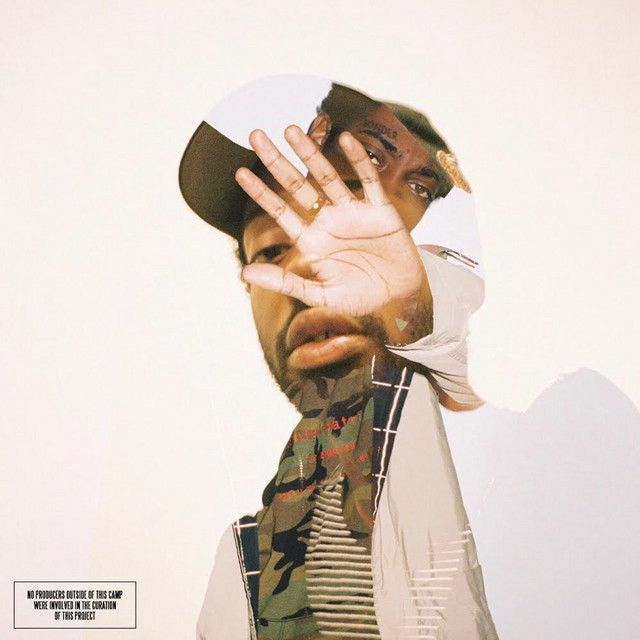
Trust by Brent Faiyaz
They don’t ask for much—just honesty. That’s the tension at the heart of Brent Faiyaz’s “Trust,” a slow-burn R&B soliloquy that sounds like a late-night voice memo. For listeners searching for the meaning of Trust Brent Faiyaz, the song is a candid request for loyalty when attention and temptation blur what’s real.
"Trust" - Brent Faiyaz
You either riding or you can't
But for now I'm on the way
Loading lyrics...
Unable to load lyrics
We're unable to display the lyrics at this time. Please try again later.
A plea for loyalty in a loud world
At its core, “Trust” is about a person balancing public shine with private doubt. The singer can project cool, but underneath is a simple need: someone dependable. When he repeats the stark line
You told me I could trust you Don’t lie
he’s not posturing—he’s measuring the distance between promises and actions. The refrain turns the idea of trust into a stress test of any relationship.
Watch the official Trust
music video
Who speaks, and who they need
The narrator speaks in first person as someone caught between status and solitude. A challenge like either you down or you ain't
frames the relationship as all-or-nothing. It’s not just romance; it’s about whether the other person will show up when things get messy.
They ask for straight answers and steady presence, admitting they need support. Lines like I could really use it
give the song its emotional center: confidence on the outside, uncertainty on the inside.
The storyline in quick beats
- Opening stance: He draws a line—ride with him or don’t. The tone is decisive, but it hides nerves.
- Confession: He lacks someone to confide in and fears being let down again. The wish for love arrives without armor.
- Temptations of exposure: He acknowledges
Hood fame
, the kind of recognition that amplifies noise but doesn’t quiet the mind. - Vision and doubt: He imagines a future together, then wonders if they’ll exploit his secrets when he’s low.
- Final ask: He circles back to trust as both test and comfort, hoping repeated promises become reality.
Why the hook lands like a truth test
The hook is simple on purpose. It’s the moment where the narrator drops the bravado and speaks plainly. The two-line plea above functions like a lie detector. Each return to the chorus tightens the stakes. Interpretation: the more he repeats it, the more he’s trying to convince himself that the answer will finally be yes.
Images that do the heavy lifting
The song leans on compact images rather than long storytelling. The phrase deep waters
turns emotional overload into a physical sensation—too far from shore to stand, asking to be pulled back. The quick flash of cars and lane changes suggests speed, risk, and momentum, but also the need for a co-pilot.
When he says he wants Just some peace
, the request feels humble next to the noise of recognition. Even the offhand mention of Hood fame
carries weight: it’s attention without intimacy, reminders of his name without the relief of being known.
Production: sparse design, heavy feeling
“Trust” lives in a minimalist soundscape—soft pads, a slow tempo, and close-mic’d vocals. There’s space between the drums and the harmonies, which makes every word feel more exposed. That negative space mirrors the emotional gap he’s trying to close.
The stacked vocals act like a chorus of inner thoughts, surrounding the lead line without drowning it. The arrangement resists big drops or flashy runs. It lets small phrases bruise. In this way, the production delivers the same message as the lyrics: don’t dress it up—say what you need.
How fame complicates tenderness
“Trust” doesn’t reject attention; it questions what attention is worth without loyalty. The narrator can get noticed, but he’s unsure what that notice buys when he’s vulnerable. That tension is why the hook keeps circling back. Interpretation: fame raises the volume of life but doesn’t change the frequency of loneliness.
The ad-lib mantra about staying loyal underscores that he’s not asking for perfection—just steadiness when life tilts. The song argues that trust is currency, and he’s asking if the other person will spend theirs on him when it counts.
Other ways to hear it
- Interpretation: It’s a love song, but also a boundary-setting note. “Be real with me, or don’t be here.”
- Interpretation: It could be addressed to a friend or a circle, not just one partner. The ask for loyalty applies to any bond tested by exposure.
- Interpretation: Some listeners hear a self-address—promising to stay grounded despite pressure, to keep his own word when things get difficult.
Takeaway: a soft heart behind a cool face
For all its smooth edges, “Trust” is blunt about need. The meaning of Trust Brent Faiyaz comes down to this: honesty is rare, and he’s willing to risk rejection to ask for it out loud. That vulnerability, paired with the quiet production, is why the song lingers long after the last note.
Disclaimer: Song interpretations are subjective and may vary by listener.








