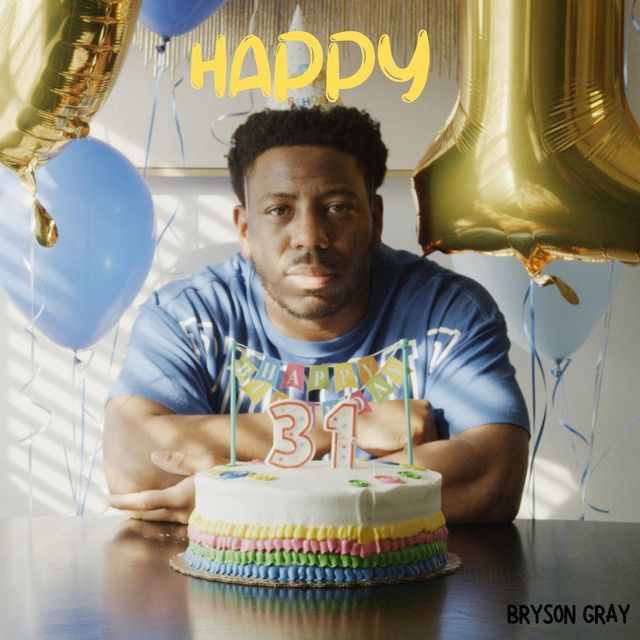
HAPPY by Bryson Gray
They come to “HAPPY” expecting a smile; they leave with a challenge. The meaning of HAPPY Bryson Gray centers on a simple claim: he’s cheerful in a culture he sees as over-politicized, and that cheer irritates his critics. The song frames joy as protest, turning a grin into a stance.
"HAPPY" - Bryson Gray
When everything went so woke
Why is there a feminist in every tv show?
Loading lyrics...
Unable to load lyrics
We're unable to display the lyrics at this time. Please try again later.
A Taunt Wrapped in a Smile
At its core, the track argues that public life is saturated with politics—summed up in the hook’s punch of everything's political
. Against that backdrop, the narrator shrugs off outrage and insists his mood is unshakable: you're mad because I'm happy
.
Interpretation: The tension isn’t really about happiness itself. It’s about who sets the terms of culture, and who gets to feel comfortable inside it. Gray’s narrator says he won’t yield his taste or beliefs to fit a dominant trend.

Watch the official HAPPY
music video
Who’s Talking—and Who’s “Y’all”?
The voice is first person, direct, and conversational. He addresses an unnamed crowd as “y’all,” a mix of online foes, media, and trendsetters he finds predictable. He calls them out as so predictable
, then imagines their response—cancellation or deplatforming—compressed into I should be banned
.
Interpretation: The “you” isn’t one person; it’s a composite antagonist. By painting a broad target, the song turns private irritation into a public stance about speech and conformity.
What Happens in the Song (In Order)
- He observes changes in entertainment and style, claiming constant political messaging.
- He anticipates being labeled a bigot and censored, but shrugs it off as noise.
- He anchors his identity in happiness, not approval, and repeats that stance in the hook.
- He lays out non-negotiables (for example, he says he
wouldn't wear a dress
) as markers of his values.
Each beat returns to the chorus, emphasizing resilience over persuasion. He’s not trying to win a debate so much as to hold a line.
Symbols and Shortcuts: What the References Signal
The song leans on cultural shorthand. Mentions of TV rainbows and fashion point to debates over LGBTQ+ visibility and gender expression. A line about believing women nods to the MeToo-era slogan and questions blanket rules for judgment. The provocation man can have babies
references arguments over gender identity and language in medicine and law.
Interpretation: These aren’t policy essays; they’re symbols. He pulls loaded phrases to spark recognition (or irritation) fast. Whether a listener agrees or not, the song works by compression—turning issues into memorable hooks.
How the Sound Carries the Message
Production keeps the focus on words. A straightforward hip-hop beat, tight low end, and a chant-friendly hook give the lyrics room to land. The tempo sits in a comfortable pocket, so his delivery can be blunt and rhythmic rather than dense.
Interpretation: The taut, loop-like structure mirrors the argument. Repetition isn’t laziness—it’s branding. By circling the same ideas, the track turns opinion into slogan and emotion into posture.
Context and Reception: Why It Hits Nerves
Bryson Gray’s catalog often mixes politics, cultural critique, and faith. That background sets expectations: listeners anticipate direct takes and a line-in-the-sand tone. “HAPPY” fits that mold by packaging pushback as levity.
Reactions will map to prior beliefs. Supporters may hear catharsis and comic timing. Detractors may hear a dismissal of groups already fighting for visibility or safety. The song is designed for that friction—it courts the conversation rather than avoiding it.
Alternate Readings to Consider
- Interpretation: Satirical exaggeration. The narrator inflates extremes to parody what he sees as cultural mandates. The happiness pose is armor against outrage.
- Interpretation: Straight defiance. The song is a literal refusal to comply with norms he rejects, using punchlines and repetition to keep the message sticky.
Both readings coexist because the writing leaves space. The lines work as jokes to some and as pledges to others.
Why the Hook Matters
Hooks define memory, and this one defines attitude. By repeating the happiness claim over a steady groove, the song reframes conflict as a mood choice. The result is a protest track that smiles while it swings.
Takeaway
The meaning of HAPPY Bryson Gray is about agency—choosing cheer in a climate he sees as policed and political. Whether one hears satire or confrontation, the song’s power comes from its simple frame: joy as resistance.
Disclaimer: Song meanings are interpretive. This reading draws on lyrics, tone, and common cultural references; your experience may differ.









