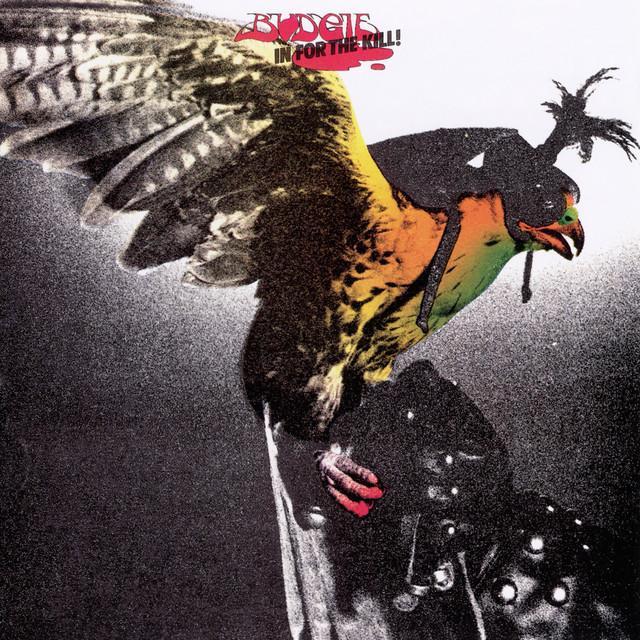
Zoom Club by Budgie
A Fast, Open-Armed Rock Invitation
The meaning of Zoom Club Budgie starts with motion, community, and release. Rather than tell a tight story, the song feels like a rallying cry. They aim their words at many kinds of people—soldiers, dropouts, hungry listeners, preachers, and teachers—and pull them into one room, one mood, and one musical rush.
"Zoom Club" - Budgie
You are the ones who can care
Speed on you wonderful dropouts
Loading lyrics...
Unable to load lyrics
We're unable to display the lyrics at this time. Please try again later.
That broad address matters. Budgie were a Welsh hard rock band who helped shape early heavy metal, even if they stayed more of a cult favorite than a huge U.S. chart act. According to Budgie’s history, the group formed in Cardiff in 1967 and became known for mixing heaviness with wit, speed, and odd imagery. “Zoom Club” fits that mix well: it is urgent, playful, and bigger in feeling than in plot.
Watch the official Zoom Club
music video
What the Song Seems to Mean
At its core, the song treats music as a force that cuts across labels. The singer calls to outsiders and authority figures alike, suggesting that a live rock experience can flatten social divisions for a few minutes. When they urge people to eat up the music
, the idea is not literal hunger. It frames sound as nourishment, something people need when daily life feels dull, rigid, or disconnected.
Another clue is the line about breaking barriers. The song imagines music pushing beyond ordinary limits, as if volume and momentum could smash the walls around a crowd. That is why the repeated command Zoom along
feels central. It is less about travel than surrendering to movement, noise, and shared excitement.
Interpretation: the song may be celebrating a real venue, a scene, or just the fantasy of an ideal rock space. Either way, the “club” becomes a symbol of belonging.
Who They Call In, and Why It Matters
One striking feature is how many groups get named. They begin with G.I.s, then wonderful dropouts
, then “people,” then preachers and teachers. That wide list creates a democratic feeling. Budgie are not singing only to rebels or only to insiders. They are saying that almost anyone can enter the moment.
There is also tension in those categories. Soldiers and dropouts suggest opposite ends of social order. Preachers and teachers carry authority, while hungry listeners suggest need and vulnerability. By placing everyone in the same song, Budgie turn the club into neutral ground.
You are my life
You turn around
in your zoot suit
This brief passage shifts the scale from crowd address to personal devotion. The song suddenly sounds intimate, almost dazzled by a single figure in motion. That detail gives the track a glam flash and hints that the crowd experience also contains private obsession.
The Chorus as a Mission Statement
The hook points listeners toward a kind of chosen acceleration. Superstar
and music man
suggest performance, charisma, and identity built through sound. The chorus is not deep in a confessional sense, but it is effective because it reduces the song’s message to energy and direction.
In plain terms, the chorus says: keep moving, keep playing, spread this feeling everywhere. That is why the phrase about going all over the land
matters. Budgie present rock music as contagious. It starts in one room, then imagines itself spilling outward.
Sound, Tempo, and the Feeling of Lift-Off
Production and arrangement shape the meaning as much as the words do. “Zoom Club” appeared in 1974, during the period around In for the Kill!, when Budgie were leaning harder into aggressive riff-driven rock. Contemporary discography records also note “Zoom Club (Edit)” as a 1974 single, listed on the band’s discography overview.
Musically, the song works because the title idea is audible in the performance. The guitar pushes forward with a clipped, propulsive feel. The rhythm section gives the track a rolling base, and the vocal delivery sounds like a command thrown into a busy room. Even without complex lyrics, that combination creates the sense of acceleration the title promises.
This is where Budgie’s style helps. They were often heavier than standard hard rock but looser and more playful than some metal bands that came after them. In “Zoom Club,” the band’s punchy groove keeps the song from sounding solemn. Instead, it feels like movement for movement’s sake—joyful, sweaty, and just a little strange.
Two Strong Readings of “Zoom Club”
Interpretation 1: A Celebration of Live Rock Culture
This is the clearest reading. The song invites every kind of listener into a shared event where music feeds, unites, and transforms. The room becomes a place where social roles blur and people are remade by volume, rhythm, and style.
Interpretation 2: A Small Utopia Against the Outside World
There is also a more idealistic reading. References to hunger, walls, and different social groups suggest dissatisfaction with ordinary life. In that view, the club is not just a venue. It is a temporary answer to alienation, a space where people can feel seen.
Neither interpretation cancels the other. In fact, the song works because it holds both ideas at once.
Why the Song Still Connects
The meaning of Zoom Club Budgie lasts because it captures a simple but powerful faith: music can make strangers feel like part of the same body. Budgie do not overexplain that belief. They shout it, riff it, and let the beat carry it.
For modern listeners, that may be the song’s charm. It comes from an era when rock often sounded like a public event, not a private diary. “Zoom Club” is less about confession than invitation.
Final Take on Budgie’s Message
In the end, “Zoom Club” is about the social power of music—its ability to gather outsiders, authority figures, and dreamers into one energized space. The lyrics are loose, but the feeling is precise: movement, appetite, style, and togetherness.
That is the best way to understand the meaning of Zoom Club Budgie. It is a song about joining in before the moment passes.
Disclaimer: This interpretation is based on the released lyrics, the song’s musical setting, and available band context. As with many rock songs, some meanings remain open to listener interpretation.







