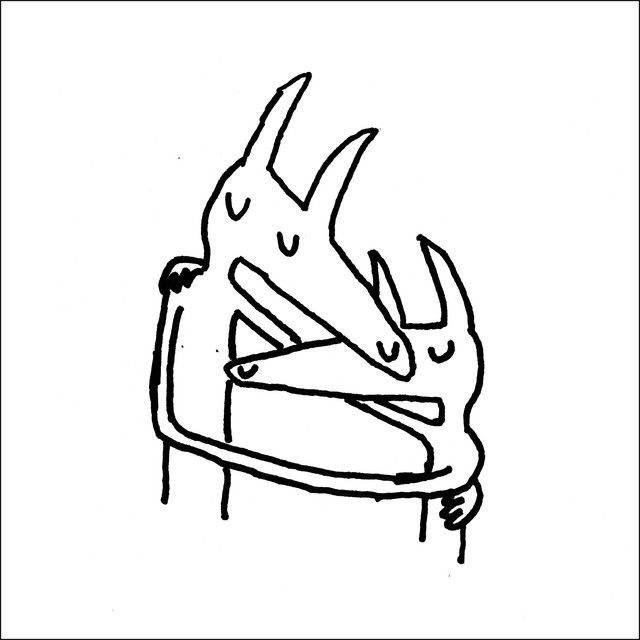
Beach Life-In-Death by Car Seat Headrest
Few indie rock songs capture young adult confusion as fully as this one: love feels thrilling, identity feels unstable, and even ordinary errands start to sound existential.
"Beach Life-In-Death" - Car Seat Headrest
Provided by LyricFind(Last) last night I drove to Harper's ferry and I thought about you
There were signs on the road that warned me of stop signs
The speed limit kept decreasing by tenLoading...Loading lyrics...
Unable to load lyrics
We're unable to display the lyrics at this time. Please try again later.
Why the meaning of Beach Life-In-Death Car Seat Headrest hits so hard
The meaning of Beach Life-In-Death Car Seat Headrest centers on emotional overload. Will Toledo turns a relationship story into a portrait of obsession, depression, queer anxiety, and the fear of becoming trapped inside their own thoughts. Rather than telling one neat plot, the song moves through memories, spirals, jokes, and breakdowns.
Factually, the track was first released on Twin Fantasy in 2011 and then re-recorded as the lead single from Twin Fantasy (Face to Face) in 2017, with the full album arriving in 2018 (Wikipedia). Toledo wrote and produced both versions.
Interpretation: the title itself suggests a contradiction. “Beach life” sounds warm and youthful, while “death” points to decay and emotional collapse. That split runs through the whole song: desire feels alive, but it also hurts.
Watch the official Beach Life-In-Death
music video
A romance told as a panic spiral
The opening scenes are grounded in small details: a drive, a train station, weather, a goodbye. Those images make the song feel lived-in before it opens into something much bigger. A train becomes almost too powerful to look at directly, and leaving town feels haunted.
Then the song shifts into routines and self-instructions. The repeated everyday commands make life sound mechanical, almost survival-based. Instead of freedom, they get a checklist: eat, work, sleep, repeat.
Interpretation: that pattern suggests depression more than laziness. The speaker is not merely bored; they are struggling to move through ordinary life after emotional loss.
Queer longing, hesitation, and self-exposure
One reason the song resonates so deeply is how plainly it captures uncertainty around identity. Toledo includes a painful confession about pretending to be drunk while coming out, then immediately undercuts it by admitting he never truly did. That reversal shows fear in real time.
A later line about not knowing if they are officially together gives the song one of its sharpest emotional cuts. The relationship matters deeply, yet it still feels undefined.
Short phrases like pretended I was drunk
, boyfriends yet
, and wanted to be humans
show how the song keeps moving between desire and embarrassment. Pitchfork said the lyrics swing between daily routine and the anxieties of negotiating queer identity and relationships (Pitchfork).
Three movements, one collapsing mind
The song’s structure is crucial to its meaning. It is divided into three parts, with louder first and third sections around a quieter middle (Wikipedia). That design lets Toledo stage an inner argument instead of a simple confession.
Part one: memory becomes obsession
The first movement starts almost like a diary entry, then swells into longing and frustration. References to earlier Car Seat Headrest songs link this track to Toledo’s larger emotional universe, as if old wounds keep resurfacing.
Part two: thought loops and mental strain
In the slower middle, the song becomes more reflective and more alarming. There is direct fear about losing control of the mind. The line I don't want to go insane
lands with unusual bluntness because the rest of the song has already shown how unstable the speaker feels.
Part three: love turns monstrous and tender
The final movement mixes violent dreams, jokes, erotic imagery, and repeated refrains. That combination is part of the point. Love here is not clean or calming. It is hungry, consuming, and still strangely beautiful.
By the one you love
their lips around you
feel their smile
Paraphrased, the song imagines intimacy as being devoured from the inside. It is affectionate and terrifying at once.
Symbols that keep washing back in
Several motifs help explain the song.
- Ocean and grave: recurring water imagery suggests grief, burial, and feelings that will not stay buried.
- Dogs and ears: these images hint at alertness, instinct, and the wish to be chosen or noticed.
- Humans versus inhumanity: the repeated tension around being or hating humans points to alienation.
- Groceries and errands: ordinary life becomes absurd when someone is emotionally wrecked.
Interpretation: the repeated ocean image may be the song’s clearest symbol. It suggests that memory keeps returning, eroding closure every time it seems possible.
How the music carries the message
The production matters as much as the words. The original 2011 recording is lo-fi and intimate, while the 2017 re-recording is broader, cleaner, and more explosive (Wikipedia). Critics praised the remake’s dramatic shifts: the A.V. Club called it a “jaw-dropping series of gear shifts,” and Pitchfork said it was reinvigorated rather than polished smooth.
Those shifts mirror the song’s mental state. Guitars stretch out, vocals veer from near-spoken confession to full-throated release, and the arrangement keeps threatening to break apart. That is why the song’s 13-minute length does not feel indulgent. It feels necessary.
Why the song still feels so big
Toledo has said long-form songs by artists like Pink Floyd, of Montreal, and Destroyer influenced him, and that planning this track helped define the broader palette of Twin Fantasy (Wikipedia). That ambition shows. The song is not just about one crush or one breakdown. It is about how a young person tries to build meaning while desire, shame, fantasy, and self-consciousness all fight for space.
For many listeners, that is the lasting power of the meaning of Beach Life-In-Death Car Seat Headrest: it understands that growing into oneself can feel epic, ridiculous, ugly, and transcendent at the same time.
Final takeaway from the wreckage
Interpretation: at its core, this song is about wanting connection so badly that it starts to distort reality. It captures the strange zone where romance, identity, and mental health blur together.
That is also why it remains one of Car Seat Headrest’s defining songs. It sounds like someone trying to think and feel their way into a human life, even when they are not sure how.
Disclaimer: This interpretation is based on the lyrics, released versions, and public commentary. Like most great songs, “Beach Life-in-Death” can support more than one valid reading.









