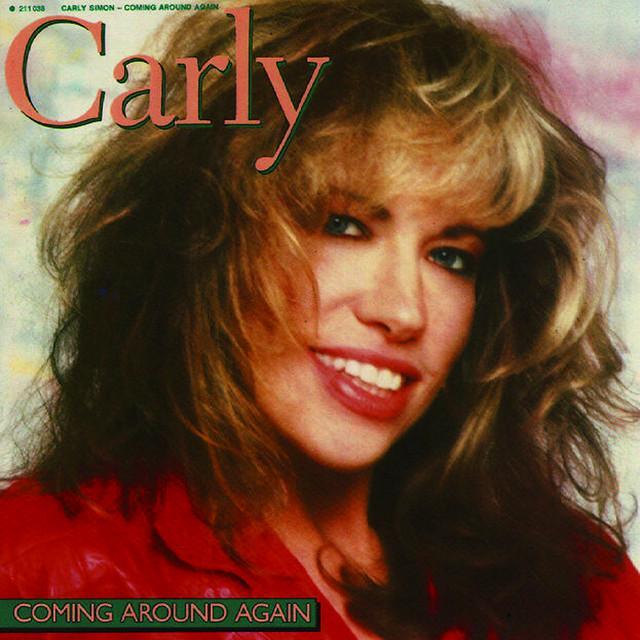
Coming Around Again by Carly Simon
Why This Song Still Lands So Hard
The meaning of Coming Around Again Carly Simon starts with a hard truth: love does not erase stress. Instead, the song places romance inside a busy home, where chores, parenting, and disappointment all press against the promise of staying together.
"Coming Around Again" - Carly Simon
Mummy pleases
Daddy breezes in
Loading lyrics...
Unable to load lyrics
We're unable to display the lyrics at this time. Please try again later.
Carly Simon wrote the song for the 1986 film Heartburn, directed by Mike Nichols, and it was later released as a single before appearing on her 1987 album Coming Around Again (Songfacts, Wikipedia). That context matters because Heartburn is about a marriage under strain, and Simon’s lyric fits that emotional space almost perfectly.

Watch the official Coming Around Again
music video
A Portrait of Domestic Love Under Pressure
The verses open with quick snapshots of family life. Phrases like Baby sneezes
and Daddy breezes in
create a house that feels active, ordinary, and slightly off balance. The details are plain on purpose. They make the song feel lived-in instead of idealized.
Then Simon undercuts the fantasy. The relationship looks So good on paper
, yet it feels confusing in real life. That contrast is one of the song’s sharpest ideas: some relationships seem perfect from the outside, but inside, the people involved may feel lonely, tired, or unseen.
Interpretation: The speaker is not rejecting love. They are rejecting the false version of love that ignores work, mess, and emotional absence.
The Chorus Turns Breakdown Into Hope
The chorus is where the song reveals its core. When Simon sings nothing stays the same
, she frames pain as temporary rather than permanent. The line accepts change instead of fighting it.
That leads to the title phrase, which suggests return, renewal, and emotional cycles. Love may weaken, but it can also recover. The song does not promise an easy fix. It asks whether both people are willing to keep going.
The most striking line may be the idea that there is more room in a broken heart
. Paraphrased, the speaker is saying that heartbreak can expand a person rather than end them. Hurt creates space for deeper feeling, greater honesty, and maybe a stronger kind of love.
I know nothing stays the same
But if you're willing to play the game
It will be coming around again
That short passage captures the song’s emotional bargain: love is unstable, but instability does not cancel hope.
Small Actions, Big Frustrations
How Everyday Details Build the Meaning
One reason the song feels so believable is its attention to tiny domestic moments. Paying bills, fixing appliances, greeting guests, and then suddenly losing control all happen in the same emotional world. The song understands that a relationship can look functional while one person is nearing a breaking point.
American Songwriter describes the lyric as portraying marital reality and a woman straining under domestic life with a partner who is not fully present (American Songwriter). That reading fits the song well, especially because the verses move from routine to emotional overload so quickly.
Interpretation: The speaker does not sound shocked by the chaos. They sound exhausted by its repetition. That is why the title matters so much. What keeps “coming around again” may be love, but it may also be conflict, stress, and the need to rebuild.
The Sound Makes the Message Softer and Sadder
Musically, the song sits in polished 1980s pop, but it is not flashy. Its arrangement has a calm, reflective surface that lets the emotional weight rise slowly. Billboard once noted the track’s moody sway
, a good phrase for the way it moves with sadness but not despair (Wikipedia).
The listed producers were Russ Kunkel, Bill Payne, George Massenburg, and Paul Samwell-Smith, with Simon also contributing keyboards and vocals (Wikipedia). That team helps create a warm adult-contemporary sound: restrained drums, smooth keys, and a vocal that feels intimate rather than theatrical.
That restraint is important. A bigger production might have turned the song into pure drama. Instead, the music leaves room for ambivalence, which is exactly what the lyric needs.
Career Context Gives the Song Extra Weight
The single became one of Simon’s major later-career hits, reaching No. 18 on the Billboard Hot 100 and No. 5 on the Adult Contemporary chart (American Songwriter, Wikipedia). That success suggests listeners recognized something true in it.
Songfacts also reports that Mike Nichols helped spark the title by suggesting the word “again,” which Simon later said unlocked the song’s concept (Songfacts). That origin story fits the lyric perfectly. The song is built on recurrence: repeated chores, repeated hurt, repeated faith.
What the Song Finally Believes
At its center, this is not a song about a perfect marriage. It is a song about choosing belief after disappointment. The repeated idea of believing in love does not sound naive. It sounds defiant.
That is the lasting meaning of Coming Around Again Carly Simon: love survives not because life is simple, but because people keep returning to it after life gets hard.
Final Thought
One listener may hear a marriage song. Another may hear a broader statement about resilience. Both readings are valid. This article offers an interpretation based on the lyrics, known song history, and documented release context.









