Why 'Stick to the Status Quo' Still Hits
The meaning of Stick to the Status Quo - From "High School Musical: The Musical: The Series"/Performance Cast of High School Musical: The Musical: The Series, Disney comes down to a simple but powerful idea: people often feel forced to act like only one version of themselves.
"Stick to the Status Quo - From "High School Musical: The Musical: The Series"/Performance" - Cast of High School Musical: The Musical: The Series, Disney
Not another word (no)
Not another sound (no)
Loading lyrics...
Unable to load lyrics
We're unable to display the lyrics at this time. Please try again later.
In the song, the cast performs a warning disguised as advice. The repeated demand to stick to the status quo
sounds catchy and playful, but it carries a real threat. It tells students that belonging depends on staying in their lane.
That is why the song has lasted. Beneath the school-setting humor, it captures a fear many people know well: if they show a different side of themselves, will everyone else reject them?
A Catchy Anthem About Conformity
At its core, this number is about conformity. The speaker is not one single person with a private confession. Instead, the song uses a group voice to represent social pressure itself.
Lines like stick to the stuff you know
turn identity into a rulebook. The message is not just “be yourself carefully.” It is closer to: be predictable, be useful to the group, and do not surprise anyone.
Interpretation: That makes the song a critique of labels. Even though the words seem to defend order, the performance exposes how unfair that order can be.
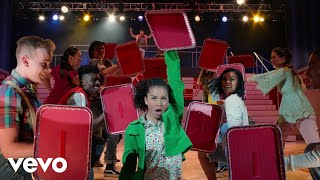
Watch the official Stick to the Status Quo - From "High School Musical: The Musical: The Series"/Performance
music video
Who the Song Is Talking To
The song speaks to anyone tempted to step outside an assigned role. In the High School Musical world, that means students whose interests do not match what their clique expects.
The warning if you wanna be cool
reveals the emotional pressure behind the scene. Popularity becomes a tool of control. The song suggests that social acceptance is offered only if students keep performing the identity others chose for them.
That idea fits the larger Disney franchise, which centers on students crossing boundaries between sports, academics, theater, and other social groups. Disney describes High School Musical: The Musical: The Series as a meta continuation of that world, with students staging the original musical in their own school setting.
How the Hook Turns Pressure Into a Rule
The chorus is the key to the song’s meaning. It repeats the command until it sounds like common sense. That is exactly how social norms work: they become powerful because they are repeated, not because they are fair.
When the cast insists don't mess with the flow
, they frame change as danger. The wording matters. It does not say difference is wrong in a moral sense. Instead, it says difference is disruptive.
Interpretation: This is what makes the song sharp. It shows how exclusion often hides behind the language of order, tradition, or keeping things smooth.
The Scene Behind the Words
Even in this short lyric set, the structure tells a story:
- First, there is immediate silencing:
not another peep
. - Next, the group lays out the social rule.
- Then, they tie acceptance to obedience.
- Finally, they repeat the command until it feels final.
That movement matters. The song begins by shutting down expression before it even starts. Only after that does it explain the “rule.” In other words, silence comes before understanding.
It is better by far
To keep things as they are
Those lines summarize the mindset perfectly. Stability is presented as a virtue, but the real goal is protecting the social system from change.
Why the Sound Matters as Much as the Lyrics
Part of the song’s success comes from its contrast between sound and message. Musically, it is bright, rhythmic, and built for ensemble performance. That energy makes the number entertaining, but it also makes the pressure feel bigger because it comes from a crowd.
Group vocals are especially important here. A solo complaint would feel personal. A chorus of voices feels institutional. The arrangement turns peer pressure into something almost mechanical, like a machine pushing everyone back into place.
That is a classic musical-theater move. A memorable hook carries a serious idea in a form audiences can absorb quickly. The Disney presentation softens the surface, but the emotional logic underneath is strict and even a little intimidating.
Context From the Franchise
The song was written by Faye L. Greenberg and David N. Lawrence, as provided in the supplied context. In the broader High School Musical franchise, songs often work as character arguments set to music rather than simple expressions of feeling.
This one is different from the franchise’s big aspirational anthems because it represents resistance to change. That gives it an important job in the story world. Before characters can break social boundaries, the audience needs to hear how strong those boundaries are.
In that sense, the number is not the moral center of the story. It is the obstacle. It dramatizes the pressure that later songs and scenes push against.
Why It Still Connects
The reason this number still works for U.S. audiences is simple: high school labels do not disappear just because times change. Students may face different social spaces now, including online ones, but the pressure to stay recognizable is still familiar.
Interpretation: The song can also be read more broadly. It is not only about school cliques. It is about any community that punishes people for being more complex than expected.
That is the lasting meaning of Stick to the Status Quo - From "High School Musical: The Musical: The Series"/Performance Cast of High School Musical: The Musical: The Series, Disney. It shows how groups protect themselves by discouraging difference, while quietly proving that difference is exactly what makes people interesting.
Final Note on the Song's Message
What makes the song memorable is not that it celebrates the status quo. It is that it reveals how fragile the status quo really is. If a small act of honesty can shake the whole system, then the system was never very strong to begin with.
Disclaimer: This article offers an interpretation of the song based on its lyrics, performance context, and franchise themes. Meaning can vary by listener.









