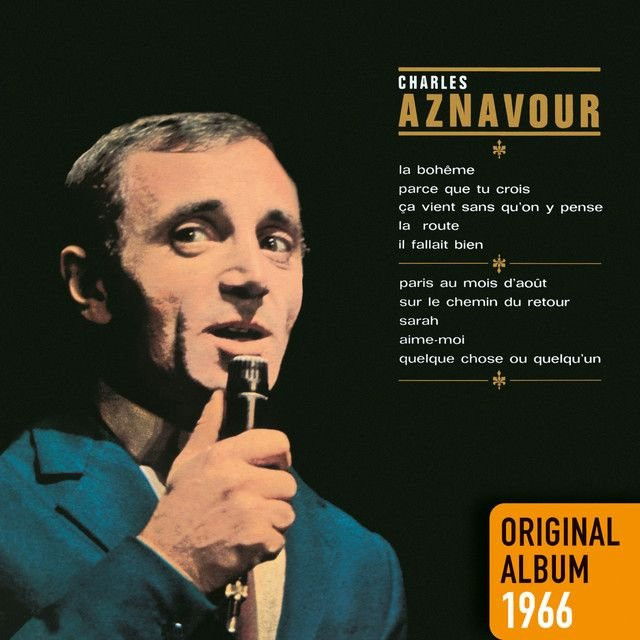
Why 'La bohème' Still Breaks Hearts
The meaning of La bohème Charles Aznavour centers on a painful kind of nostalgia: the singer remembers a youth shaped by poverty, art, romance, and hope, then realizes that both the place and the feeling are gone. What makes the song last is not just its sadness. It is the way Charles Aznavour turns memory into something warm, vivid, and then quietly devastating.
"La bohème" - Charles Aznavour
Que les moins de vingt ans
Ne peuvent pas connaître
Loading lyrics...
Unable to load lyrics
We're unable to display the lyrics at this time. Please try again later.
Written by Charles Aznavour and Jacques Plante, and widely recognized as one of Aznavour’s signature songs, La bohème is rooted in Montmartre, the Paris neighborhood long linked with painters, poets, and café life. In broad cultural history, Montmartre became a symbol of bohemian art culture, especially from the late 19th and early 20th centuries. That background matters because the song is not only about one couple or one artist. It is also about a whole myth of creative youth.
A Memory of Poverty That Felt Like Richness
At the start, the singer looks back on a time younger people cannot know. That opening immediately frames the song as remembrance, but not neutral remembrance. They are telling a story from the distance of age.
The details are humble: a cheap room, hunger, cold, and unstable work. Yet the song does not present those hardships as pure misery. Instead, it says that in those days, La bohème
meant happiness. That is the key tension. They had very little, but the memory glows because youth made struggle feel meaningful.
One short line about eating only every other day makes that point sharply. The song admits real deprivation, but it also suggests that hunger was easier to bear when shared with love, friendship, and artistic purpose.
Watch the official La bohème
music video
Montmartre as Place and Symbol
Montmartre is more than a setting here. It becomes a symbol of a vanished inner world. The old streets, workshop, cafés, and flowers are not just scenery. They hold the singer’s identity.
In the early verses, the neighborhood feels alive and intimate. They remember windows, lilacs, nearby cafés, and a circle of aspiring artists waiting for glory. Those small images make the past feel physical and close.
Later, when the singer returns, the shock is not just that buildings changed. It is that memory itself has lost its home. The line about les lilas sont morts
lands because the dead lilacs stand for more than flowers. Interpretation: they suggest that beauty, innocence, and youthful belief have withered with time.
Love, Art, and the Bohemian Dream
The song ties romance and creativity together from the start. The lovers meet in hardship: one is starving, the other poses nude. That image places them inside an artist’s life where money is scarce, but beauty still matters.
The middle verses deepen this world. Friends gather in cafés, trade paintings for meals, recite poems, and cling to fame as a future promise. One refrain says we all had genius
, which can sound proud, funny, or tragic depending on how it is heard.
Interpretation: that line may be sincere, but it may also gently expose the illusions of youth. In youth, everyone believes greatness is near. The song honors that confidence while also seeing its innocence.
A later verse focuses on the painter working through sleepless nights, perfecting a body on canvas. The attention to form, labor, and dawn suggests that art was not a pose. It was exhausting, obsessive, and deeply connected to desire.
On a vingt ans
Et nous vivions de l'air du temps
These lines capture the song’s emotional center. They do not literally mean youth can live on air. They mean being twenty can make passion feel like nourishment.
What the Refrain Keeps Changing
One of the smartest things in the song is how the repeated phrase La bohème
changes meaning each time. At first, it means happiness. Then it means beauty, youth, and genius. Each return adds a new layer.
That structure matters because the song is building a mythology in real time. Bohème becomes a shorthand for an entire philosophy: poor but alive, uncertain but hopeful, ridiculous but sincere.
Then the ending breaks that spell. The singer admits they were young and crazy, and finally says bohème means nothing at all now. That line is heartbreaking because it does not simply reject the past. It shows that some words only work while a life is being lived. Once the world changes, the label collapses.
How the Music Carries the Loss
The performance helps explain why the song feels so human. Aznavour sings with a conversational intimacy, almost like someone talking through an old photograph. The melody rises with affection, then settles into resignation.
The arrangement, often heard with a gentle orchestral French pop style, supports the memory instead of overpowering it. Its smooth pacing and lyrical sweep make the song feel elegant, but not grand. That balance is important: the production lets nostalgia breathe while keeping the listener close to the storyteller.
Interpretation: because the music never becomes harsh, the sadness feels mature rather than dramatic. The song mourns without shouting.
Why the Song Still Connects
For U.S. listeners, the meaning of La bohème Charles Aznavour may feel universal even if the setting is specifically Parisian. Many people know the experience of returning to a place from youth and finding it unrecognizable. Many also know how age changes the stories people tell about struggle.
The song lasts because it refuses two easy answers. It does not say the past was better in every way, and it does not say youthful dreams were fake. Instead, it says those years were real because people believed in them fully.
That is why the ending hurts. The singer has not only lost a neighborhood. They have lost the version of themselves who could call that life joy.
The Lasting Meaning of "La bohème"
In the end, the song is about the cost of growing older. It remembers a time when love, hunger, friendship, and art all seemed to belong to one shining idea. Time exposes the hardship, but it cannot erase the beauty.
That tension is what gives La bohème its power. It is a love song to youth, and also an elegy for the moment when youth stops making sense.
Disclaimer: This interpretation is based on the lyrics, performance, and cultural context, and other listeners may hear different shades of meaning.








