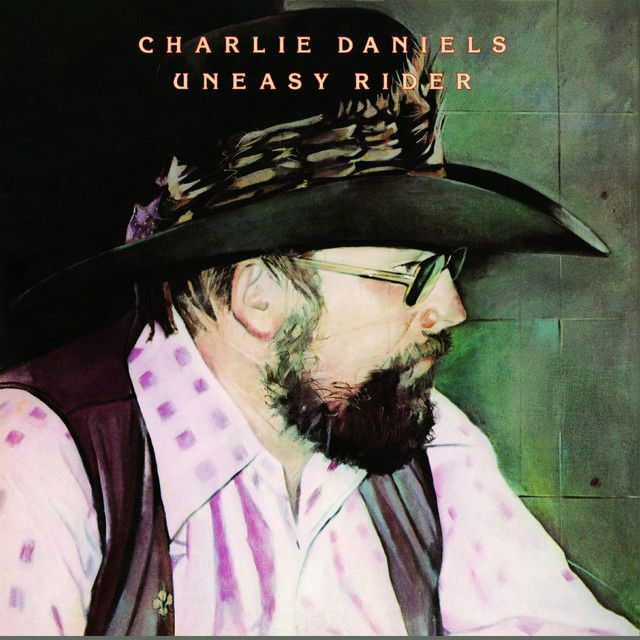
Uneasy Rider by Charlie Daniels
The meaning of Uneasy Rider Charlie Daniels starts with a joke, but it does not stay there. On the surface, the 1973 hit is a funny road story about a long-haired driver who gets stranded outside a rough bar in Mississippi and talks his way out of danger. Under that comic setup, though, the song captures a tense cultural moment in America.
"Uneasy Rider" - Charlie Daniels
Toolin' along in my Chevrolet
Tokin' on a number and diggin' on the radio
Loading lyrics...
Unable to load lyrics
We're unable to display the lyrics at this time. Please try again later.
Charlie Daniels turns a flat tire and a barroom scare into a story about identity, performance, and survival. The narrator is not just afraid of a fight. They are trapped between two Americas that do not trust each other.
A comic story with real social tension
Factually, "Uneasy Rider" was released in 1973, written and produced by Charlie Daniels, and included on Honey in the Rock. It became a major crossover hit, reaching No. 9 on the Billboard Hot 100, which helps explain why the song still matters in discussions of 1970s country and Southern rock.
The title plays off the film Easy Rider, and that matters. Daniels presents a traveler linked to counterculture style: long hair, weed, a customized car, and a trip toward Los Angeles. When that character ends up in a place that reads him as an outsider, the song turns into a comic version of a larger national conflict.
Interpretation: the song is about how fast appearance can become danger. The narrator knows that details like hair, clothes, and even a car can make people judge them before they speak.
Watch the official Uneasy Rider
music video
The plot moves like a short movie
Daniels tells the story as a spoken narrative over a steady acoustic groove. That style makes every detail feel conversational and visual.
The main beats are simple:
- The driver is heading west and gets a flat.
- They stop at a small bar called the
Dew Drop Inn
. - A group of locals notices the outsider image.
- To escape trouble, the narrator invents a wild political lie.
- Once the tire is fixed, they flee and change the route.
That last turn is key. By the end, the narrator jokes about going to LA through Omaha, which means the fear has changed the whole journey. The trip is still funny, but it leaves a mark.
Why the bar scene means more than a bar fight
The central scene works because Daniels piles cultural signals on top of each other. The car has a peace sign
. The setting is a redneck bar. The narrator hides their hair under a hat because they already understand the risk.
When the disguise fails, the danger becomes social before it becomes physical. The room laughs. The narrator becomes a target. In response, they do not fight with strength. They fight with local language, local fears, and local politics.
undercover agentfor the FBI
sent to infiltrate the Klan
That is the song's sharpest comic move. The narrator survives by telling the crowd exactly the kind of story they are ready to believe. Then Daniels keeps raising the stakes with quick references to George Wallace, George McGovern, the John Birch world, and anti-Communist panic.
Interpretation: the lie works because everyone in the room is already organized by suspicion. The song suggests that prejudice and paranoia are easy to trigger when a group already sees enemies everywhere.
Counterculture versus Southern conservatism
One reason the song landed so strongly in 1973 is that it compresses a whole era into one scene. The narrator represents the fading 1960s counterculture, while the bar crowd stands for a more defensive, traditional Southern identity.
But Daniels does something more interesting than simple side-taking. The narrator is sympathetic, yet not heroic in a noble way. They are stoned, sarcastic, and willing to manipulate the crowd. The locals are threatening, but also exaggerated enough to become comic characters.
That balance is part of the song's power. According to American Songwriter, it was Daniels' first big hit and a spoken story song that stood apart from standard radio singles of the time. Its humor made the politics easier to swallow, but the politics are still there.
How the sound carries the meaning
Musically, "Uneasy Rider" is lean and clever. It is often described as talking blues or talking bluegrass, and that hybrid matters. Instead of a huge chorus or dramatic vocal melody, Daniels relies on rhythm, timing, and phrasing.
The acoustic guitar pattern keeps the song moving like tires on a road. The spoken delivery makes the listener feel like they are hearing the story from a friend at a bar. Small changes in pace create tension, especially as the room fills up and the narrator starts improvising.
Because the track does not overplay the moment, the humor lands harder. Daniels sounds amused, nervous, and quick-thinking at once. That performance is a big reason the song works. They are not singing about fear in a grand way; they are acting it out in real time.
The ending is funny, but not carefree
At the end, the narrator escapes, circles the crowd once for fun, and tears off down the road. That gives the song a release. Still, the joke does not erase the threat.
The final reroute tells the truth. After what happened, the driver no longer trusts the road ahead. The open highway, which often symbolizes freedom in American music, becomes uncertain territory.
Interpretation: that is the deeper meaning of Uneasy Rider. It is a road song where freedom exists, but only if the traveler can read the room, shift identities, and stay one step ahead of other people's anger.
What the song finally says
The meaning of Uneasy Rider Charlie Daniels is not just that a clever drifter escaped a bad night. It is that America in the early 1970s could feel divided enough that hair, slang, and politics could turn a roadside stop into a test of survival.
Daniels wraps that idea in wit, speed, and strong storytelling. That is why the song lasts. It is funny on first listen, but its real subject is how people perform belonging when they are somewhere they do not fit.
Disclaimer: This interpretation separates documented facts about the song from critical reading. Meanings can vary by listener and context.








