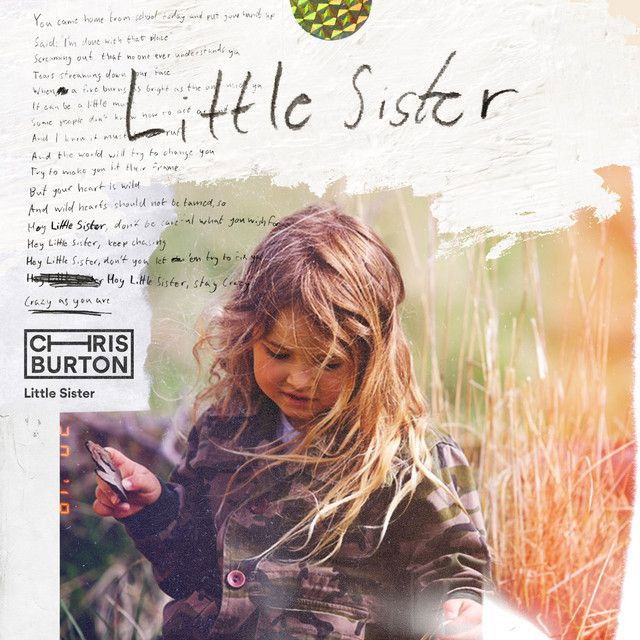
Why Chris Burton’s ‘Little Sister’ Feels So Protective
The heart of the song in one look
The meaning of Little Sister Chris Burton centers on love that protects without controlling. The song speaks to a younger sister who feels misunderstood at school and pressured by the world to become easier, quieter, or more acceptable. Instead of asking her to shrink, the narrator tells her to keep her spirit.
"Little Sister" - Chris Burton
Said, "I'm done with that place"
Screamin' out, no one never understands ya
Loading lyrics...
Unable to load lyrics
We're unable to display the lyrics at this time. Please try again later.
That is what gives the song its warmth. It is not a lecture about behaving better. It is a defense of individuality. When the chorus says stay crazy
, it does not praise chaos for its own sake. It reframes “crazy” as passion, originality, and the kind of energy that other people often fear before they admire it.

Watch the official Little Sister
music video
A family voice, not a romance
One reason the song lands so quickly is its point of view. The speaker is not a distant observer. They sound like an older sibling who has seen tears, school stress, and family arguments up close. The opening scene is simple and vivid: a sister comes home upset, feeling unseen, and someone is there to hear it.
That personal setup matters. The repeated address Hey, little sister
makes the song feel direct and intimate. It also keeps the message grounded in family rather than a broad self-help anthem. They are not speaking to everyone at once. They are speaking to one person they know deeply.
The conflict inside the home
The song does not pretend this relationship is perfect. It admits that arguments can feel like warfare
, with pride making apologies hard. That detail adds credibility. The narrator is not claiming to be the flawless guide. They love their sister, but they also hurt and misunderstand each other sometimes.
That honesty strengthens the message. Support here is not idealized. It is messy, lived-in, and believable.
What the verses are really saying
The first verse introduces the core problem: the sister feels alienated. School is not just tiring; it feels hostile and narrowing. The song suggests that some people do not know how to deal with someone intense, emotional, or unconventional.
Then the lyric turns that pressure into a bigger theme. The world will try to make her fit the frame
. In plain terms, society rewards people who act predictably. The song pushes back against that idea. It says her difference is not a defect that needs repair.
wild hearts should not be tamedThe line sums up the song’s main belief: strong feeling and independence may cause friction, but they also carry purpose.
Interpretation: This is the emotional thesis of the track. Burton and his co-writers frame rebellion not as danger, but as identity. The sister’s intensity is treated as a gift that may be difficult now but valuable later.
The chorus flips a common warning
The smartest move in the song may be the line don't be careful what you wish for
. Usually, people say the opposite: be careful what you wish for. That old warning tells someone to lower expectations because desire can backfire.
This chorus rejects that cautious mindset. It tells the sister to keep wanting big things and to keep chasing them. Even the phrase try to fix ya
points to a familiar social habit: people often respond to unusual personalities by diagnosing, correcting, or smoothing them out.
In that sense, the chorus is both comforting and defiant. It says: dream anyway, remain yourself, and do not let other people turn your spark into something safer.
Sound and production: why the message feels uplifting
Even without detailed public production notes, the writing strongly suggests a modern pop approach: a clean, anthemic chorus, rising emotional dynamics, and repetition that makes the central reassurance stick. The melody likely does a lot of work here. A song about conflict at home and pain at school could feel heavy, but this one aims for lift.
That matters because pop often uses bright sound to carry hard feelings. As many listeners know from songs whose upbeat surfaces hide deeper themes, musical energy can make emotional truth easier to absorb. The Quora discussion on misunderstood songs collects many examples of this contrast, from Pumped Up Kicks to Hey Ya!, where catchy sound can distract from meaning. Here, though, the bright feel does not hide darkness. It softens it and turns care into momentum.
Burton’s performance also appears designed to sound encouraging rather than pitying. The hook repeats enough to feel like reassurance, almost like something an older sibling would say until it is finally believed.
Artist and writing context
The song is credited to Chris Burton along with Andreas Dyre Odbjerg, Lars Ankerstjerne, Malthe Rostrup, Peter Biker, and Max Olof Nilsson. That collaborative team helps explain the song’s polished, accessible structure. Multiple writers often shape a track so its emotional point is immediate, and that is true here.
For credits, readers can refer to lyrics and writers. Burton’s broader artist pages, such as Spotify, place him within a melodic pop space where direct feeling matters.
A second way to read it
Interpretation: While the most obvious reading is about an actual younger sister, the song can also be heard more broadly. “Little sister” may stand in for any young person who feels too emotional, too loud, too ambitious, or too different for the room they are in.
That wider reading helps explain why the song resonates beyond literal siblings. Its message is universal: the traits that get someone labeled “too much” early in life can later become their strength.
Why the song stays with listeners
What makes this track memorable is its balance. It acknowledges school pain, family fights, and social pressure, but it never collapses into despair. Instead, it offers a specific kind of love: the kind that sees a person clearly and still says they do not need to be reduced.
That is the lasting meaning of Little Sister Chris Burton. It is a song about defending someone’s untamed self before the world convinces them to apologize for it.
Disclaimer: This interpretation is based on the released lyrics, songwriting credits, and available public context. As with any song, listeners may hear meanings that differ from the writer’s private intent.








