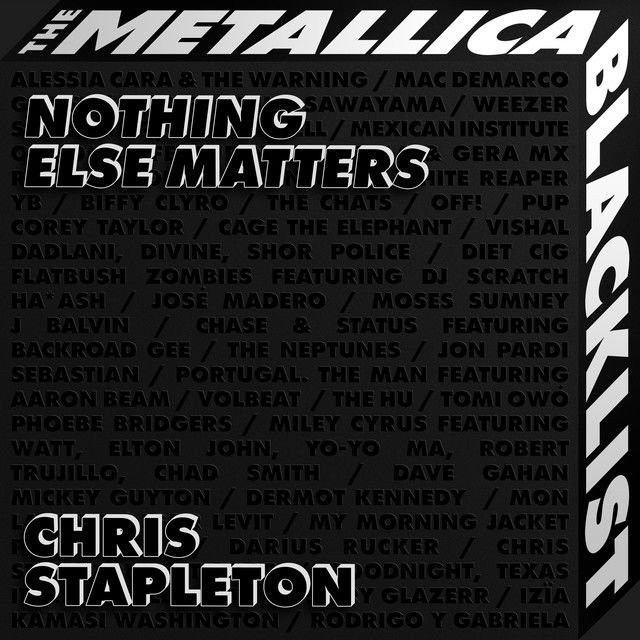
Nothing Else Matters by Chris Stapleton
The meaning of Nothing Else Matters Chris Stapleton starts with an important fact: Chris Stapleton did not write the song. It was written by James Hetfield and Lars Ulrich and first released by Metallica on their 1991 self-titled album, with the single arriving in 1992. Stapleton later recorded his own version for The Metallica Blacklist in 2021. That matters because his cover changes the texture, but not the song’s emotional center.
"Nothing Else Matters" - Chris Stapleton
Couldn't be much more from the heart
Forever trusting who we are
Loading lyrics...
Unable to load lyrics
We're unable to display the lyrics at this time. Please try again later.
A Cover That Keeps the Heart Intact
At its core, the song is about trust, vulnerability, and closeness that survives distance. The speaker says connection can remain strong even when people are apart. That is why the opening idea, summed up in so close, no matter how far
, still lands so hard.
In interviews summarized by major reference sources, Hetfield explained that he wrote it while away on tour and missing someone at home. He also later said the song grew beyond that private starting point and came to mean many things to many listeners. That wider reach helps explain why Stapleton’s cover feels natural rather than forced.

Watch the official Nothing Else Matters
music video
Where the Lyrics Point
Trust Over Image
One of the song’s clearest themes is emotional honesty. When the narrator says never opened myself this way
, the point is not drama. It is exposure. They are admitting that real love, or real faith in another person, requires risk.
That honesty pairs with freedom. The phrase life is ours
pushes back against pressure from outsiders. The speaker is not asking the world for approval. They are choosing a bond over performance.
The Chorus as a Value Statement
The hook nothing else matters
can sound romantic, but it is broader than that. It says that once trust feels real, gossip, status, and crowd opinion shrink in importance. The line is less about shutting out the world completely and more about putting first things first.
This is why the repeated dismissals of what others do, know, or say matter so much. The song is not anti-social. Interpretation: it is anti-distraction. It separates inner truth from public noise.
How the Verses Build the Meaning
The song moves in a simple but effective pattern:
- It begins with emotional closeness despite distance.
- It shifts into personal openness and self-revelation.
- It lands on mutual trust and a willingness to see life differently.
- It rejects shallow outside judgment.
That structure gives the song its staying power. Each verse adds a layer: distance, honesty, trust, then independence. By the time the chorus returns, it sounds earned.
Forever trusting who we are
And nothing else matters
Those lines carry the song’s core belief. They turn a private relationship into a larger statement about identity and loyalty.
Why Chris Stapleton Fits This Song So Well
Stapleton’s voice has always carried grit and tenderness at the same time. That blend suits a song built on strength and softness. Reports on The Metallica Blacklist noted that his interpretation is darker and longer than the original album cut, with a heavy, moody atmosphere and an extended solo section.
That changes the emotional color. Metallica’s original is a power ballad with a famous arpeggiated intro and a slow, almost waltz-like pulse. Stapleton leans toward a Southern, roots-rock gravity. Interpretation: where Metallica’s version feels like a confession that becomes an anthem, Stapleton’s feels like a confession that stays haunted.
The Sound Carries the Message
Part of the song’s power comes from arrangement, not just words. The original recording is notable because Hetfield, not Kirk Hammett, played the studio guitar solo. It also features orchestral arrangement work associated with Michael Kamen on later prominent versions. Those details show how unusual the song was inside Metallica’s catalog: softer, slower, and more open than what many fans expected.
Stapleton keeps that openness but filters it through his own musical language. His phrasing stretches the emotional pauses. The instruments leave room around the vocal. That space reinforces the song’s main idea: trust does not need to shout.
Why the Song Reaches Beyond Romance
Hetfield later suggested the song could connect to more than one relationship, and listeners have proven that true for decades. Some hear a love song. Some hear friendship. Some hear devotion, grief, or even spiritual surrender.
That flexibility comes from the lyric design. The words are plain, not overly specific. A phrase like trust I seek
invites the listener in without locking them into one story. The song gives just enough detail to feel personal, but not so much that it becomes closed off.
Why It Still Matters Now
The meaning of Nothing Else Matters Chris Stapleton is really the meaning of a classic song passing through a new voice. Stapleton does not rewrite the message. He underlines it. His version reminds listeners that vulnerability is not weakness, and that loyalty can sound just as powerful whispered as shouted.
That is likely why the song has lasted so long, from Metallica’s 1991 album to major live versions, tribute projects, and billions of video views tied to its long cultural life. It speaks in simple language about hard things: trust, distance, and choosing what matters most.
Final Thought
Interpretation: the song endures because it treats emotional openness as an act of courage. Whether heard as a love song, a bond between friends, or a statement of faith, its message stays the same: when trust is real, the rest of the noise fades.
Disclaimer: This article offers an interpretation of the song based on released recordings, known artist comments, and musical context. Meanings can vary from listener to listener.








