
Science/Visions by CHVRCHES
A dark pulse at the center of the album
The meaning of Science/Visions CHVRCHES comes from tension. The song sounds mechanical and haunted at once, as if it is caught between a hospital monitor and a dream. On the surface, it describes someone sensing another person slip away. Under that, it wrestles with a larger question: can human experience be explained by the body alone, or is there something beyond it?
"Science/Visions" - CHVRCHES
Don't speak
It's leaving your body now
Loading lyrics...
Unable to load lyrics
We're unable to display the lyrics at this time. Please try again later.
That tension fits CHVRCHES well. Their 2013 debut album, The Bones Of What You Believe, often balanced bright synth-pop with darker emotions. But "Science/Visions" pushes harder into shadow. In a 2023 track-by-track feature with Stereogum, Lauren Mayberry said there was nothing quite like it in the band's catalog, while Martin Doherty called it the sound of the band they were trying to become.
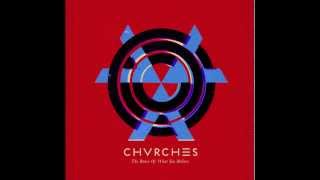
Watch the official Science/Visions
music video
What the song is really about
A clear reading is that the song captures a moment of departure. The opening commands, including Breathe
and Don't speak
, sound like someone trying to stay calm during a crisis. Soon after, the lyrics move from body to spirit, suggesting a person is no longer fully present in a physical sense.
Interpretation: This could be literal death, near-death, or an emotional disappearance. The key image is the line about a circuit of consciousness
. That phrase turns the mind into an electrical system, which blends scientific language with spiritual fear. The person in the song is not just losing someone; they are trying to understand what a self really is when the body begins to fail.
Where science meets the unseen
The title matters a lot. "Science" suggests reason, medicine, anatomy, and proof. "Visions" points to dreams, intuition, religion, and altered states. Instead of picking one side, the song brings them together.
That idea shows up in the lyrics' movement. The words describe breathing, heart rate, and the body, then jump toward permanence, shadow, and states of consciousness. The result is a song about the limits of explanation. Facts can describe what the body does, but they may not fully explain what it means when someone is still here one second and gone the next.
This is where the chorus lands hardest. A line about a mind full of questions
makes the song feel less certain, not more. The speaker is not claiming truth. They are searching.
A voice trying to hold on
The repeated refrain gives the song its emotional center. Instead of telling a story with lots of details, it keeps circling one sensation: the speaker can sense another person fading.
I hear your breathing
I feel you leaving
Those lines are simple, but that is why they work. One phrase focuses on the body, something measurable and close. The other focuses on loss, which is harder to define. Together, they show the whole conflict of the song. A person can hear breath and still feel absence arriving.
Interpretation: The "you" may be a dying loved one, but it could also be the self. The song can be heard as someone observing their own dissociation, panic, or spiritual split. That ambiguity gives it staying power.
Symbols that deepen the mystery
Several images sharpen the song's themes:
- Light and shadow: The contrast between day and night suggests dual states, such as life and death, reason and fear, or public calm and private dread.
- Current and circuits: Electrical words make consciousness feel both modern and fragile.
- Questions: The song treats uncertainty as part of being human, not a weakness.
- Purification: The idea of a current that cleanses hints at ritual, healing, or passing into another state.
The most striking detail from band history supports this reading. In Stereogum's oral history, the group said some lyrics were inspired by the Tibetan Book of the Dead. That does not make the song a direct retelling of Buddhist teaching, but it does explain why the words feel concerned with transition, release, and what happens around the moment of death.
How the production carries the meaning
CHVRCHES built their early style from synth-pop hooks, but they also came from indie, rock, and darker electronic influences. "Science/Visions" lets those darker instincts lead. The beat feels severe, the synths feel cold, and the vocal layers create a sense of echoing distance.
That matters because the production mirrors the lyrics. Repetition creates a trance state, almost like thought loops during grief or panic. The harmonies and chromatic movement add unease, so even the prettier vocal moments never feel safe.
According to the band's 2023 reflections, live versions later became more aggressive, with post-punk and Nine Inch Nails energy. That evolution makes sense. The studio version already sounds like a struggle between human breath and machine force.
Why the song still stands out
The meaning of Science/Visions CHVRCHES lasts because it never explains too much. It speaks in short, stark images and lets the listener connect them. Some will hear a deathbed scene. Others will hear anxiety, dissociation, or spiritual awakening.
What seems most solid is this: the song is about standing at the edge of understanding. It asks what remains when logic reaches its limit and feeling takes over. In that way, "Science/Visions" is one of CHVRCHES' clearest early statements of their signature contrast: bright pop form carrying dark, difficult ideas.
Final takeaway
"Science/Visions" turns a private moment of fear into something cosmic. It uses the language of bodies, machines, and mystery to ask what consciousness means when someone begins to slip away.
That is why the song feels so unsettling and so powerful. It does not solve the riddle between science and spirit. It lets both stay in the room.
Disclaimer: This article offers interpretation based on the lyrics, recording context, and published band comments. Song meanings can remain open, and listeners may hear something different.







