
Respire encore by Clara Luciani
The meaning of Respire encore Clara Luciani starts with a simple idea: after a long period of stillness, people want to feel alive in their bodies again. This song does not describe recovery in quiet, reflective terms. Instead, it throws the listener into bars, dance floors, sweat, noise, and motion.
"Respire encore" - Clara Luciani
Ah-ah, ah-ah
Ah-ah, ah-ah
Loading lyrics...
Unable to load lyrics
We're unable to display the lyrics at this time. Please try again later.
Clara Luciani released the track as part of the campaign around Cœur, her second album, and the song was written by Luciani, Ambroise Willaume, and Pierrick Devin. Those credits matter because the song blends Luciani’s cool pop presence with a strong sense of rhythm and uplift. Factually, Cœur followed her breakthrough debut and helped confirm her place in modern French pop.[1][2]
A comeback anthem disguised as a dance song
On the surface, the song follows a woman moving through a nightclub scene. She smells bodies around her, sees people dancing in darkness, and wants to be pulled into the crowd. But the deeper point is not romance alone. It is release.
Very early, the lyric presents someone who does not want rest or distance. She does not want to sit still; she wants attention, movement, and spinning contact. The key phrase l'immobilité forcée
points to a period of imposed stillness. That line strongly suggests a post-lockdown reading, where social life was paused and the body itself seemed restrained.
Interpretation: The woman in the song may be one person, but they also feel symbolic. They can stand for anyone trying to recover pleasure, confidence, and momentum after isolation.
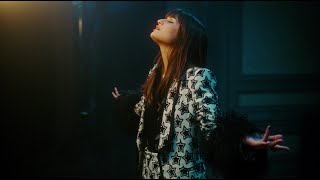
Watch the official Respire encore
music video
Why “breathing again” matters so much
The title phrase is the song’s emotional core. When the chorus insists on respirer encore
, it means more than staying physically alive. It suggests reclaiming a fuller life.
Breathing in this song is tied to crowded spaces, dancing, and even minor chaos. The repeated demand for things to move and shake turns breath into a sign of re-entry into the world. The body is no longer locked away; it is active, visible, and connected.
That is why another repeated phrase, Il faut qu'ça bouge
, matters so much. The song treats motion as medicine. Not perfect healing, but necessary healing.
Il faut qu'ça bouge
il faut qu'ça tremble
il faut qu'ça transpire encore
This short sequence captures the song’s logic: recovery is physical first. People move, tremble, sweat, and only then begin to feel whole again.
The nightclub is a symbol, not just a setting
The bars and dance floors are vivid, but they are not there only for atmosphere. They symbolize a return to shared life. The lyric about le bordel des bars
embraces mess, noise, and imperfection. That is important because the song does not dream of a clean, controlled rebirth. It wants the real world back, with all its awkward energy.
The woman at the center is described in motion, almost at the point of collapse, yet she keeps going. Her neck grazes the dance floor; her heart syncs with the strobe lights. Those images show how close joy can be to exhaustion. Re-entering life is thrilling, but it can also feel overwhelming.
Interpretation: That tension may be why the song feels so persuasive. It does not pretend that freedom is calm. It presents freedom as intense, sweaty, and slightly unstable.
How the sound carries the message
The production helps explain the meaning of Respire encore Clara Luciani just as much as the words do. The song leans on a driving beat, bright pop textures, and a chant-like chorus that is easy to join. It sounds communal, almost built to be shouted back in a crowd.
Luciani’s style often draws from disco, French pop, and sleek retro influences, and that background matters here.[3] The groove keeps pushing forward, which mirrors the lyric’s refusal to sit still. Even the repeated vocal patterns and syllables create momentum. They feel less like detailed storytelling and more like a collective pulse.
Because Pierrick Devin and Ambroise Willaume are among the writers, the song also carries a polished pop structure. The hook arrives quickly, repeats often, and works almost like a mantra. Instead of asking listeners to think their way out of isolation, it asks them to dance their way back into feeling.
A song about desire, but not only romantic desire
There is flirting in the song. The central figure wants to be noticed, approached, and spun around. But those details serve a larger theme: being seen again.
After isolation, desire can mean more than attraction. It can mean wanting proof of presence. To be looked at is to re-enter the social world. To dance with others is to leave numbness behind.
That is why the line about needing to relearn drinking lands as more than a joke. It suggests relearning rituals of public life. Small habits once taken for granted now feel new again.
Final takeaway
In the end, “Respire encore” is a celebration of recovery through the body. It turns nightlife into a metaphor for waking up after emotional and social shutdown. The song says that life returns not in one grand speech, but in sweat, breath, rhythm, and contact.
For many listeners, that is the lasting meaning of Respire encore Clara Luciani: it is a pop song about dancing, but also a sharp portrait of what it feels like to come back to life.
Disclaimer: This interpretation is based on the lyrics, musical context, and public release history. As with any song, listeners may hear meanings that differ from the ones discussed here.








