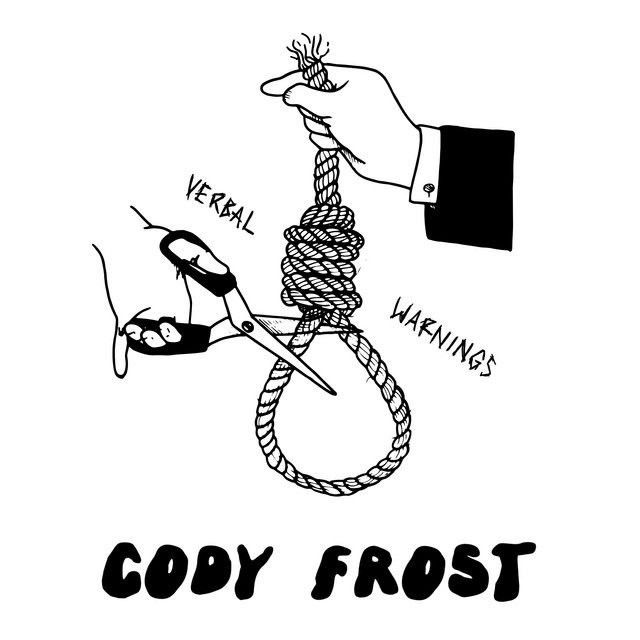
verbal warnings by Cody Frost
Cody Frost’s “verbal warnings” feels like a confrontation that has been building for a long time. At its core, the meaning of verbal warnings Cody Frost is about refusing to be talked down to, controlled, or trapped by someone who mistakes pressure for power.
"verbal warnings" - Cody Frost
To sit there and listen and plea
And this is the problem, you see
Loading lyrics...
Unable to load lyrics
We're unable to display the lyrics at this time. Please try again later.
The song does not sound calm or distant. It sounds cornered, then defiant. That shift matters, because the lyrics move from describing manipulation to tearing it apart.
A song about control finally meeting resistance
On the surface, the track captures a toxic conversation. The other person seems to expect obedience, silence, and gratitude. Early lines describe a voice that wants the speaker to sit, listen, and beg. In plain terms, the song rejects that setup.
The key emotional move comes when the speaker refuses to play along. When Frost writes that their determination is strong and that the other person has not really “got” them, the song becomes less about fear and more about resistance.
Interpretation: This can be heard as a response to any unequal relationship where one side uses language as a weapon. That could mean a boss, an industry figure, a partner, or a broader social system.

Watch the official verbal warnings
music video
Who holds the power here?
One of the strongest ideas in the song is that control often hides inside ordinary speech. Commands like hold your tongue
and hush-like language are not just rude; they are tools for shrinking somebody else.
That is why the title “verbal warnings” is effective. A warning sounds minor at first, but here it becomes a sign of a larger structure of intimidation. The other person may not be physically present as a threat, yet their words still tighten around the speaker.
That tension peaks in the image of a noose 'round my neck
. The song is not subtle there. It turns emotional pressure into a picture of suffocation. The speaker feels trapped, watched, and forced to stay still.
The chorus turns fear into action
The repeated hook, break it down
, is the song’s mission statement. In context, it suggests tearing apart false authority piece by piece. Instead of accepting the other person’s version of events, the speaker wants everything exposed and reduced to what it really is.
That is why the follow-up line no more hiding underground
matters so much. The song stops being only personal. It becomes a call to bring hidden behavior into the open.
Interpretation: The chorus can be read two ways at once:
- breaking down the manipulator’s control
- breaking down the speaker’s own fear and silence
Those ideas work together. The moment somebody names a power game, that game gets weaker.
The song’s class tension sharpens its message
Midway through, the lyrics widen the frame. There is a pointed contrast between a man on the throne
and people who cannot “live for free.” That detail brings money, status, and survival into the song.
This matters because it suggests the conflict is not just emotional. It may also be economic. The speaker seems to be answering someone who pretends struggle is simple, or who acts as if everyone has the same choices.
Interpretation: This section gives the meaning of verbal warnings Cody Frost a social edge. The song can be heard as a protest against people who speak from comfort while others deal with real pressure, bills, and dependence.
“Your wall is only thin” is the song’s big reveal
The repeated phrase your wall is only thin
changes the balance of power. Up to that point, the other figure seems dominant. Then the song says their defenses are weak.
That line suggests that intimidation is partly performance. The speaker now sees through it. What looked solid is fragile. What sounded commanding is insecure.
This idea connects to another line about seeing through “games.” Taken together, the lyrics say the manipulator’s strength depends on other people believing in it. Once the speaker stops believing, the whole structure starts to crack.
How the sound carries the meaning
Frost is known for blending alternative, punk, and heavy pop energy in a way that puts emotional strain right on the surface. The songwriting credits provided here list Cody Frost, Dan Weller, and Geoff Swan, and that makes sense for a track that feels both sharp-edged and hooky.
Musically, “verbal warnings” leans on repetition, tension, and impact. The downward pull in the chorus mirrors the idea of dismantling something. The insistent rhythm feels like pressure building in the body, while the vocal delivery pushes between agitation and command.
That matters because the production does not soften the lyrics. It reinforces them. The track sounds like someone pacing, clenching their jaw, then finally speaking clearly enough to cut through the noise.
The clearest way to read the ending
By the end, the repeated phrases start to feel almost obsessive, but in a purposeful way. Repetition becomes a tactic. The speaker keeps naming the truth until it cannot be buried again.
So what is the final takeaway? The song is about reclaiming a voice from someone who tried to manage it. It is angry, but its anger has direction. It wants exposure, not chaos.
For listeners, that makes the song feel personal and political at once. It speaks to anyone who has been patronized, cornered, or told to stay quiet, then decided not to.
Disclaimer: This interpretation is based on the lyrics provided and publicly available artist context where confirmed. As with most songs, listeners may hear different meanings in “verbal warnings.”









