Trouble In Town by Coldplay
Why the meaning hits so hard
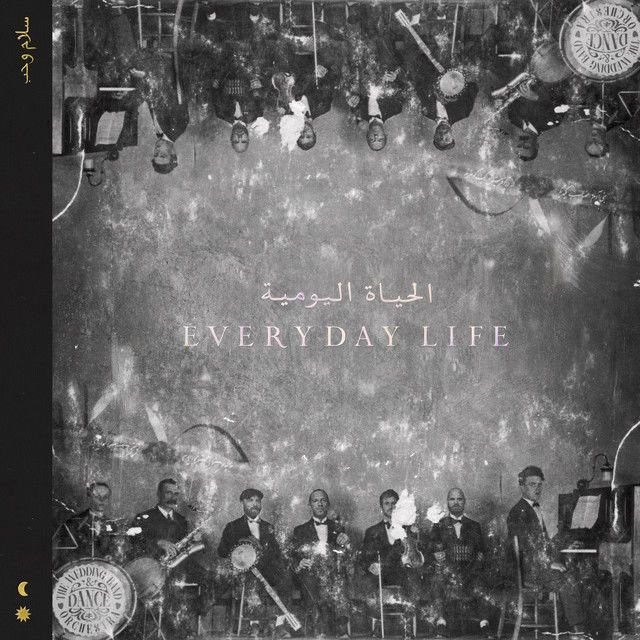
The meaning of Trouble In Town Coldplay comes through fast: this is a song about racial injustice, police violence, and the feeling of being trapped inside a system built to intimidate. Released on Everyday Life in 2019, the track marked one of Coldplay's most openly political statements. Reports around the song describe it as a response to racial politics in America, and the band tied proceeds from the song to the Innocence Project and the African Children's Feeding Scheme, showing that its social concerns were not just lyrical decoration.
"Trouble In Town" - Coldplay
Because my sister can't wear her crown
There's trouble, there's trouble in town
Loading lyrics...
Unable to load lyrics
We're unable to display the lyrics at this time. Please try again later.
Factually, the song appears on Coldplay's eighth studio album, Everyday Life (Songfacts). It was written by Chris Martin, Guy Berryman, Jonny Buckland, and Will Champion.

Watch the official Trouble In Town
music video
A cry against systems, not just one bad moment
At the lyric level, the song keeps returning to the idea that public violence is not random. When the narrator says trouble in town
, they are not talking about vague unrest. They are pointing to a town, a country, and a civic order where some people are cut down while others hold power.
The references to a brother and sister broaden the pain. A line like cut my brother down
suggests deadly violence, while the image of a sister unable to wear her crown points to dignity being denied. Interpretation: together, those images turn family members into symbols for a wider Black community living under threat and disrespect.
That social focus becomes even clearer with Brother Brown
. Coverage of the song links that wording to Michael Brown and the 2014 Ferguson shooting (Songfacts). Even without naming every case directly, Coldplay frame the song around repeated patterns of injustice.
How the chorus turns pain into pressure
The chorus is simple, but that simplicity is the point. When the song repeats no shelter
and no peace
, it moves from politics into daily life. Safety is missing. Rest is missing. Release is missing.
This matters because the song is not only accusing institutions; it is showing what those institutions do to the body and mind. The feeling is constant surveillance, constant threat, and constant exhaustion. The later idea of getting more policing instead of comfort sharpens that message: authority shows up, but care does not.
Interpretation: this is why the song feels heavier than a protest slogan. It is about what injustice feels like hour by hour.
The spoken interlude changes everything
The most disturbing part of the track is the real audio sample in the middle. Reporting identifies it as a 2013 Philadelphia traffic stop involving officer Philip Nace and two Black men (Songfacts; Coldplay Wiki). The officer's aggression and profanity are not scripted drama. They are a piece of reality dropped into the song.
That choice changes how listeners hear the rest of the track. Before the sample, the song could sound symbolic. After it, the theme becomes painfully concrete. The fear, humiliation, and imbalance of power are no longer abstract.
There must be some way
Or it's gonna kick off someday
Those background lines are brief, but they matter. They sound like a plea for change before pressure explodes into open conflict. Coldplay are not glorifying chaos; they are warning what happens when people are denied justice for too long.
Sound design as moral argument
Production carries as much meaning as the lyrics. Reviews noted the track's tense piano rock build, jagged guitar, and detuned synth textures, with some critics hearing echoes of A Rush of Blood to the Head in its intensity (Coldplay Wiki summarizing NME).
The arrangement starts controlled, then becomes harsher and more crowded. That shape mirrors the song's subject. Social pressure builds. Fear builds. Anger builds. By the time the spoken sample arrives, the music feels less like a backdrop and more like a tightening environment.
Chris Martin's vocal also matters. He does not sing this one with airy distance. He sounds strained, urgent, and sometimes nearly cornered. That delivery keeps the song human, even when the message is broad.
Why the ending does not stay in despair
After all that tension, the closing section brings in children from the African Children's Feeding Scheme in Soweto singing Jikelele
(Songfacts). That shift is striking.
Interpretation: the ending does not erase the song's anger. Instead, it opens the frame. The voices suggest survival, memory, and collective strength beyond one city or one incident. Where the middle of the song sounds boxed in by authority, the ending sounds communal and borderless.
That contrast may be the key to the meaning of Trouble In Town Coldplay. The song says the trouble is real, historical, and ongoing. But it also suggests that witness, solidarity, and shared voices can answer isolation.
The video adds another layer
The official video, directed by Aoife McArdle, reworks George Orwell's Animal Farm in a modern urban setting, using anthropomorphic animals and political satire (Rolling Stone). Pig politicians and predatory police imagery make the song's critique even more direct.
That visual choice fits the track well. Orwell's story is about power disguising itself as order. "Trouble in Town" argues something similar: systems often present themselves as protection while delivering fear and inequality.
Final takeaway
So what is "Trouble in Town" really saying? At its core, it is a protest song about racism and policing, but also a song about emotional siege. It shows how public injustice becomes private pain.
Coldplay take a familiar phrase, a few sharp images, and a real-world audio sample, then build a song that feels both mournful and accusatory. Interpretation: their message is that the trouble was never just in the streets. It was in the system all along.
Disclaimer: This interpretation combines documented context with informed reading of the lyrics, sound, and visuals. Meaning can vary from listener to listener.








