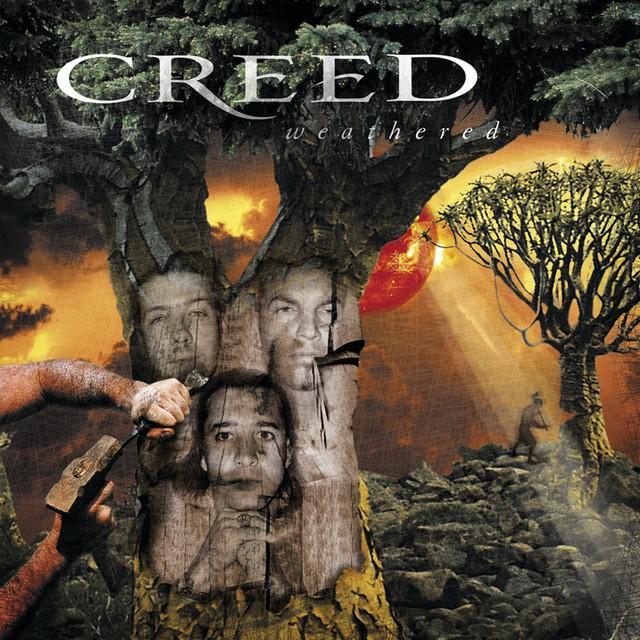
Weathered by Creed
Why the meaning of Weathered Creed still hits hard
The meaning of Weathered Creed comes through as a portrait of someone who feels worn down by life but refuses to fully surrender. The song is the title track from Creed's 2001 album Weathered, later released as a single in 2002. It was written by Mark Tremonti and Scott Stapp, and the song has often been tied to the emotional strain surrounding the band during that era.
"Weathered" - Creed
I can't seem to tame my mind
Slings and arrows are killing me inside
Loading lyrics...
Unable to load lyrics
We're unable to display the lyrics at this time. Please try again later.
Factually, Weathered was Creed's third studio album, released on November 20, 2001, and the title track arrived as a single on November 6, 2002. Album credits list John Kurzweg, Kirk Kelsey, and Creed among the key producers on the album, while the song itself is commonly credited to John Kurzweg's production work. The album was also a major commercial success, debuting at No. 1 on the Billboard 200 and staying there for eight weeks. These facts are widely documented by sources such as Wikipedia and Songfacts.

Watch the official Weathered
music video
A portrait of damage, not defeat
At the center of the song is a speaker lying awake, mentally trapped, and unable to quiet their own thoughts. Early lines about a long night and inner pain set up a mood of anxiety and exhaustion. When the song says long, dark night
, it is not just describing time of day. It suggests depression, isolation, and a mind that will not rest.
The next idea deepens that feeling. The speaker admits they may not be able to accept the life they have. That confession matters because it turns the song from vague sadness into something more painful: a struggle with identity and reality itself. They are not only hurt; they feel alienated from their own life.
The chorus turns pain into body imagery
The most memorable part of the song is the refrain built around rusted and weathered
and barely holding together
. Those images make emotional pain feel physical. Rust suggests time, neglect, and corrosion. Weathering suggests exposure to harsh conditions over a long period.
This is why the chorus lands so strongly. It is not about one dramatic wound. It is about slow damage. The phrase it just won't heal
makes that clear. Whatever happened to the speaker has lasted long enough to shape who they are.
Interpretation: Many listeners hear this as a song about burnout and depression. That reading fits the lyric's repeated sense of exhaustion and numbness. It also fits later comments associated with the album era, where Scott Stapp described the title-track lyrics as him sharing his heart and soul while dealing with sadness, pressure, and a hidden mental decline, as summarized in sources including the song and album entries on Wikipedia.
Where loneliness meets self-protection
One of the song's strongest ideas is that the speaker may have helped build their own emotional distance. They describe trading love for indifference and becoming hardened. In plain terms, they seem to have learned how not to feel too much because feeling too much hurts.
That creates a tragic loop. Emotional armor protects them, but it also leaves them alone. The lyric about being calloused to the bone
shows this clearly. A callous forms after repeated friction. So the song suggests that pain has not only injured the speaker; it has reshaped their personality.
A turn toward light, struggle, and choice
Midway through, the song opens up from inner pain to larger reflection. The speaker notices light, mortality, pride, belief, and the need to keep going. This is where Weathered becomes more than a confession. It becomes a statement about resilience.
The key emotional pivot comes with the declaration I choose to fight
. That line matters because it does not erase the earlier despair. Instead, it answers it. The song admits the temptation to give up, then deliberately pushes back.
Take all this pride
And leave it behind
One day we die
I choose to fight
Paraphrased, that passage argues that life is short, pride gets in the way, and belief alone is not enough without action. The answer is not perfect healing. The answer is endurance.
Spiritual themes are possible, but not required
Some readers hear religious language in the references to light, earth, pride, belief, and mortality. Songfacts notes that listeners have long discussed spiritual meanings in these lines. That makes sense, especially given Creed's history of being read through a Christian lens.
Interpretation: Still, the song does not need a strictly religious reading to work. It can also be understood as a human struggle with suffering, ego, and survival. In that reading, the bridge is less about doctrine and more about humility and resolve.
How the music carries the message
The sound of "Weathered" is crucial to its meaning. The track sits in Creed's post-grunge and hard rock lane, but research on the song also notes blues elements and a classic-rock feel. Producer John Kurzweg reportedly compared its vibe to bands like Bad Company or Lynyrd Skynyrd, which helps explain its slower, heavier groove.
That groove matters. Rather than racing forward, the song drags with purpose. The guitars feel thick and worn-in, the drums keep a steady weight, and Stapp's vocal delivery sounds strained rather than polished. Mark Tremonti also used an open D5 tuning on the track, which adds to its broad, resonant feel, according to the song's documented background.
All of that supports the lyric's main idea: this is not flashy pain. It is heavy, lived-in pain.
Why the song still connects
Part of the meaning of Weathered Creed is its honesty about damage that does not disappear neatly. The song offers no easy cure. It says a person can be hurt, hardened, tired, and still keep choosing life.
That is likely why it still resonates. It gives listeners a way to name emotional erosion without pretending that one breakthrough fixes everything.
Final takeaway
"Weathered" is about a person shaped by hardship, loneliness, and inner conflict who still reaches for endurance. Its central message is not healing completed, but survival chosen.
Disclaimer: This interpretation blends documented context with critical reading of the lyrics and music. As with any song, listeners may hear different meanings.








