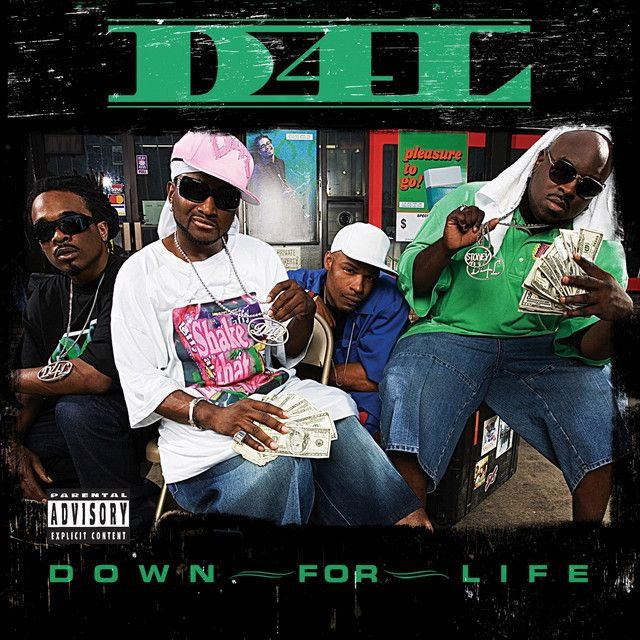
Why 'I'm Da Man' by D4L Is Pure Swagger
The meaning of I'm Da Man D4L starts with a simple idea: they are building a larger-than-life image of status, power, and street authority. This is not a reflective song. It is a victory lap.
"I'm Da Man" - D4L
Got no wife but the white be my girlfriend
Got no wife but the white be my girl
Loading lyrics...
Unable to load lyrics
We're unable to display the lyrics at this time. Please try again later.
D4L came out of Atlanta during the mid-2000s snap and trap boom, a scene tied to club-ready beats, repeated hooks, and local slang that later shaped mainstream rap. In that setting, a song like this works as a public performance of confidence. They are not asking to be believed gently. They are insisting on it loudly.
The Core Message Hides in Plain Sight
At its center, the track is about self-coronation. The repeated hook, I'm the man
, is less a plot point than a slogan. They keep returning to it because the song is designed to make that identity feel undeniable.
The verses expand that claim through familiar rap symbols: money, cars, jewelry, work, and reputation. When they mention keep work
or describe being seen in the club spending freely, they connect success to visibility. In this world, power has to be seen to count.
Interpretation: the song is less about one literal day in the life and more about creating a public myth. They present themselves as untouchable, wealthy, and feared, using repetition to turn boasting into branding.
Watch the official I'm Da Man
music video
Street Status, Not Romance, Drives the Song
One of the song's most striking recurring lines uses drug imagery instead of love imagery. The phrase white be my girlfriend
replaces romance with hustle. Even without taking every line literally, the point is clear: their deepest commitment is to the life that brings money and status.
That matters because it sharpens the song's priorities. There is almost no emotional softness here. Relationships, luxury, and nightlife are all filtered through one question: do they prove dominance?
I'm the man
white be my girlfriend
This brief pairing sums up the track's worldview. Identity comes first, and everything else serves that identity.
How the Verses Build a Persona
The song does not unfold like a story with a beginning, middle, and end. Instead, it stacks images.
A catalog of proof
They mention city units, expensive cars, jewelry, old hustle history, and the ability to make money fast. Phrases like same color T shirts
and poppin' rubber bands
turn everyday objects into status markers. Even basic details become evidence that they are operating at a higher level than everyone around them.
This is important to the meaning of I'm Da Man D4L. The song's logic says that repetition of proof creates rank. If they list enough signs of success, then the title becomes true by force of performance.
Competition is always present
They also define themselves against rivals. Other people are mocked as weak, late, or unable to keep up. The boast only works if someone else is beneath them. That competitive edge gives the song its aggression.
Interpretation: beneath the flashy images, this is a song about hierarchy. They are not just celebrating wealth. They are declaring themselves at the top of a social order.
Atlanta Context Makes the Message Stronger
D4L are closely linked to Atlanta's mid-2000s movement, especially through the breakout success of Laffy Taffy, which topped the Billboard Hot 100 in 2006, according to Billboard. That context matters because Atlanta rap at the time was pushing minimalist hooks, dance energy, and local street vocabulary into national pop culture.
In that climate, "I'm Da Man" sounds like a natural extension of the scene's confidence. It leans on chant-like repetition rather than dense storytelling. The goal is immediate impact.
Shawty Lo, a central D4L figure, later became one of Atlanta's signature voices in street rap, as covered by outlets like The New York Times and Rolling Stone. That later reputation helps listeners hear this song as part of a bigger persona: a local hero turning neighborhood status into music.
The Production Turns Boasting Into Atmosphere
The beat supports the message by leaving lots of space around the vocals. That kind of production lets every repeated line hit harder. Instead of crowding the track with melody, the song relies on rhythm, bounce, and blunt delivery.
There is a club function here too. A hook like I'm the man
is built for group response. They say it, and the room can say it back. That call-and-response feel turns individual bragging into shared energy.
Why the sound matters
A few production choices shape the meaning:
- Repetition makes the persona feel unavoidable.
- Sparse instrumentation keeps attention on the claims.
- A heavy, bouncing rhythm connects street talk to club power.
- The vocal delivery sounds direct, not doubtful.
Interpretation: the beat does not question the lyrics. It backs them up. Everything in the sound says certainty.
Is the Song Meant to Be Taken Literally?
Not fully. Like many rap boasts, the song mixes real-world detail, exaggeration, and persona-building. That does not make it fake; it makes it performative. They are speaking in a tradition where confidence itself is part of the art.
So the best way to hear the track is not as a diary entry. It is a statement piece. The meaning of I'm Da Man D4L lies in how completely they commit to that statement.
Why the Song Still Connects
Even listeners who do not share the song's world can understand its appeal. It offers a fantasy of total certainty. There is no hesitation, no apology, and no self-doubt.
That is why the song works as more than a list of flashy details. It captures a rap tradition where identity is built through repetition, sound, and public style. They are telling listeners who they are, over and over, until the claim feels bigger than the facts.
In the end, "I'm Da Man" is about swagger as survival, performance, and power. It turns self-belief into a chant.
Disclaimer: This interpretation is based on the lyrics, performance style, and available cultural context. As with most songs, some meanings remain open to listener interpretation.








