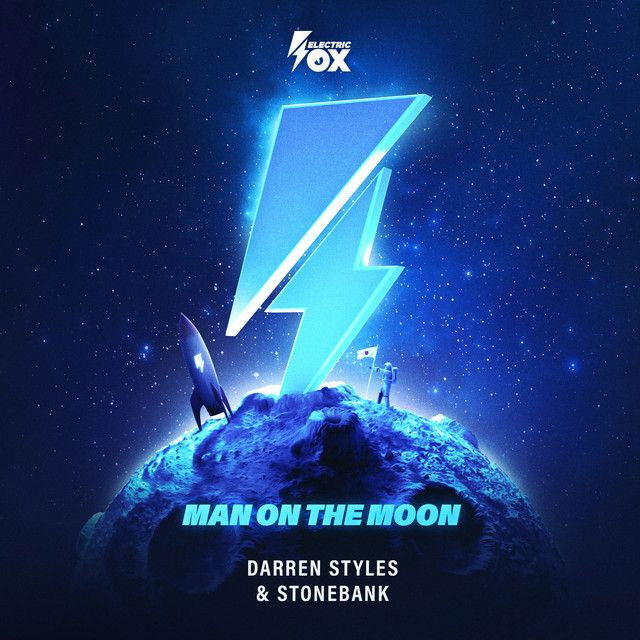
Why ‘Man On The Moon’ Feels So Direct
The meaning of Man On The Moon Darren Styles, Stonebank is easy to feel even before it is fully explained. This is a song about distance, desire, and the need to reach someone as quickly as possible. Its language is simple, but that simplicity is the point: they present love as a mission so powerful that even a trip to the moon feels like a fair comparison.
"Man On The Moon" - Darren Styles, Stonebank
Wishing the rocket would go faster, mm
All the stars remind me of you, yeah, they do
Loading lyrics...
Unable to load lyrics
We're unable to display the lyrics at this time. Please try again later.
Darren Styles is a major name in UK hardcore and dance music, while Stonebank is known for high-energy electronic production through the Monstercat scene. Those backgrounds matter because the song’s emotional message is carried not by dense storytelling, but by speed, lift, and repetition. The result is a track that turns yearning into momentum.
The Heart of the Song Is Urgency
At its core, the song describes someone moving toward another person and hating the delay. The speaker frames themselves as a man on his way
, which makes the whole song feel active rather than reflective. They are not sitting with heartbreak. They are already in motion.
That is why the image of the moon works so well. The moon is far away, difficult to reach, and tied to wonder. By using that image, the song enlarges a common feeling: missing someone so much that normal travel or time starts to feel unbearable.
When the lyric mentions wishing the rocket would go faster
, the song makes its main emotion very clear. This is not just romance. It is impatience mixed with devotion. They want reunion now, not eventually.

Watch the official Man On The Moon
music video
A Small Set of Words, A Big Emotional Scale
One reason the track lands so quickly is that it uses very few ideas, but each one connects tightly. The stars, the rocket, the moon, and the destination all point in the same direction. Nothing distracts from the central message.
The line about all the stars remind me
of the other person deepens that message. The world around them has become charged with memory. Even beautiful things in the sky become reminders of absence. That detail keeps the song from being just a chase anthem; it also becomes a song about fixation and emotional saturation.
Who Is Speaking, and to Whom?
Factual reading: the lyric voice is first person, speaking directly about a journey toward a specific “you.”
Interpretation: that “you” could be a lover, a partner far away, or even an ideal of connection itself. Because the words are broad, listeners can map their own story onto the song. That openness helps explain why the track feels universal despite its very limited lyric sheet.
Why the Repetition Matters So Much
The repeated phrase I'm on my way to you
is the emotional engine of the track. It functions almost like a vow. Every return to that line strips away extra thought and leaves only commitment.
In many electronic songs, repetition is there to support the drop. Here it does that, but it also shapes meaning. The song sounds like a mind locked on one outcome. There is no second plan, no doubt, and no detour.
That repeated focus can suggest two things at once:
- romantic dedication n- emotional obsession
Interpretation: the song sits in a productive blur between healthy determination and overwhelming need. That ambiguity is part of its appeal.
Space Imagery Without Sci-Fi Distance
Even though the song talks about the moon, it does not feel cold or futuristic. The imagery is cosmic, but the emotion is very human. Space here is not about technology or exploration for its own sake. It is a metaphor for separation.
A short multi-line section shows how tightly the song links cosmic scale with personal feeling:
I'm just a man on his way
to the moon
All the stars remind me
I'm on my way to you
Paraphrased, the song says that every huge image in the sky still points back to one person. That move shrinks the universe into a private love story.
How the Sound Sells the Meaning
The production style associated with Darren Styles and Stonebank helps explain why the song feels uplifting instead of crushed by sadness. Fast tempo, bright synths, and a driving beat turn longing into forward movement. Rather than sitting in loss, the track rushes through it.
That matters for the meaning of Man On The Moon Darren Styles, Stonebank. The song does not frame love as passive waiting. It frames love as motion, propulsion, and effort. The instrumental energy acts like the rocket mentioned in the lyric: it keeps pushing upward.
The vocal approach also supports this. The melody is clean, direct, and easy to latch onto. There is very little verbal complexity, so the listener focuses on feeling. In dance music, that kind of clarity can be more powerful than detailed narrative.
The Most Plausible Readings
Reading One: A Love Song About Distance
This is the clearest interpretation. Someone is far away, and the speaker wants to reach them as fast as possible. Everything in the song supports that reading.
Reading Two: A Song About Hope Itself
Interpretation: the “you” may also represent peace, home, or emotional completion. In that reading, the moon trip becomes a symbol of how hard people work to reach the thing that will make them feel whole.
Both readings fit because the song keeps its language broad and emotionally focused.
Why the Song Connects So Easily
The track succeeds because it takes one feeling and scales it up to the size of the sky. It gives listeners a clean, memorable image for emotional distance, then pairs that image with a rush of sound that feels like movement.
That is why the song can feel both huge and simple. It says very little, but what it says is clear: love can make any distance feel impossible, and hope can make even impossible distance feel crossable.
Disclaimer: This interpretation is based on the song’s lyrics, performance, and production, and should be read as informed analysis rather than confirmed artist intent.








