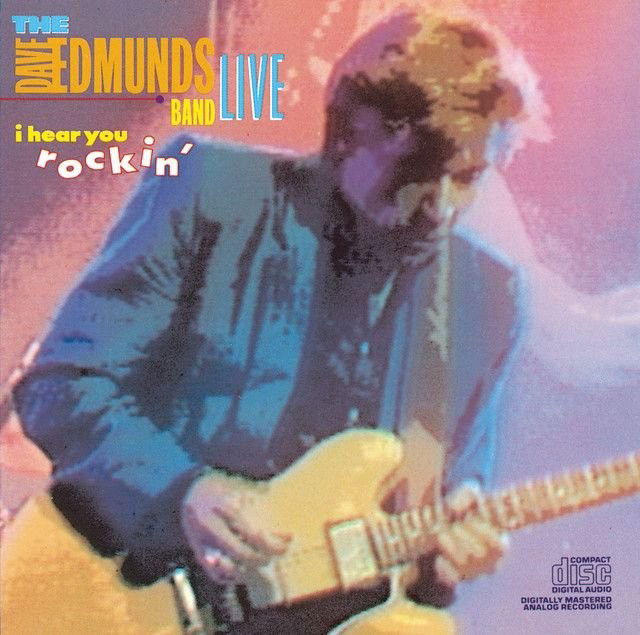
Why Dave Edmunds' 'I Hear You Knocking' Hits Hard
The meaning of I Hear You Knocking Dave Edmunds starts with a simple scene: an ex comes back too late, and the door stays shut. That plain setup is the song's power. It turns hurt into backbone.
"I Hear You Knocking" - Dave Edmunds
Now you're knocking on my door
I hear you knocking, but you can't come in
Loading lyrics...
Unable to load lyrics
We're unable to display the lyrics at this time. Please try again later.
Dave Edmunds did not write the song; it was first recorded by Smiley Lewis in 1955 and written by Dave Bartholomew, with Pearl King used as a credit name. But Edmunds' 1970 version changed the feel so strongly that many listeners now hear it as his signature statement. His remake became a huge hit, reaching No. 1 in the UK and No. 4 in the U.S., according to Wikipedia.
A Breakup Song About Boundaries
At its core, this is a rejection song. The speaker is not confused, romantic, or torn. They have already lived through the breakup, already begged, already been hurt, and now they are done.
That is why the repeated line I hear you knocking
matters so much. It is not just about someone at a literal door. It is about emotional access. The ex wants to return, explain, maybe lie, maybe restart things. The answer is still no.
The chorus makes that refusal blunt with you can't come in
. In plain language, the speaker is saying: they had their chance. Now the person who walked away has lost the right to come back and act like nothing happened.

Watch the official I Hear You Knocking
music video
How the Story Unfolds
The song works because it tells a full emotional timeline in a few verses:
- The ex left long ago.
- The speaker once pleaded for them to stay.
- Now the ex returns, asking for another chance.
- The speaker recognizes the pattern and refuses.
That middle step is crucial. When the lyric refers to begging and then hearing all your lies
, it shifts the song from simple anger to earned self-protection. This is not pettiness. It is someone learning from experience.
The Hook Turns Pain Into Control
Every time the chorus comes back, it sounds less like a complaint and more like a ruling. The speaker is not arguing the case anymore. They are delivering the verdict.
I hear you knocking
but you can't come in
Those two short lines are the whole drama. One line admits contact; the next sets the boundary. That balance is what makes the song feel so satisfying.
What the Lyrics Suggest Beneath the Surface
Interpretation: The door can be heard as more than a door. It stands for the speaker's heart, trust, and private life. The ex is outside because they chose to leave that space before.
Another revealing line is go back where you been
. On the surface, it is a sharp send-off. Underneath, it says something stronger: the speaker will not rescue someone from the consequences of their own choices.
There is also a streak of pride in the line about a used-to-be
. That phrase reduces the old relationship to the past tense. The speaker is not just saying the romance is over. They are saying it belongs to another chapter.
Dave Edmunds Gave It a New Personality
Part of the meaning of I Hear You Knocking Dave Edmunds comes from sound, not just words. Smiley Lewis's original was a New Orleans R&B performance with a rolling, piano-led groove. Edmunds kept the basic 12-bar structure, but he transformed the mood.
His version is leaner, tougher, and more mechanical in rhythm. Songfacts notes that Edmunds shifted the feel from the older swinging style into a straighter rock beat and played nearly all the instruments himself on the recording at Rockfield Studios. That matters because the record sounds like one person locking in on one idea: no more second chances.
Guitar as Emotional Meaning
The guitar lines do a lot of narrative work. Instead of warm piano triplets inviting the listener in, Edmunds uses clipped riffs and a sharp slide-guitar break. The sound feels like a slammed door.
His vocal also helps. It is cool rather than wounded. Even when the lyric remembers past hurt, the performance does not collapse into sadness. It stays firm. That gives the song its emotional twist: the speaker has already done the crying offstage.
Why the Record Felt So Fresh in 1970
Edmunds recorded the song after hearing Smiley Lewis on the radio and realizing its simple structure could support a fresh backing. He later said the tune was a simple 12-bar thing
, which helps explain why the remake feels both old-school and immediate.
That mix of vintage songwriting and modern attack gave the single wide appeal. It nodded to 1950s rhythm and blues while fitting neatly into the roots-rock revival of the early 1970s. Even John Lennon praised it, briefly calling it a great simple rock record, a sign of how strongly Edmunds' version connected across scenes and generations.
A Song of Revenge, or Self-Respect?
Interpretation: Some listeners hear triumph, even a little revenge. The tables have turned, and the ex is finally the one left outside. That reading fits.
But the deeper reading is self-respect. The speaker is not chasing revenge for its own sake. They are protecting themselves from a love they know is bad news. The lyric says that directly when it suggests this kind of love is not good for them. That is the song's clearest message.
Why It Still Works
The song lasts because almost everyone understands the feeling behind it: the moment when apology arrives after trust is gone. The writing is spare, the hook is unforgettable, and Edmunds' production gives the message steel.
In the end, the meaning of I Hear You Knocking Dave Edmunds is not just refusing an ex at the door. It is about learning that closure can sound confident, catchy, and loud.
Disclaimer: This interpretation separates documented facts about the song's history from critical reading of its lyrics and sound. Meaning can vary from listener to listener.








