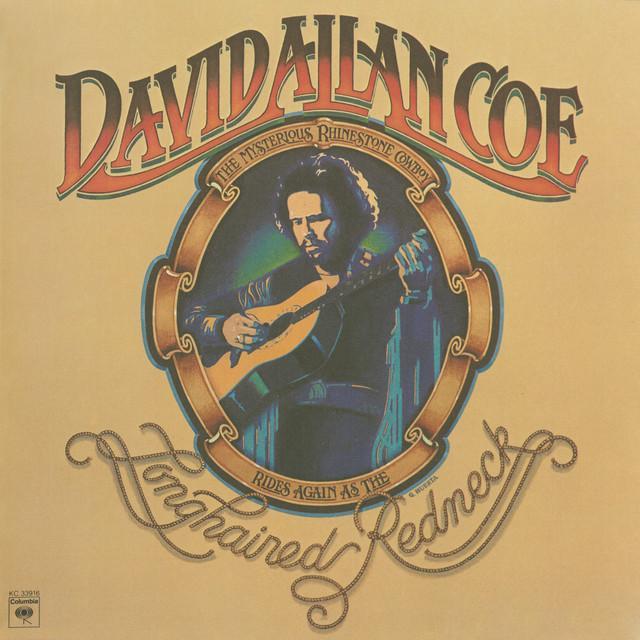
Longhaired Redneck by David Allan Coe
A Rebel Song About Who Gets to Belong
The meaning of Longhaired Redneck David Allan Coe comes down to one big idea: identity is more complicated than appearances. The song is a challenge to people who think they can sort everyone into simple boxes. Coe’s narrator looks like a drifter, a biker, or a hippie to some people, but he insists that he is still deeply tied to country culture.
"Longhaired Redneck" - David Allan Coe
They'd never come to see me in this dive
Where bikers stare at cowboys who are laughing at the hippies
Loading lyrics...
Unable to load lyrics
We're unable to display the lyrics at this time. Please try again later.
That tension gives the song its force. It is not just about personal pride. It is also about who gets accepted as “real” country. In the song, they stand in a rough barroom where every group is judging another. The room becomes a small map of America’s culture wars in the 1970s.
Watch the official Longhaired Redneck
music video
The Barroom as a Social Battlefield
The opening verse drops listeners into a crowded, hostile scene. Coe describes a dive where bikers, cowboys, and hippies all share the same room, each looking down on the others. The phrase bikers stare at cowboys
quickly sets up a chain of tension, and the song keeps building from there.
This is more than colorful writing. Interpretation: the bar acts like a stage for class, regional, and style conflicts. Nobody feels safe, and nobody seems fully accepted. Even before the chorus, the narrator is caught in the middle of these clashing identities.
That helps explain why the song feels so defensive. When someone in the corner mocks his earrings and hair, the insult is really about authenticity. The critic is saying he does not look country enough. Coe answers not with politeness, but with swagger.
The Chorus Turns Image Into a Statement
The hook is one of Coe’s clearest self-definitions. When he says long hair
cannot hide his roots, he flips an insult into a badge of honor. The song’s key claim is that surface style cannot erase background, values, or toughness.
my long hair just can't cover up my red neckI don't need some turkey
Even in these short lines, the point is clear: they reject gatekeepers. The narrator does not ask for permission to count as country. He declares it. That is why the chorus lands so hard. It is about class pride, regional pride, and artistic pride all at once.
Country Credentials, Performed and Defended
One smart part of the song is how Coe answers image with musical proof. He says he can sing Texas songs, sad songs, and songs linked to country tradition. The line about looking like Merle Haggard and sounding like himself is funny, but it also makes a serious point.
He is measuring country identity in terms of repertoire, voice, and experience, not clean-cut looks. The phrase songs about Texas
matters because Texas in outlaw country often stands for freedom, toughness, and anti-Nashville independence.
There is also humor in the boasting. References to prison, Johnny Cash, and old country songs blur the line between fact and persona. Interpretation: Coe is not simply giving biography. They are building a mythic self-image, one that feels half confession and half tall tale.
Why the Sound Matters So Much
The production supports that message. According to the album entry, the song appeared on Coe’s 1976 album Longhaired Redneck, recorded in Nashville and associated with outlaw country. The track carries a rough, rocking pulse rather than a polished countrypolitan sheen.
That matters because the music itself refuses neat categories. It sounds country, but it also has bar-band swagger. Wikipedia notes that the album featured top session players including Reggie Young, Charlie McCoy, The Jordanaires, and The Nashville Edition. That combination is telling: elite Nashville musicians are helping create a song that pushes back against Nashville judgment.
Interpretation: the arrangement mirrors the lyric’s argument. It blends tradition and rebellion. The rhythm feels rowdy, the vocal delivery sounds confrontational, and the country touches keep reminding listeners that Coe knows exactly where the music comes from.
The Outlaw Context Behind the Song
The song makes even more sense in its era. By the mid-1970s, outlaw country was already a recognizable movement linked with Willie Nelson and Waylon Jennings. But Coe occupied a stranger place within it. As AllMusic notes, his image could make industry people dismiss him even when his songwriting and singing were respected.
That outsider position is central to the meaning of Longhaired Redneck David Allan Coe. He is not only rebelling against mainstream society. He is also pushing back against country radio, country insiders, and anyone who thinks style cancels substance.
Coe later explained the title in simple terms: not every long-haired person was a hippie, and not every one of them would quietly take abuse. That quote helps ground the song. Its core message is not subtle, but it is effective.
Final Meaning: A Fight for Self-Definition
At its heart, this is a song about refusing false labels. Coe presents a narrator who contains contradictions: country and outlaw, flashy and traditional, threatening and funny. That mix is the whole point.
The song says people are often more than the roles assigned to them. In that way, it is both a barroom anthem and a statement about American identity. Interpretation: its staying power comes from how sharply it captures the urge to say, in effect, you do not get to tell me who I am.
Disclaimer: This interpretation is based on the lyrics, historical context, and available sources. Like many songs, it can support more than one reading.







