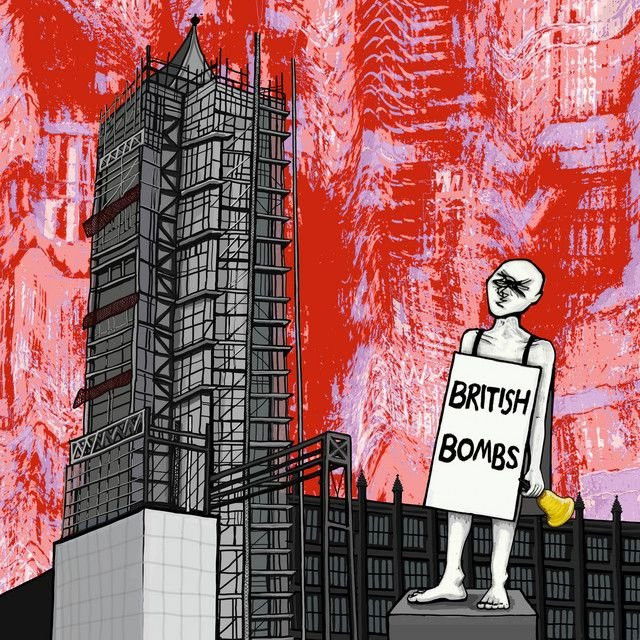
British Bombs by Declan McKenna
Why This Protest Song Still Hits Hard
The meaning of British Bombs Declan McKenna starts with a direct idea: they are attacking the hypocrisy of war politics, especially the gap between patriotic language and the real damage caused by weapons sales and military action.
"British Bombs" - Declan McKenna
Good gravy, did you say it cost a penny or two for you?
We're talking 'bout the bad starts
Loading lyrics...
Unable to load lyrics
We're unable to display the lyrics at this time. Please try again later.
McKenna said as much when discussing the song in 2019, calling it a response to the British arms trade and saying they wanted to write something “outright against war” in any form, as reported by NME and The FADER. That context matters because this is not a vague political song. It names a system and calls out how easy it is for ordinary people to look away.
Released in August 2019 as a standalone single, it arrived after McKenna’s debut album What Do You Think About The Car? and was produced by James Ford, according to The FADER. That polished but urgent sound helps the message land.

Watch the official British Bombs
music video
The Core Message Beneath the Hook
At its center, the song argues that public life often turns war into background noise. Politicians, headlines, and national slogans can make violence sound distant, technical, or even necessary. McKenna pushes back on that.
The chorus is the clearest example. When they repeat Great British bombs in the Yemen
, the point is blunt: national pride and moral language can exist beside real-world destruction. The line is accusatory on purpose. It takes a polished national image and puts it next to the human cost of war.
Another key phrase, fool me again
, suggests repeated deception. The target is not just one leader or one event. It is a cycle of spin, denial, and public forgetting.
A Song About Distance, Memory, and Excuses
How the verses build the argument
The verses show how people absorb violence through media and routine rather than direct experience. References to newspapers, official stories, and dramatic public messaging suggest a culture where people are informed just enough to move on.
When the song mentions we shall remember the dead
, it sounds at first like respect. But McKenna quickly twists that idea. The song suggests that public mourning can become hollow if a country honors victims one day and then returns to business as usual the next.
That is one of the song’s strongest ideas: memory without change is not real accountability.
One day each year, a worry
We shall remember the dead
And we'll remember the dead
But then carry on
In that short passage, the emotional logic of the song becomes clear. Ceremonies, apologies, and solemn speeches do not mean much if policy stays the same.
What Specific Lines Suggest
A few images sharpen the song’s themes without needing long quotation.
my baby brother
with a gas mask brings war fear into family life. It makes distant conflict feel close and childish at the same time.The Mail
points to tabloid framing and the role media can play in narrowing public understanding.wherever the... got oil
connects military action to resources and economic motives.
Interpretation: These details make the song feel less like a speech and more like a collage of modern political life. The listener hears war not only as battlefield violence, but as headlines, slogans, excuses, and national habits.
The Sound Makes the Critique Sharper
One reason the song stands out is its contrast between sound and subject. McKenna told NME they wanted the music to balance bitterness with energy, drawing on a British punk tradition and the example of The Clash.
That influence is easy to hear. The guitars move with bounce and attack, the rhythm feels quick and singable, and the melody is catchy enough to sound almost celebratory. But that is exactly the trick. The bright, charged arrangement makes the song feel like a public chant, which fits a protest message.
Produced by James Ford, the track does not bury its anger in noise. Instead, it turns outrage into momentum. The listener can shout along before fully realizing how severe the lyrics are. That tension mirrors the song’s argument: violent systems often hide behind normal, polished surfaces.
Artist Context Matters Here
McKenna has often mixed pop instincts with political themes, but they were careful in interviews not to frame themselves as only a “political musician.” In NME, they said they mainly love pop, even when making a point.
That helps explain why “British Bombs” works. It is not written like a lecture. It is written like a sharp pop-punk single with enough hooks to pull in listeners who may not expect a song about arms sales, war, and public responsibility.
The single also had a real-world angle: proceeds were donated to charity, as noted by NME and The FADER. That does not change the lyrics, but it supports the sincerity behind them.
Final Meaning: Patriotism Under Cross-Examination
So what is the meaning of British Bombs Declan McKenna? At the simplest level, it is an anti-war song about the British arms trade, public denial, and the habit of expressing sorrow while continuing harmful policies.
Interpretation: On a deeper level, it is also about moral numbness. The song asks how a nation can see itself as decent while benefiting from violence carried out elsewhere. Its anger comes from that contradiction.
That is why the song still feels urgent. It is not only about one place or one year. It is about how easy it is for any country to wrap violence in respectable language and then carry on
.
Disclaimer: This article offers an interpretation of the song based on the lyrics, public statements, and release context. Listeners may hear different shades of meaning.









