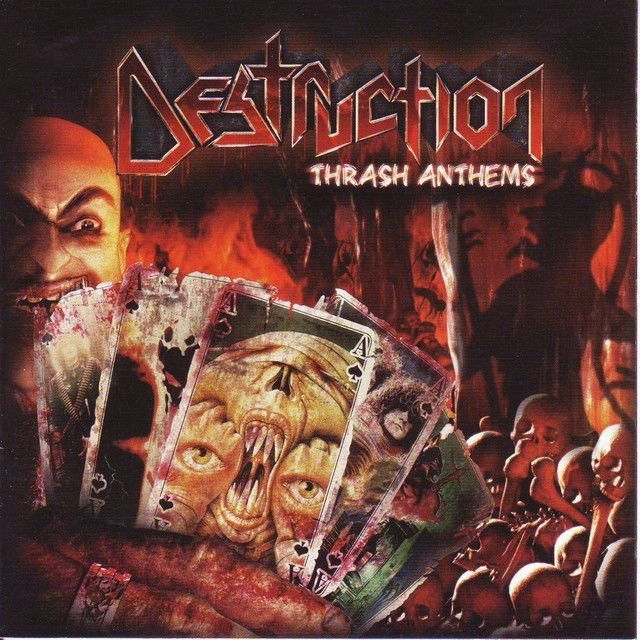
Bestial Invasion by Destruction
Why This Thrash Classic Still Hits Hard
The meaning of Bestial Invasion Destruction comes through fast: this is a song about terror arriving without warning and taking over everything people trust. Destruction build a nightmare scene where sleep, weather, religion, and public order all collapse at once.
"Bestial Invasion" - Destruction
There's a roaring in the air
Impenetrable fog
Loading lyrics...
Unable to load lyrics
We're unable to display the lyrics at this time. Please try again later.
Rather than tell a personal story, they stage an apocalypse. The lyrics move like a disaster film in miniature, beginning with a sleeping world and ending under a new, violent power. That simple structure is a big reason the song feels so effective.
Watch the official Bestial Invasion
music video
The Core Idea Behind the Chaos
At the center, the track imagines an invasion that is more than military. It feels demonic, symbolic, and total. The opening places humanity at its most vulnerable, then introduces unnatural signs in the sky and air. When the lyric points to mankind sleeps
, it suggests more than nighttime. It hints at blindness, complacency, or a world caught off guard.
Soon after, Destruction pile on images of storm and dread. Phrases like impenetrable fog
and thunder rolls
make the attack feel cosmic. The world does not just face enemies; it faces a violent change in reality itself.
Interpretation: the invasion can be heard as a metaphor for any force that sweeps through society and crushes resistance—war, evil, fanaticism, or authoritarian control. The lyrics support all of those readings because they never narrow the threat to one literal event.
How the Song Unfolds Scene by Scene
The narrative works in a few sharp beats:
- The world is asleep and unaware.
- Strange weather signals danger before anyone understands it.
- The attack arrives and panic spreads.
- Evil takes command and replaces the old order.
That movement gives the song its punch. It starts with tension, then turns quickly to public horror. When the lyrics describe people screaming and realizing evil has taken control, the song shifts from warning to aftermath.
The repeated title phrase, Bestial Invasion
, matters because it acts like a stamp on every scene. It does not explain the event in detail. Instead, it names the horror and lets the imagination fill in the rest.
What the Chorus Really Emphasizes
In thrash metal, repetition often works like a weapon, and that is true here. The chorus is less about melody than impact. Each return of the title feels like another wave of attack.
The line about hell storms
rushing over the earth makes the invasion sound unstoppable and larger than human conflict. This is not a border clash or a private fear. It is total domination.
Interpretation: the chorus suggests that evil becomes powerful when it feels inevitable. By repeating the central image instead of explaining it, Destruction create dread through force and simplicity.
Symbols of Fear, Power, and Collapse
Several motifs shape the song’s meaning:
- Sleep: innocence, denial, or unpreparedness
- Fog: confusion and loss of control
- Thunder and lightning: violent arrival
- Hell imagery: moral collapse and anti-sacred power
- Obedience: the end of freedom
One of the harshest moments comes near the end, when the lyrics move from destruction to command. The song no longer just describes terror; it describes submission. The order to pray to a new lord shows that the invasion is spiritual as well as physical.
That is also where the anti-religious shock element appears. In early extreme metal, bands often used blasphemous imagery to provoke, unsettle, and dramatize rebellion. Here, that language helps show a world where old protections fail.
How Destruction’s Sound Carries the Meaning
Destruction emerged from Germany’s first wave of thrash metal and became one of the style’s defining acts, often grouped with Kreator and Sodom in discussions of German thrash history. Their early work is known for speed, aggression, and raw intensity. Those broad facts are well documented in standard band histories and metal reference coverage.
That musical approach is essential to the meaning of this song. The riffs attack in short, sharp bursts. The drumming drives forward like a charge. The vocal delivery sounds urgent and hostile rather than reflective.
This matters because a slower arrangement could have made the lyrics feel theatrical. Instead, the speed makes them feel immediate. The music does not just describe invasion; it performs it.
Artist Context and Writing Credits
The song is credited here to Marcel Schirmer, Michael Sifringer, and Thomas Sandmann. That trio reflects the classic early Destruction lineup that helped shape the band’s raw, foundational sound.
Knowing that context helps with interpretation. Early thrash often pushed imagery to extremes in order to express chaos, disgust, and confrontation. So while the song uses Satanic and apocalyptic language, that does not automatically mean it should be read as literal belief. In metal, such imagery often functions as dramatic symbolism.
A Strong Reading of the Ending
The final section is the song’s bleakest turn. Once death rules and a new law is in command, the invasion becomes complete. The world has not merely been attacked; it has been remade.
Interpretation: this ending can be heard as a warning about what happens when fear becomes obedience. The real horror is not only violence from above. It is the point where people accept domination as the new normal.
Final Take on the Meaning
The meaning of Bestial Invasion Destruction lies in its vision of sudden collapse: social, moral, and spiritual. Through storm imagery, repeated threat, and relentless speed, Destruction turn a short lyric into a vivid portrait of total takeover.
They leave the exact identity of the invader open, and that ambiguity gives the song lasting power. It can sound like a demonic fantasy, a war nightmare, or a metaphor for tyranny.
Disclaimer: This article offers interpretation based on the lyrics, known band context, and the song’s musical style. Meaning in music can remain open to multiple valid readings.








