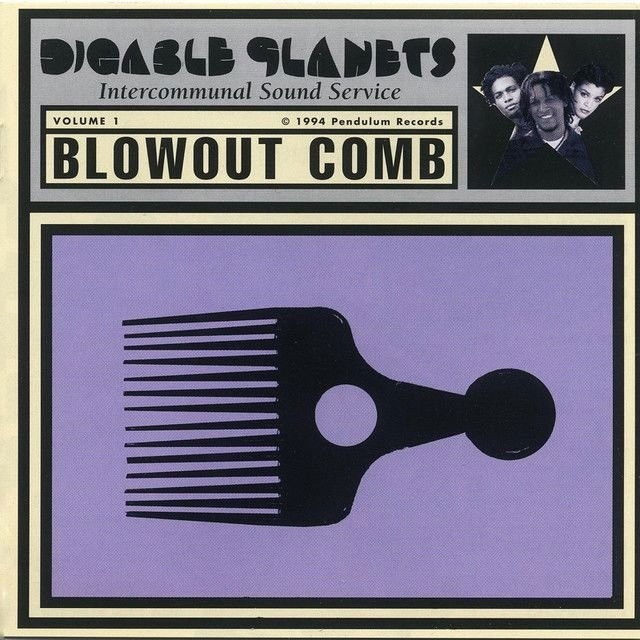
Why “9th Wonder” Feels Bigger Than Brag Rap
The meaning of 9th Wonder (Blackitolism) Digable Planets starts with swagger, but it does not end there. On the surface, the song sounds like a cool, loose celebration of style, borough pride, and emcee confidence. Under that surface, it works as a statement about Black identity, local culture, and hip-hop lineage.
"9th Wonder (Blackitolism)" - Digable Planets
ah yea
whole world
Loading lyrics...
Unable to load lyrics
We're unable to display the lyrics at this time. Please try again later.
Released as a single on September 13, 1994, and later included on Blowout Comb, the track sits inside an album that deliberately pushed Digable Planets toward a more grounded, political, and Brooklyn-centered sound. According to album history, Blowout Comb was released on October 18, 1994, featured DJ Jazzy Joyce on this track, and was built from a mix of live instrumentation and samples while foregrounding inner-city life and Black nationalist ideas (Wikipedia: Blowout Comb).
A Style Record With a Deeper Backbone
The easiest way to hear the song is as a fashion-and-flow showcase. The group talks about hair, clothes, sneakers, fatigues, boroughs, and movement through the city. Phrases like slicker this year
and fresh ass hair
present style as a public language.
But the song is not just saying they look good. Interpretation: it argues that style itself is cultural memory. Afros, baggy fits, camo, and street movement become signs of belonging. On Blowout Comb, that matters because the album’s whole concept leaned into what the group called a more natural Black aesthetic; even the album title refers to the blowout comb and, in the group’s own explanation, the utilization of the natural
and a natural style
(Wikipedia: Blowout Comb).
Watch the official 9th Wonder (Blackitolism)
music video
Brooklyn Is the Real Setting
A major part of the song’s power comes from place. They do not rap about a vague city. They name routes, corners, and neighborhoods, including Myrtle Ave
and Flatbush
, while the hooking shouts widen the map to other boroughs and scenes.
That local detail makes the song feel lived-in. Interpretation: the point is not tourism; it is ownership. They are presenting Brooklyn as a creative center, where fashion, slang, survival, and music all grow together.
That reading matches the album’s broader context. Blowout Comb has often been described as a distinctly Brooklyn album, packed with references to block-level life, community spaces, and urban textures rather than abstract cool alone (Wikipedia: Blowout Comb).
The Hook Turns Boasting Into a Thesis
The repeated line slicker this year
sounds like a classic rap brag. It is catchy, funny, and easy to remember. Yet repetition gives it more weight.
Interpretation: when they keep saying they are slicker now, they are not only talking about appearance. They are talking about artistic growth, sharper identity, and stronger self-possession. The phrase suggests evolution. They have become more exact in who they are.
That idea fits a key statement from Ishmael Butler about the album’s writing: the group made a “concerted effort to be more literal and less abstract” than on their debut (Wikipedia: Blowout Comb). In that sense, the hook almost sounds like a mission statement: they are clearer, tougher, and more rooted than before.
Blackitolism: Pride, Politics, and Lineage
The parenthetical title is where the song opens up. “Blackitolism” is not a standard ideology term, but in context it points toward a Black-centered way of seeing the world. Across the album, Digable Planets reference Afrocentrism, Five-Percent ideas, and Black Panther influences. Research into Black history and Butler’s family ties to Panther politics also shaped the record’s themes (Wikipedia: Blowout Comb).
So while “9th Wonder” is playful, “Blackitolism” hints at a broader frame. Interpretation: the song treats style, neighborhood knowledge, and musical skill as parts of Black self-definition. Looking good is political here, not because the song becomes a lecture, but because it links appearance, history, and pride.
“we black we wild flowers” “black motion is ocean style”
Those brief lines connect beauty, movement, and Blackness. They sound celebratory, but they also give the song a collective spirit that goes beyond individual bragging.
How the Sound Carries the Message
The production helps explain the meaning of 9th Wonder (Blackitolism) Digable Planets just as much as the words do. The track samples “Supperrappin’ Theme” by Grandmaster Flash & The Furious Five, “Blow Your Head” by The J.B.’s, and “Soul Pride” by James Brown (Wikipedia: Blowout Comb).
That sample list matters. It ties the song to early hip-hop and deep funk, placing Digable Planets inside a longer Black musical tradition. Instead of chasing polished pop rap, the group built a groove that feels dusty, physical, and communal.
The album’s production approach also matters. Butler said the songs were made from live instruments and samples, and vocals were mixed low so they felt woven into the music rather than floating above it (Wikipedia: Blowout Comb). That creates a layered effect: the city, the beat, and the voices all seem to move together.
Why the Song Still Lands
“9th Wonder (Blackitolism)” charted modestly in 1994, reaching No. 80 on the Hot 100 and No. 8 on Hot Rap Singles, but its parent album has grown in stature over time (Wikipedia: Blowout Comb). That reevaluation makes sense. The song captures something rare: a record that feels casual and stylish while carrying history underneath.
In simple terms, the song is about being fly. In fuller terms, it is about being fly in a way that honors place, Black culture, and hip-hop ancestry. That is why it feels bigger than a normal brag track.
Disclaimer: This interpretation is based on the lyrics provided, album context, and documented statements about Blowout Comb*. As with any song, listeners may hear meanings beyond the ones discussed here.*







