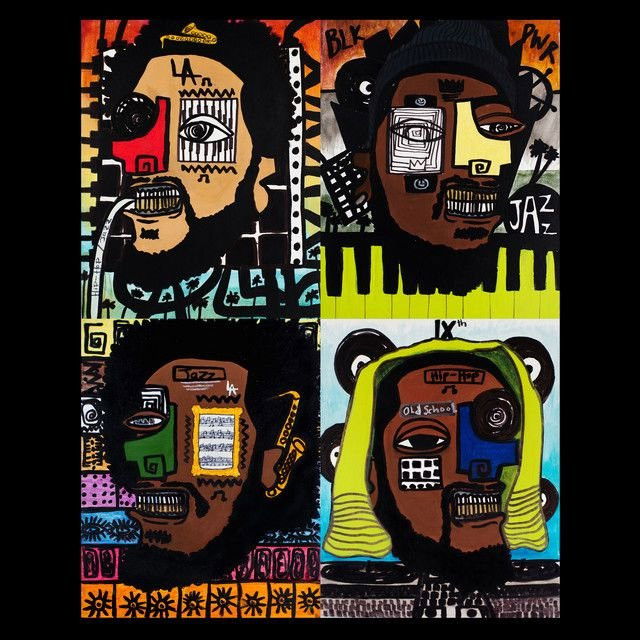
Why “Freeze Tag” Feels So Heavy
The meaning of Freeze Tag Terrace Martin, Robert Glasper, 9th Wonder, Kamasi Washington, Dinner Party, Phoelix starts with a simple but frightening image: someone is ordered not to move. From there, the song opens into something bigger. It becomes a meditation on racial profiling, survival, and the emotional cost of living under constant suspicion.
"Freeze Tag" - Terrace Martin, Robert Glasper, 9th Wonder, Kamasi Washington, Dinner Party ft. Phoelix
Higher
Woo-woo
Loading lyrics...
Unable to load lyrics
We're unable to display the lyrics at this time. Please try again later.
Released by Dinner Party—the group formed by Terrace Martin, Robert Glasper, Kamasi Washington, and 9th Wonder—the track features Phoelix and appeared on the group’s 2020 project Dinner Party, a collaboration widely covered by major music outlets and the artists’ official pages. Factually, the song’s credited writers include Kamasi Washington, Michael E. Neil, Patrick Douthit, Robert Glasper, and Terrace Martin.
A children’s game turned into a crisis
The title is clever because it flips a childhood game into a life-or-death moment. In a normal game of freeze tag, stopping is playful. Here, being frozen means being controlled by force.
That is why the opening command, put my hands up
, hits so hard. The narrator is not just being stopped. They are being made into a suspect before they can explain themselves. When the song follows that with I think they got the wrong one
, it frames the whole track around mistaken identity, prejudice, and power.
Interpretation: The song suggests that innocence does not always protect a person when a system already sees them as dangerous.
Watch the official Freeze Tag
music video
The voice of someone worn down
Phoelix sings from a first-person point of view, but the voice feels collective. The line sick and tired of runnin'
is about more than physical escape. It also sounds like emotional exhaustion.
They are tired of explaining, tired of fearing the next encounter, and tired of chasing safety that never fully arrives. That feeling expands in searchin' where the love went
. The song is not only asking why violence happens. It is also asking what happened to empathy, mercy, and care.
The search for peace
One of the most revealing details is the image of looking for a dove, a classic sign of peace. The narrator wants calm and human connection, not conflict. Yet the world around them keeps forcing them into defense mode.
I been waitin' on the summer Soul lookin' back and wonders How we 'posed to get from under?
This is the article’s one brief multi-line quote, and it shows the song’s larger reach. Summer suggests relief, freedom, or healing. But even that hope is clouded by the question of how anyone escapes the weight pressing down on them.
What the song is really saying
At its core, “Freeze Tag” is about being trapped between fear and dignity. The narrator is threatened, but they do not surrender their inner life. That is where the startling phrase 'bout to cut a rug
matters.
On the surface, it sounds playful, even odd, in such a tense song. But that contrast is the point. Dancing here can mean refusing to let oppression steal joy. It can also mean making one’s own movement in a moment when movement has been taken away.
Interpretation: The song argues that joy itself can be a form of resistance. Even when a person is told to freeze, their spirit still looks for rhythm, release, and life.
Why the production matters so much
The music makes the message hit deeper. Dinner Party’s sound blends jazz, soul, hip-hop, and quiet groove, and that softness is crucial. Rather than scoring the lyrics with chaos, they surround them with warmth.
That choice creates tension. The arrangement feels elegant and lived-in, while the words describe danger. Robert Glasper’s harmonic language, Terrace Martin’s polished sense of atmosphere, Kamasi Washington’s spiritual-jazz presence, and 9th Wonder’s deep-rooted hip-hop sensibility give the track a reflective mood instead of a purely confrontational one.
The result is not less political. It is more human. The song does not reduce pain to a headline. It lets listeners sit inside the fear, the memory, and the fragile hope.
How the repeated lines build meaning
The lyrics repeat almost exactly, and that repetition is important. In many songs, repetition is just a hook. Here, it feels like a cycle.
The same stop, the same fear, the same plea for understanding keep happening again and again. That structure mirrors the lived experience the song points to: recurring encounters, recurring grief, recurring questions with no clean answer.
A cycle without closure
Because the verses return in nearly identical form, the song refuses easy resolution. It does not offer a neat victory. Instead, it shows how trauma can loop.
That is one reason the track lingers. It sounds beautiful, but it does not let the listener forget the pattern underneath.
A broader reading of “Freeze Tag”
The clearest reading is about police violence and racial injustice in America. That reading is strongly supported by the command posture, the threat of deadly force, and the insistence that the authorities have targeted the wrong person.
But there is also a wider interpretation. The song can be heard as describing any system that freezes people in place—fear, poverty, racism, or emotional paralysis. The final question about getting out from under something leaves the target intentionally broad enough to feel social, spiritual, and personal at once.
Why “Freeze Tag” still resonates
The meaning of Freeze Tag Terrace Martin, Robert Glasper, 9th Wonder, Kamasi Washington, Dinner Party, Phoelix lies in that mix of terror and grace. It is a protest song, but it is also a soul song. It speaks about danger without giving up beauty.
That balance is what makes “Freeze Tag” memorable. They turn a scene of command and fear into a larger statement about endurance, longing, and the right to remain fully human.
Interpretation disclaimer: Song meaning is not always fixed, and this reading combines lyrical analysis with cultural context rather than claiming a single official explanation.








