Why 'Telegraph Road' Feels So Vast and Broken
The meaning of Telegraph Road Dire Straits comes down to one big idea: progress can build a world and hollow it out at the same time. In this long, cinematic song, Dire Straits trace the life of a place from frontier settlement to modern traffic jam, then connect that history to personal loss.
"Telegraph Road" - Dire Straits
Walking thirty miles with a sack on his back
And he put down his load where he thought it was the best
Loading lyrics...
Unable to load lyrics
We're unable to display the lyrics at this time. Please try again later.
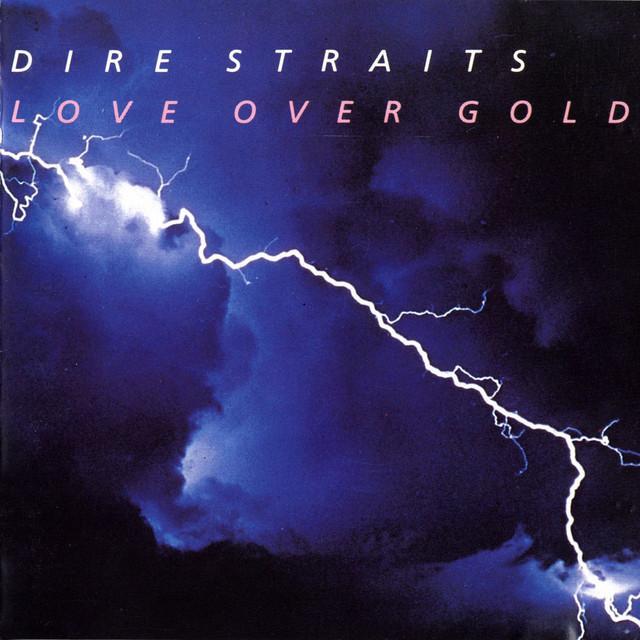
Written by Mark Knopfler and released on Love over Gold in 1982, the song runs 14:18 on the album version and opens that record's track list. It was inspired by Telegraph Road in Michigan, and Knopfler reportedly linked that image of a long American road with themes of settlement and development over time (Wikipedia).
A Road Becomes a Whole Country Story
At first, the lyric tells a simple origin story. A man arrives, settles, and builds a life. Then more people follow. What begins as wilderness becomes a town, then a system.
The early verses move step by step through social growth: homes, churches, schools, law, transport, mining, war. The short phrase the dirty old track
matters because it shows how a rough path turns into something larger and more permanent. The road is not just a road. It becomes a symbol of expansion itself.
Interpretation: The song is not celebrating that growth in a simple way. It shows how every stage of development brings another layer of control, labor, and pressure. Even before the modern section begins, there is a sense that history is carrying people forward whether they want it to or not.
Watch the official Telegraph Road
music video
From Frontier Hope to Factory Exhaustion
The sharpest turn comes when the song leaves the distant past and enters the present. Suddenly the listener is in a cold, crowded world of radios, factories, and traffic. The line about people driving home
from industrial work turns the grand history into everyday routine.
Then the song gets more direct about economic decline. The narrator says work is gone and the old promise has failed. That matters because the road once stood for opportunity, but now it leads through shutdowns and debt. The brief phrase we're closed
sums up the mood: not just stores or plants, but a whole social contract seems shut.
This is one reason the meaning of Telegraph Road Dire Straits still connects with American listeners. It speaks to boom-and-bust places where industry built communities and then left them behind.
The Personal Story Inside the Social Story
One of the song's smartest moves is how it folds a relationship into the wider collapse. In the middle of economic frustration, the narrator remembers nights of speed, romance, and possibility. Now that intimacy feels colder.
That shift is important. The song suggests that public decline seeps into private life. Lost jobs, dead streets, and constant pressure do not stay outside the home. They shape memory, love, and hope.
into the day
rivers of headlights
rivers of rain
Those short images capture the dream of escape, but they also show how hard it is to get free. The world is flooded with movement, weather, and artificial light, yet none of it feels liberating.
Symbols That Carry the Message
Several images do heavy lifting throughout the song:
- The road: progress, history, and the path society chooses
- Factories: the promise and failure of industrial life
- Birds on the wires: freedom humans do not quite have
- Rain and freezing weather: emotional and economic harshness
- Headlights: motion without real arrival
The birds are especially telling. The lyric notes they can fly away from the cold. People, by contrast, are stuck in traffic, debt, memory, and place. Interpretation: that contrast makes the song feel tragic without becoming melodramatic.
How the Music Expands the Meaning
The production is a huge part of why the song lands so strongly. According to available credits, Knopfler produced the track, with Alan Clark on piano, organ, and synthesizers, Pick Withers on drums, John Illsley on bass, and Hal Lindes on guitar (Wikipedia).
The arrangement begins with a long, quiet build in G minor before the full band settles into the main theme. That slow opening feels like land before development: open, uncertain, waiting. As the song grows, the rhythm section and keyboards add weight, making history feel physical.
Knopfler's guitar solos do more than decorate the track. They act like emotional overflow. When words have reached their limit, the guitar carries frustration, longing, and release. That helps explain why critics admired the song's scale; Rolling Stone called it a work of historic sweep
and intimate tension (Wikipedia).
Why the Song Still Matters
Part of the song's staying power is that it works on two levels at once. Factually, it is tied to a real American road and a 1982 Dire Straits album. But artistically, it speaks to a repeating pattern: settlement becomes prosperity, prosperity becomes systems, and systems can become traps.
Interpretation: The ending does not offer a neat solution. Instead, it leaves listeners with momentum, noise, and memory. That is why the song feels both epic and intimate. It is about a place, a country, a job, a relationship, and a state of mind all at once.
For many listeners, that is the real meaning of Telegraph Road Dire Straits: a warning that progress without human care can leave people stranded on the very road that once promised a future.
Disclaimer: This interpretation blends documented context with close reading of the lyrics and music. As with any song, meanings can vary from listener to listener.







