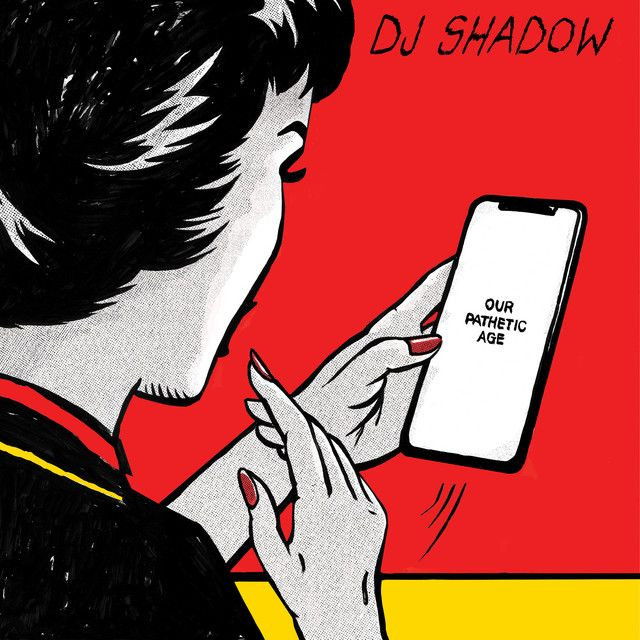
Why “C.O.N.F.O.R.M.” Hits So Hard
The meaning of C.O.N.F.O.R.M. DJ Shadow, Lateef The Truthspeaker, Gift of Gab, Infamous Taz starts with a simple idea: modern life rewards obedience, even when that obedience harms people. The song is not just angry at one villain. It points at work culture, corporate greed, social media, and the ways technology can dull human attention instead of expanding it.
"C.O.N.F.O.R.M." - DJ Shadow, Lateef The Truthspeaker ft. Gift of Gab, Infamous Taz
it can illuminate, yes and even it can inspire
But it can do so only to the extent
Loading lyrics...
Unable to load lyrics
We're unable to display the lyrics at this time. Please try again later.
That makes the track feel bigger than a standard protest rap. They frame conformity as a system people live inside every day, often without noticing how much of themselves they have given away.
A Protest Song About More Than One Trap
At its core, the song argues that people are pushed to fit into structures that value profit over peace. The verses describe overwork, emotional burnout, and a society where people keep grinding while someone else gets rich. When the lyric points to stacking billions
, it is criticizing a top-down economy where labor and reward are badly split.
The song then widens its focus. It is not only about bad jobs or unfair bosses. It is also about a culture that trains people to keep moving, consuming, and posting. In that sense, conformity is both economic and psychological.
Interpretation: They suggest that control works best when it feels normal. If exhaustion, distraction, and self-branding become everyday habits, then resistance starts to seem strange.

Watch the official C.O.N.F.O.R.M.
music video
The Hook Turns a Word Into a Warning
The chorus is effective because it spells the title out like a command. That structure makes the word feel mechanical and relentless. Instead of sounding free-flowing, it lands like a system repeating itself.
The line about the rights of my expression
is especially important. The song is not only concerned with money or technology. It also worries about voice: who gets to speak, who gets shaped by public pressure, and who gets erased.
C-O-N-F-O-R-M
To own the rights of my expression
That short moment captures the song’s main tension. A person may think they are expressing themselves, but the surrounding system may already be influencing how that expression looks, sounds, and circulates.
From Work Stress to Digital Dependence
One of the strongest parts of the song is how it links the office and the phone. At first, those problems might seem separate. But the lyrics argue they are connected by the same basic pressure: keep producing, keep performing, keep feeding the machine.
The early verses describe bodies and minds worn down by labor. There is no romantic view of hustle here. Work appears as something that drains life and leaves little room for rest, joy, or reflection.
Then the song pivots to digital life. It describes people who no longer need to remember directions or phone numbers because devices now do that work. That is not framed as pure convenience. Instead, it becomes a sign that human attention is being outsourced.
When the speaker admits feeling trapped by social media standards
, the song becomes more personal. It is no longer just about institutions “out there.” It is also about daily behavior: chasing validation, posting private thoughts in public, and recording life instead of living it.
A Critique of the Attention Economy
The track is sharpest when it shows how corporations profit from emotional need. It describes a world where people are encouraged to feel visible and important, while companies sort, sell, and monetize their behavior behind the scenes.
The phrase pay me in exposure
extends that critique into creative work. Artists, like workers, are often told that visibility is a fair substitute for security. The song rejects that logic. Exposure does not pay rent, protect a home, or replace real support.
This is where the song’s politics become clear. They are arguing that modern capitalism does not just sell products. It sells identity, attention, aspiration, and access, while keeping most of the value for itself.
Why the Production Matters
DJ Shadow’s presence matters because his production style has long mixed collage, mood, and unease. Even without getting lost in technical details, the beat here supports the message by feeling tense and purposeful rather than loose or celebratory.
The spoken intro about technology being only wires and lights in a box
sets the tone. It reminds listeners that tools are neutral until people decide how to use them. That opening idea becomes a frame for everything after it: the internet, phones, platforms, and media are not automatically evil, but they can become harmful when power shapes them toward control.
Interpretation: The production sounds like pressure. The rhythm and delivery help the song feel less like abstract philosophy and more like a real alarm.
Multiple Voices, One Shared Argument
Because the song features DJ Shadow, Lateef the Truthspeaker, Gift of Gab, and Infamous Taz, it avoids sounding narrow. Different voices reinforce the idea that conformity is not one person’s private struggle. It is social.
That group dynamic also gives the song balance. One section sounds systemic, another sounds intimate, and another sounds openly political. Together, they build a full picture of modern pressure.
For listeners in the United States, that is part of why the song still lands. Its targets are familiar: burnout, online performance, corporate power, and the fear that people are becoming easier to manage because they are too tired or distracted to push back.
The Lasting Meaning of “C.O.N.F.O.R.M.”
The lasting meaning of C.O.N.F.O.R.M. DJ Shadow, Lateef The Truthspeaker, Gift of Gab, Infamous Taz is that conformity is not only about acting the same. It is about slowly accepting systems that define value, identity, and reality for people.
The song warns that convenience can hide control, and connection can hide isolation. Its message is not anti-technology in a simple sense. Rather, it asks whether people still control their tools, or whether the tools now help control them.
That is why the track feels both timely and uneasy. It hears modern life asking people to adapt, optimize, and stay visible—and then asks what gets lost in the process.
Disclaimer: This article offers an interpretation of the song based on its lyrics and credited creators. Meanings can vary from listener to listener.









