Why “Shady Grove” Still Feels So Tender
The meaning of Shady Grove Doc Watson comes down to a simple but lasting tension: deep affection mixed with the pain of leaving. In Doc Watson’s hands, this old Appalachian song feels warm, direct, and human. It is about young love, admiration, and the hope that romance can survive distance.
"Shady Grove" - Doc Watson
Shady Grove I say
Shady Grove, my little love
Loading lyrics...
Unable to load lyrics
We're unable to display the lyrics at this time. Please try again later.
“Shady Grove” is a traditional song rather than a modern single with one fixed text. Scholars describe it as an Appalachian courting song with many variants, and some sources note that hundreds of stanzas have circulated over time. It is also commonly linked to eastern Kentucky and early-20th-century folk tradition, while the tune itself is often described as being in the Dorian mode. Those details help explain why the song feels both old-world and emotionally immediate.
A Love Song Built on Distance
At its core, the song presents a speaker who adores one person and keeps returning to her name. The repeated address to Shady Grove
makes the song feel personal, almost like a call across space. But that tenderness is always shadowed by the admission bound to go away
.
That contrast gives the song its emotional engine. They are not hearing a tragic breakup song. Instead, they are hearing a love song shaped by movement, labor, and uncertainty, all of which fit older rural folk music traditions.
Watch the official Shady Grove
music video
What the Verses Reveal About the Relationship
The verses build a picture of idealized young romance. The singer praises her appearance with images like cheeks as red
and calls her the finest girl he knows. In plain terms, he is dazzled by her beauty and fully absorbed by his feelings.
Just as important, he imagines a future with her. One verse moves from a childhood desire for a tool to an adult desire for commitment, ending in the wish that she would become his wife. That shift matters because it shows growth: infatuation is turning into a dream of home and permanence.
Another verse adds a practical fantasy. He wishes for a horse, food for it, and for Shady Grove to stay and care for things while he is away. This is not just romance; it hints at a life partnership. Love is connected to work, household stability, and shared responsibility.
The Chorus Holds the Whole Meaning
The refrain is short, but it carries the whole song. He calls her his little love, then immediately admits departure. That is why the meaning of Shady Grove Doc Watson is not only praise. It is praise under pressure.
Shady Grove, my little love
I’m bound to go away
That two-line push and pull is what makes the song memorable. Interpretation: the singer may be trying to reassure himself as much as he is addressing her. Repeating her name keeps the bond alive while the road pulls him elsewhere.
Doc Watson’s Version Matters
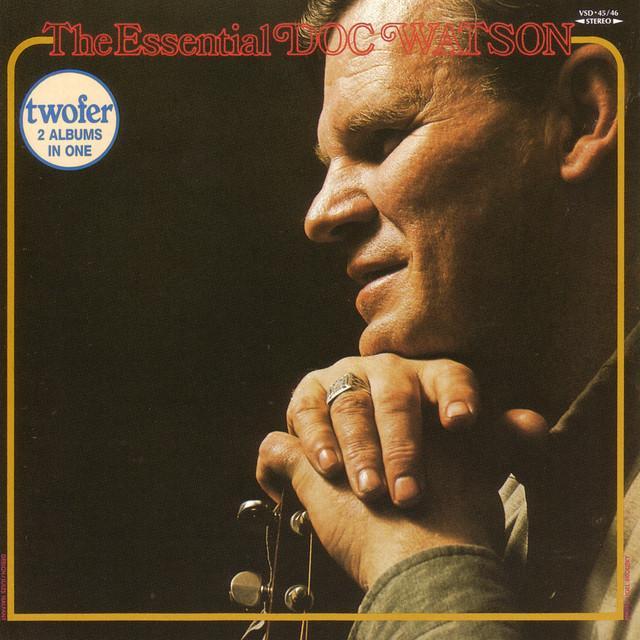
Doc Watson helped bring “Shady Grove” to wider audiences in the folk revival era, and folk reference material often notes that he likely learned it through the Jean Ritchie tradition. That matters because Watson was one of the great interpreters of Appalachian music, known for preserving older material while making it vivid for modern listeners.
His version works because of restraint. Watson’s singing is plainspoken and unforced, which suits a traditional song where sincerity matters more than drama. He does not overact the longing; they hear it in the steady phrasing.
How the Sound Carries the Story
Musically, “Shady Grove” often relies on old-time string textures and a modal melody. The Dorian feel gives it a slightly wistful color, darker than a bright major-key love song but not hopeless. That modal sound supports the lyric balance between sweetness and absence.
Watson’s guitar style is also central. His crisp flatpicking gives the song forward motion, which mirrors the lyric idea of going away. Even while the words dwell on affection, the rhythm keeps moving, as if travel cannot be stopped.
Symbols Hidden in Plain Sight
Several recurring folk images deepen the song’s meaning:
- Beauty imagery: rosy cheeks and brown eyes turn Shady Grove into an ideal beloved.
- The horse and corn: these suggest work, travel, and rural life rather than fantasy romance.
- Doorway imagery: when he sees her standing there, the moment feels intimate and domestic.
- Marriage language: the wish that she will be his wife shifts the song from flirtation to commitment.
Together, these details show a love rooted in ordinary life. The song does not need grand poetry. Its world is made of chores, visits, longing, and plans.
More Than One Way to Hear It
There is also some ambiguity in “Shady Grove.” Because traditional songs change across singers and regions, the name itself is not fully fixed. Some folklore discussions suggest it could be a woman’s name, a nickname, or even a place-name. That uncertainty gives the song a slightly mythical edge.
Interpretation: if they hear Shady Grove as a person, the song is a direct courtship lyric. If they hear it as partly symbolic, she can stand for home itself: the place of comfort the singer hates to leave.
Why the Song Endures
“Shady Grove” lasts because it captures a feeling that stays familiar in every era. Many people know what it means to love someone, admire them, imagine a future, and still have to leave for a while. The language is simple, but the emotion is not.
Doc Watson’s version endures because he trusts that simplicity. He lets an old folk song speak in a clear American voice, with enough musical lift to keep it alive and enough emotional honesty to keep it true.
In the end, the meaning of Shady Grove Doc Watson is less about plot than feeling: devotion tested by distance, and love expressed in the plain words of everyday life.
Disclaimer: This interpretation is based on traditional lyrics, historical context, and Doc Watson’s performance style. Because “Shady Grove” exists in many folk variants, meanings can reasonably differ across versions and listeners.








