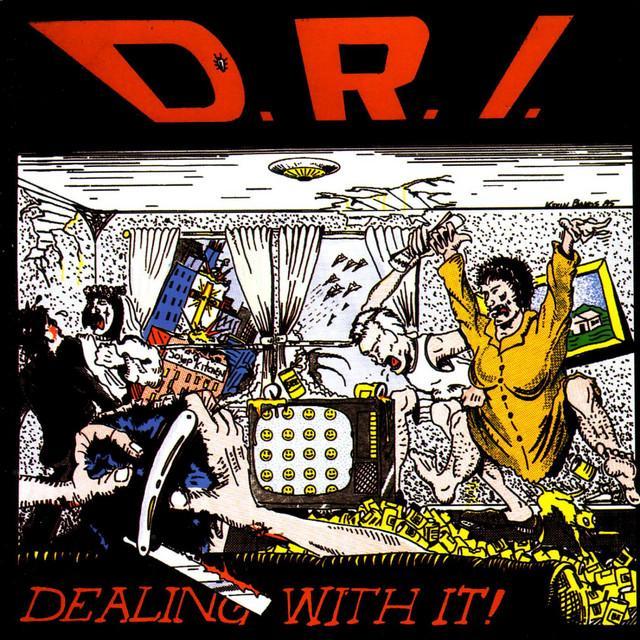
Why D.R.I.'s "I Don't Need Society" Still Hits
The meaning of I Don't Need Society D.R.I. starts with a simple idea: the song sees modern society not as protection, but as a machine that demands obedience and sacrifice. In under two minutes, D.R.I. turn that idea into a blast of anti-war rage, anti-authority punk, and personal refusal.
"I Don't Need Society" - D.R.I.
The system say's, "I told you so"
Stocked in a plane like a truckload of cattle
Loading lyrics...
Unable to load lyrics
We're unable to display the lyrics at this time. Please try again later.
D.R.I. formed in Houston in 1982 and became one of the key bands in hardcore’s move toward crossover thrash, with Kurt Brecht and Spike Cassidy as long-running core members according to Tropedia’s overview of the band. That background matters because this song comes from their early, stripped-down phase, where speed and bluntness were part of the message.
A Protest Song With No Patience
At its core, the song argues that institutions treat people like expendable units. The verses describe forced movement into war, not as heroic duty, but as industrial processing. The image of people being moved like livestock strips away any patriotic shine.
Short phrases such as your number's up
and useless battle
make that point fast. They suggest a system where a person becomes a file, a body, or a statistic. The song’s anger is not abstract. It is aimed at a structure that orders, ships, and destroys people while pretending that this is normal.
This is why the song is often described as a protest song in summaries of D.R.I.’s catalog, including Tropedia. The target is war, but also the larger culture that accepts war as routine.
Watch the official I Don't Need Society
music video
How the Lyrics Build Their Case
From command to slaughter
The opening lines move quickly from authority to violence. First comes the order. Then comes transport. Then comes death. That sequence matters because it shows how bureaucracy can hide brutality.
The phrase I told you so
adds a cruel tone. It makes the system sound smug, as if obedience was always expected and resistance was always pointless. In that reading, the song is not only angry at generals or politicians. It is angry at a whole social order that expects submission.
The chorus as total refusal
When the chorus says I don't need society
, it is not a calm philosophical point. It is a shouted break with a corrupt structure. Interpretation: they are not rejecting human connection itself. They are rejecting a version of society built on control, war, conformity, and disposable lives.
That distinction helps explain why the hook remains memorable. It is broad enough to feel universal, but specific enough to fit the verses. The speaker refuses the same system that sends people to die never really knowing why
.
Who the Song Talks To
One of the smartest things in the lyric is its shifting point of view. It often speaks to you
, placing the listener inside the draft-machine story. Then it snaps back to an I
that refuses to cooperate.
That shift gives the song two effects at once:
- It makes the threat feel personal.
- It turns resistance into a direct response.
- It lets one person’s anger stand in for many others.
Later lyrics bring in suburban normalcy and everyday comfort before dropping that ordinary figure into war. The point is sharp: the system can grab someone who seemed safe, sheltered, and fully inside mainstream life. No one is really outside its reach.
The Sound Is Part of the Meaning
D.R.I.’s early style is crucial to the song’s force. The playing is fast, compact, and aggressive. Instead of building atmosphere slowly, the band attacks immediately. That musical choice matches the lyric’s world, where institutions move people quickly and violently.
The drums feel like a forced march at panic speed. The guitars are raw rather than polished. The vocal delivery is barked more than sung, which makes the lines sound like alarms or accusations. There is very little space to breathe, and that is the point.
Interpretation: the production makes society itself feel suffocating. A cleaner recording might have softened the message. Here, the roughness keeps the song close to the street-level anger of hardcore punk.
More Than Anti-War: Anti-Conformity Too
It would be fair to hear the song as an anti-war track first. The imagery clearly points there. But the meaning of I Don't Need Society D.R.I. also reaches beyond the battlefield.
The song attacks conformity, especially the kind that trains people to obey before they even realize what is happening. The repeated commands, the reduction of people to numbers, and the collapse of identity into state service all support that reading.
There is also a punk paradox here. The title sounds like total isolation, yet the song itself is made for a crowd to shout together. Interpretation: that tension may be intentional. They reject official society while creating an alternative community through punk: one built on resistance rather than compliance.
Why It Still Feels Current
The song remains powerful because its language is basic and brutal. It does not depend on one historical event or policy debate. Its warning is larger: when institutions stop seeing people as human, violence becomes easy to justify.
That is why its final outburst lands so hard. The profanity is not there for shock alone. It works as a last severing of ties, the emotional endpoint of everything the verses describe.
The Takeaway Behind the Noise
In the end, “I Don’t Need Society” is about refusing a system that demands lives while denying meaning. It sees war as the ugliest result of a culture built on obedience, and it answers with blunt refusal.
For listeners, that is the lasting power of the song. It is short, loud, and simple, but its core question is still difficult: what kind of society deserves loyalty in the first place?
Disclaimer: This article offers interpretation based on the song’s lyrics, performance, and publicly available band context. Meanings can vary from listener to listener.







