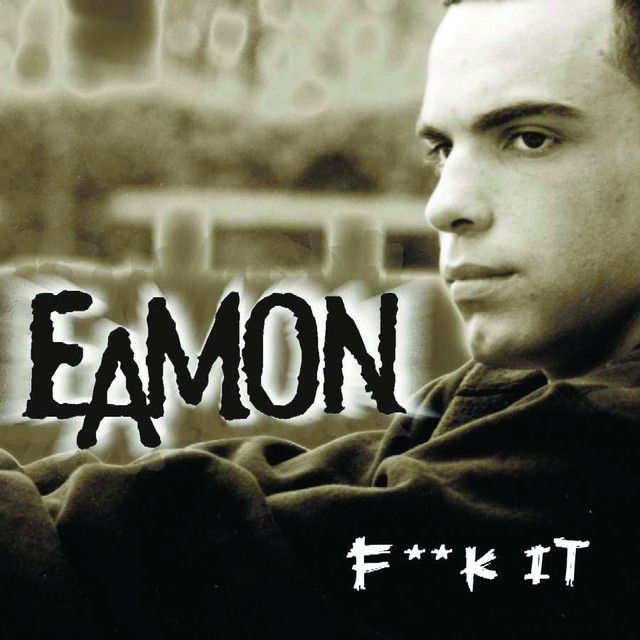
Why Eamon's Breakup Hit Still Stings
The meaning of I Don't Want You Back Eamon starts with a simple feeling: humiliation after betrayal. Eamon’s 2003 debut single turns that feeling into a loud, messy dismissal. In the clean version, the message is the same as the explicit one: trust was broken, the relationship is dead, and the singer wants the other person gone.
"I Don't Want You Back" - Eamon
Ooh hooh
No No No
Loading lyrics...
Unable to load lyrics
We're unable to display the lyrics at this time. Please try again later.
Released as Eamon’s debut single on November 10, 2003, the song later appeared on the 2004 album I Don’t Want You Back. It was written by Eamon Doyle, Kirk Robinson, and Mark Passy, and produced by Milk Dee, according to Wikipedia.
A breakup song powered by wounded pride
At its core, the song is not subtle. The narrator says they gave full trust, believed the relationship was real, and then discovered cheating. That is the engine of the whole track.
Early on, Eamon frames the romance as something he invested in deeply. Short phrases like I gave you all of my trust
and that’s all down the drain
show how fast love becomes waste. The emotional swing matters. This is not cool detachment; it is the sound of someone reacting in real time.
Interpretation: The song is really about the collapse of dignity as much as romance. The cheating hurts, but the deeper wound is that he feels made to look foolish.

Watch the official I Don't Want You Back
music video
The chorus turns heartbreak into a public slam
The chorus is why the song lasted in pop culture. Instead of quietly grieving, the singer trashes every symbol of the relationship: gifts, kisses, memories, promises. In other words, he tries to erase meaning by insulting it.
might as well throw em outI don't want you back
That tiny sequence captures the whole logic of the song. If the relationship was built on lies, then every object and gesture tied to it now feels fake.
This is also why the record felt so explosive in 2003 and 2004. Its direct profanity was unusual for a major pop-R&B hit, and the clean edit circulated widely for radio under the title I Don’t Want You Back Wikipedia; Songfacts.
What happens in the verses
The verses lay out a rough emotional timeline:
- He remembers trusting and loving her.
- He hears a story that confirms cheating.
- He refuses reconciliation.
- He admits he is still hurt.
That last step is important. Under all the insults, there is grief. Near the end, the song drops the tough pose for a second and admits it hurts real bad
. That line gives the track more depth than its reputation suggests.
Interpretation: The song uses anger as armor. The nastiness is not evidence that he is over it. It is evidence that he is not.
Sound first, subtlety second
Milk Dee’s production helps sell that emotional state. The beat is lean, repetitive, and built to leave space for Eamon’s voice. Rather than using a lush ballad arrangement, the song sits in a stripped-down early-2000s R&B-pop lane. That choice keeps the focus on confrontation.
The melody is catchy, almost sweet, which creates a sharp contrast with the words. That tension is one reason the song crossed over so widely. Listeners got a singable hook wrapped around a very ugly breakup.
There is also a street-corner feel to the vocal phrasing. Eamon does not sound polished in a distant, glamorous way. He sounds close, irritated, and impulsive. That makes the performance believable, even when the wording is harsh.
Context matters: a hit built on shock and honesty
Commercially, the song was huge. It reached No. 1 in multiple countries and hit No. 1 in the UK for four weeks, while peaking at No. 16 on the US Billboard Hot 100, according to Wikipedia. The explicit title also drew attention because it pushed at what mainstream pop could get away with.
Eamon said he did not write the song just to shock people. Songfacts quotes him telling NME, I don't write things to shock
, arguing it worked because it was a good song Songfacts. Whether one agrees or not, that point helps explain the record’s appeal: people responded because the emotion felt immediate, not polished into something safe.
The song’s success also led to Frankee’s answer record, which turned the breakup into a media story of its own. Eamon later said he had never met her and was only connected through licensing, as summarized by Wikipedia.
Why the song still divides listeners
Some hear the song as catharsis: a brutally honest snapshot of someone right after betrayal. Others hear it as immature and cruel, especially in the way it insults the woman rather than only condemning the act.
Both reactions make sense. The track is effective because it captures a real emotional state, but it also shows how pain can turn mean. That tension is part of the meaning of I Don't Want You Back Eamon. It is not a wise breakup song. It is a raw one.
The real takeaway behind the rage
What lasts about the song is not just the profanity. It is the way it freezes a single ugly moment: the point where heartbreak becomes contempt. The narrator wants to sound finished, but the song keeps revealing the opposite. They are wounded, embarrassed, and trying to reclaim control by rejecting the person who hurt them.
That is why the record still lands. Beneath the shock, it is about how people talk when love collapses faster than pride can recover.
Disclaimer: This interpretation separates documented facts about the song from critical reading of its lyrics and tone. Meaning in popular music can remain open to listeners' own experiences.







