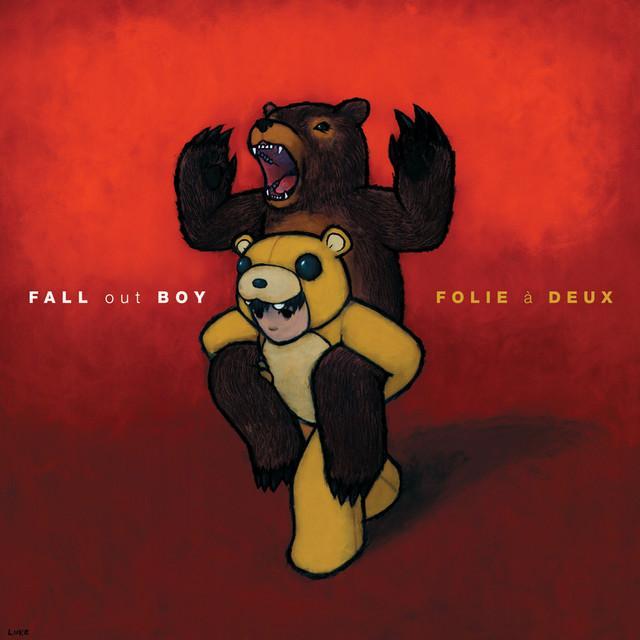
America's Suitehearts by Fall Out Boy
A bright, sarcastic pop-rock single that turns celebrity worship into a confession about the crowd, the media, and the people watching from home.
"America's Suitehearts" - Fall Out Boy
Provided by LyricFindYou could have knocked me out with a (feather)
I know you've heard this all before, but were just Hell's (neighbors) (oooh)
Why, why, why won't the world revolve around me?Loading...Loading lyrics...
Unable to load lyrics
We're unable to display the lyrics at this time. Please try again later.
Why This Song Still Bites
The meaning of America's Suitehearts Fall Out Boy starts with a contradiction. The song sounds huge, catchy, and almost celebratory. But underneath that shine, it is taking aim at the culture of fame: how the public cheers for stars, judges them, and then asks for even more.
Factually, “America's Suitehearts” was released as the second single from Folie à Deux and was written by Pete Wentz, Patrick Stump, Joe Trohman, and Andy Hurley, with Neal Avron producing. It arrived in late 2008 and was serviced to U.S. radio in January 2009. It later reached No. 78 on the Billboard Hot 100 and was certified Gold in the United States. Those details are widely documented by sources including Wikipedia and Songfacts.
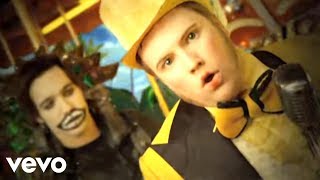
Watch the official America's Suitehearts
music video
The Core Meaning Behind the Chorus
At the center of the song is a fake cheer: America's suitehearts
. It sounds like applause, but Fall Out Boy twists it into something uneasy. They are not simply praising famous people. They are showing how fame gets turned into a national pastime.
The real sting comes in the confession I'm in love with my own sins
. That line shifts the song from social commentary to self-commentary. Instead of pretending the problem belongs only to tabloids or paparazzi, the narrator admits they are part of the same broken system.
Interpretation: this is why the song feels sharper than a simple anti-celebrity rant. It suggests that audiences, artists, and media all help create the spectacle.
Verses Full of Ego, Damage, and Performance
The opening image, knocked me out with a feather
, sounds soft but dramatic. It hints at overreaction, theatrical emotion, and a world where everything is staged for effect. That fits a song about public image, where even small moments become headlines.
Then the song moves into one of its most revealing ideas: Why won't the world revolve around me?
On the surface, it sounds selfish. But that is the point. Fall Out Boy exaggerates vanity to expose a culture that rewards people for acting like the center of the universe.
Another striking line pairs surface glamour with decay. The singer says they do not know much about classic cars
, but they know people stuck on classic coke
. In plain terms, the song contrasts old-school style with addiction and excess. It is a quick way of saying that glossy celebrity culture often hides something darker underneath.
A Media Circus in Three Words
The phrase media blitz
is short, but it explains almost everything. The song imagines fame as a nonstop attack of headlines, images, and public judgment. It is loud, fast, and impossible to escape.
Pete Wentz explained the song in similar terms. As quoted by Songfacts, he said culture likes to build people up and tear them down. That comment matters because it supports the most common reading: this is a song about the celebrity cycle, not a simple portrait of one person.
Interpretation: the narrator may sound arrogant, but that voice is partly satirical. They speak in the language of fame to show how warped that language has become.
How the Sound Sells the Message
One reason the song works so well is that the music does not sound gloomy. Reviews and summaries have noted its stacked harmonies and pop polish, with some comparisons to The Beatles and Electric Light Orchestra-style vocal layering, as summarized on Wikipedia. That sweetness is important.
Instead of scoring the lyrics with something grim or angry, Fall Out Boy wraps them in a bright, muscular arrangement. Patrick Stump’s vocal delivery is punchy and melodic, while the band pushes the track forward with tight drums, big guitars, and group backing vocals.
That creates a useful tension:
- the lyrics criticize spectacle
- the production feels like spectacle
- the hook invites listeners to sing along anyway
In other words, the song does not stand outside pop culture and lecture it. It jumps right into the carnival and shows how attractive the carnival is.
The Video Pushes the Idea Even Further
The video makes the theme even clearer. Sources including Wikipedia note that it shows people being altered and distorted by media and paparazzi pressure. Pete Wentz also said the visual pulled from Federico Fellini and Who Framed Roger Rabbit, a brief remark preserved by Songfacts.
That reference fits the song well. Both influences suggest exaggeration, surreal images, and a world where performance and reality blur together. The circus-like look is not random; it reflects the song’s belief that celebrity culture is both ridiculous and dangerous.
The Best Way to Read “America's Suitehearts”
The meaning of America's Suitehearts Fall Out Boy is best understood as a song about complicity. It mocks fame, but it also admits attraction to fame. It points at the media, but also at the audience and the self.
That is why the chorus lasts. It sounds like a celebration while quietly accusing everyone in the room. Fall Out Boy turns celebrity worship into a mirror.
Final Take
“America's Suitehearts” is not just about famous people. It is about the hunger that creates them, the moral panic that follows them, and the private flaws people excuse in themselves while condemning in others.
Interpretation disclaimer: Song meaning is never fully fixed. This reading is based on the lyrics, the song’s sound, and public comments from band members, but listeners may reasonably hear different shades of irony, confession, or satire in it.