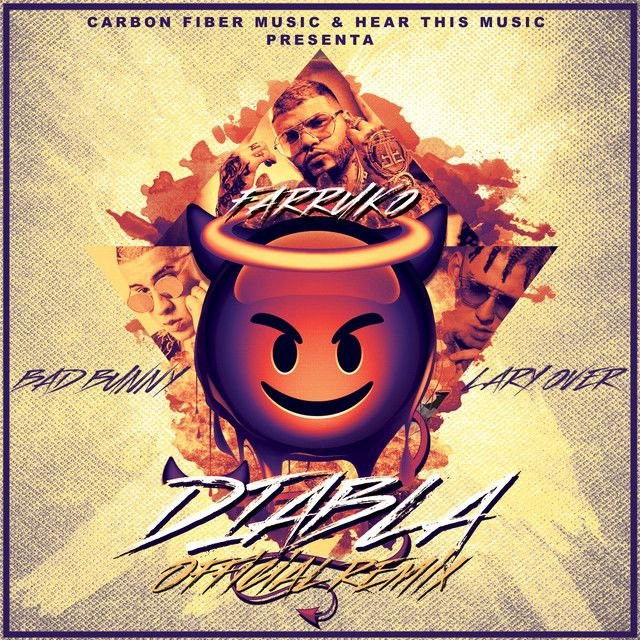
Diabla - Official Remix by Farruko, Lary Over, Bad Bunny
They come for the bounce, but stay for the story: a seductive flip between innocence and danger. The meaning of Diabla - Official Remix Farruko, Lary Over, Bad Bunny lives in that tension. She looks like an angel in public, then flips the script when the lights go out. The remix turns a simple hook into a character study of desire, control, and performance.
"Diabla - Official Remix" - Farruko, Lary Over, Bad Bunny
Yeah (yeah)
Es un ángel, suave su piel
Loading lyrics...
Unable to load lyrics
We're unable to display the lyrics at this time. Please try again later.
Desire with Halos and Horns
At its core, the song plays with a classic dual image. By day she’s framed as es un ángel
—gentle, soft, untouchable. The narrator presents her purity as a surface impression, a setup.
At night, everything changes: de noche una diabla
. That simple pivot turns the track into a tale of transformation. It’s not about moral judgment; it’s about the thrill of contrast, the way desire intensifies when a partner reveals an unexpected side.
Watch the official Diabla - Official Remix
music video
What the Song Is Really Saying
Interpretation: The chorus line se transforma en la cama
is less about literal possession and more about roleplay and agency. She isn’t losing control; she’s choosing a different persona. The repeated refrain no quiere parar
frames her as the engine of the encounter.
Religious imagery appears as playful metaphor, not doctrine. When they toss in llegó tu exorcista
, it’s a wink—he pretends to “save” her but obviously admires her power. The push-pull becomes its own dance: he performs bravado, she sets the pace.
Voice and Point of View
The verses speak in first person, a boastful yet admiring narrator addressing both her and the listener. He confesses he was fooled by appearances—me engañó con su carita de angel
—then admits he’s hooked on the transformation. That admission shifts the spotlight: she controls the setting and intensity while he reacts, praises, and funds the night.
Interpretation: The narrator’s swagger masks awe. He lists her preferences, shouts out brands, and brags about spending, but the emotional center is fascination. He’s not rescuing her from temptation; he’s chasing it.
Why the Hook Sticks
The chorus is the song’s thesis. It cycles from “angel” to “devil,” then returns to the irresistible, repeating pull of her nighttime persona. Interpretation: The loop mirrors obsession—he keeps coming back to the first moment she flipped the switch. The repetition also makes the contrast easy to chant, turning the metaphor into a club mantra.
Sound and Scene: How Production Sells the Story
The beat is a Latin trap-reggaeton hybrid: heavy 808s, tight hi-hats, and a dembow-adjacent swing that keeps bodies moving. Producers associated with This Is Music/Hear This Music and Mambo Kingz helped popularize this polished trap bounce in mid-2010s Latin hits. The mix is clean but muscular, giving room for stacked hooks and ad-libs.
Farruko glides with melody-first swagger, drawing out syllables for seduction. Lary Over injects grit and street humor, sharpening the track’s edges. Early-career Bad Bunny adds playful irreverence—his tone and ad-libs turn metaphors into cartoons you can dance to. Together, the vocals move like camera cuts: slow pan for allure, quick zoom for shock, wide shot for the party chant.
Interpretation: The production’s low-end thump and chant-ready hook amplify the roleplay. The music becomes the setting—dim room, neon glow, bass as heartbeat—so the transformation feels cinematic.
Symbols You Can’t Miss
- Angel/devil split: A clean daytime look vs. a fearless nighttime self. It’s about duality, not hypocrisy.
- Exorcism language: The fake-solemn “exorcist” bit underlines the fun. He’s not cleansing; he’s complicit.
- Predator/prey flips: Claws, scratches, and “attack” imagery frame her as the hunter. Power belongs to her.
- Fire and heat: Burning passion stands in for risk and thrill—pleasure that feels dangerous.
- Brands and adult-film references: Shout-outs to lingerie and status signals place the story in a flashy, aspirational nightlife scene.
Interpretation: These images suggest performance. Both partners act out roles, and that shared play heightens connection.
Other Ways to Hear It + Takeaway
Alternate reading 1 (empowerment): She owns the night and sets boundaries, steering location and pace. The narrator’s money talk is background noise to her control.
Alternate reading 2 (mutual fantasy): Both lean into caricatures—he’s the swaggering “exorcist,” she’s the “diabla.” The thrill comes from consenting play, not dominance alone.
Culturally, the remix sits in a moment when Latin trap fused street bravado with pop hooks, and artists like Farruko and Bad Bunny were redefining club anthems for a global stage. The result is a record that sounds like midnight: dangerous, irresistible, and loud.
Bottom line: The meaning of Diabla - Official Remix Farruko, Lary Over, Bad Bunny is the pleasure of contrast. She presents two versions of herself and keeps control of both. He can’t stop returning to the flip—that exact moment when angel turns devil and the room catches fire.
Disclaimer: Song meanings are interpretive. Different listeners may hear different themes based on personal context.







