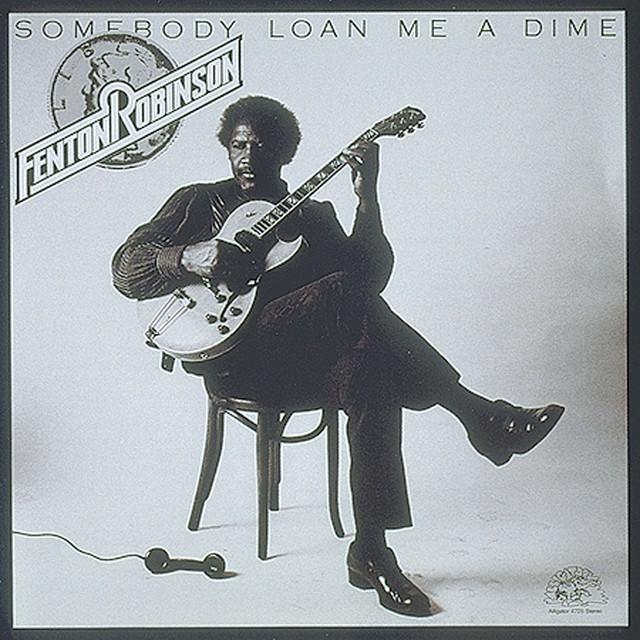
Why ‘Somebody Loan Me a Dime’ Still Hurts
The meaning of Somebody Loan Me A Dime Fenton Robinson starts with a very small request and opens into a much bigger loss. On the surface, the singer only needs a coin to make a phone call. Under that simple blues setup, though, the song is really about regret, distance, and the pain of realizing love mattered too late.
"Somebody Loan Me a Dime" - Fenton Robinson
I need to call my old time, used to be
Somebody loan me a dime
Loading lyrics...
Unable to load lyrics
We're unable to display the lyrics at this time. Please try again later.
Fenton Robinson made the song his signature piece, first recording it in 1967 and then revisiting it on his 1974 Alligator album. That later version helped cement its place in Chicago blues history. It also shows why Robinson stood out: his singing is calm but deeply bruised, and his guitar sounds elegant rather than flashy.
A Dime Is Small, but the Feeling Is Huge
At the center of the song is a speaker who feels stranded. When they ask for somebody loan me a dime
, they are not really talking about money alone. They are asking for a chance to repair a broken connection.
In older American life, a dime could buy a pay-phone call. That detail gives the song a real-world setting, but it also works as a symbol. The singer is only one small step away from reaching the person they miss, yet even that step feels out of reach.
Interpretation: the song turns a minor practical problem into a portrait of emotional helplessness. The narrator does not need riches or revenge. They need access, mercy, and maybe one more chance.
Watch the official Somebody Loan Me a Dime
music video
The Story Moves From Worry to Regret
The plot is simple, which is part of its power. A woman has been gone a long time, and the absence is eating at the singer. They admit that she has been gone so long
, and that gap creates the song’s pressure.
Then comes the most revealing turn: the singer says they knew she was good, but they did not understand her at the time. That confession matters more than the missing lover itself. The heartbreak is not only about separation. It is about hindsight.
What the narrator realizes
- They loved someone dependable.
- They failed to value that person fully.
- Now distance has turned confusion into regret.
- The phone call becomes a last emotional lifeline.
That is why the song feels mature. It is not blaming the woman. It is not full of swagger either. Instead, it shows a person looking back and hearing their own mistake more clearly than ever.
The Hook Is Really About Pride Falling Away
The repeated plea for help gives the song its emotional shape. The singer also asks for a helping hand
, which broadens the image beyond a coin. They need support because pride has collapsed.
Blues songs often turn private suffering into a public cry, and this one does that beautifully. The narrator is desperate enough to ask anyone nearby for help. That makes the song feel both intimate and communal, as if heartbreak has pushed them into the street where everybody can hear it.
I cried, just cried
like a baby
all night long
Those lines strip away any cool mask. The singer does not present sorrow as noble or poetic. It is raw, physical, and exhausting.
How Fenton Robinson’s Sound Deepens the Meaning
A big reason this song lasts is the way Robinson delivers it. Critics have often highlighted his deep baritone and refined guitar style. AllMusic called the 1974 record one of the most subtly satisfying electric blues albums of the 1970s, while other writers have noted the blend of Chicago blues, Texas blues, and jazz touches in his playing.
That mixture matters to the song’s meaning. The arrangement does not rush the pain. It leaves room for the voice, the groove, and the guitar to breathe. Robinson’s guitar lines feel thoughtful, almost conversational, like the singer is working through guilt one phrase at a time.
The 1974 album was produced by Bruce Iglauer and Robinson, and its personnel included horns, keyboards, bass, and drums, as listed by Wikipedia’s album entry. Even when the band is fuller, the mood stays controlled. That restraint fits the lyric perfectly: this is not a dramatic breakup explosion, but a slow realization that love was lost through misunderstanding.
Why the Song Became Robinson’s Calling Card
The song endured partly because its premise is universal. Almost everyone understands the wish to call someone after it is too late. Robinson gives that feeling a plainspoken blues frame, and that simplicity makes it travel well across generations.
Its history also adds weight. Robinson first cut the song in 1967, and later versions helped keep it alive. Boz Scaggs recorded it in 1969, bringing it to many rock listeners, though the song is closely tied to Robinson as writer and defining performer.
Interpretation: hearing Robinson sing it adds a layer that cover versions cannot fully replace. Their phrasing suggests not just sadness, but self-knowledge. The speaker is hurting because they now understand what they failed to see before.
The Lasting Meaning of Somebody Loan Me A Dime Fenton Robinson
So, the meaning of Somebody Loan Me A Dime Fenton Robinson is not just about borrowing change for a call. It is about recognizing love after distance has made that truth unavoidable. The dime stands for access, the phone call stands for hope, and the tears stand for the cost of late understanding.
That is why the song still lands. It takes a basic blues image and turns it into a study of remorse, loneliness, and emotional humility.
Disclaimer: This interpretation is based on the lyrics, performance, and available historical context. As with many blues songs, listeners may hear slightly different shades of meaning.








