Are You What You Want to Be? by Foster the People
A restless song with a moral challenge
The meaning of Are You What You Want to Be? Foster the People centers on a hard question: when the world is unjust, fearful, and distracting, do they live by their values or hide from them? The song sounds energetic, but its message is uneasy. It pushes past style and asks about identity, courage, and responsibility.
"Are You What You Want to Be?" - Foster the People
A fine lady from Belize said "You got the spirit of a Fela"
A young one dripping make-up put her hands out to holla
Loading lyrics...
Unable to load lyrics
We're unable to display the lyrics at this time. Please try again later.
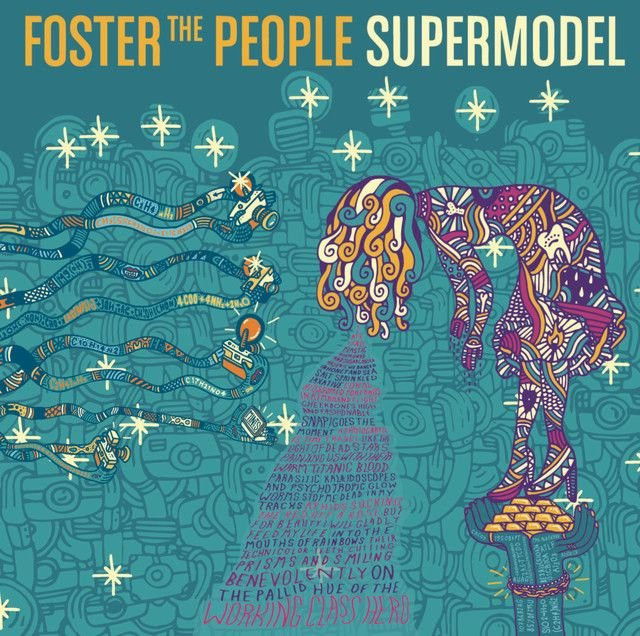
This track appears on Supermodel, Foster the People’s 2014 album, a record shaped by global imagery, anxiety, and criticism of modern culture. The band has described that album as more outward-looking than their debut, with frontman Mark Foster drawing on travel and social observation. Those broad concerns matter here because the song moves between personal scenes and political ones before landing on one repeated test: are you what you want to be
.

Watch the official Are You What You Want to Be?
music video
From travel snapshots to a bigger crisis
The opening verse feels almost cinematic. They wake in Paris, hear rhythms tied to Ghana, and meet people from different places. That travel-heavy language gives the song a global frame. It suggests a speaker moving through a connected world, seeing beauty, pain, glamour, and instability all at once.
But the song does not stay in postcard mode. It quickly shifts toward emotional damage and public conflict. One figure has a broken heart
, while another image points toward activists and power struggles. This matters because the lyrics connect private suffering with larger systems. The song implies that modern life is not neatly split between personal problems and political ones.
The central tension: fear versus action
The clearest conflict appears when the speaker admits fear. They worry about speaking too boldly and becoming a target, yet they fear moral failure even more. In plain terms, the song asks whether silence is safer but also more shameful.
That is why the chorus hits so hard. The line is simple, but it is not casual self-help. It is an ethical question. The song is not just asking who they dream of becoming. It is asking whether their real choices match that ideal.
What the chorus means
The chorus mentions waiting for revelation
and revolution
. Those two words are important. Revelation suggests clarity, truth, or a spiritual awakening. Revolution suggests public change, action, and conflict. By pairing them, the song joins inner change and outer change.
Then comes the title question. Interpretation: the chorus suggests that waiting can become its own trap. People often hope for a sign, a turning point, or a movement to carry them along. But the song keeps returning to personal accountability. Before history changes, they still have to decide who they are.
Will all these things I wait for revelation
These things ask the biggest question to me
That brief passage shows the song’s structure clearly: outside events create inner pressure, and that pressure becomes a test of identity.
Political images, but not a simple protest song
The second verse uses blunt images of money, violence, and power. The line about war machines
reaching for cash turns conflict into business. It paints a world where violence is not only ideological but profitable. That gives the song its bitter edge.
At the same time, this is not a straightforward protest anthem with a policy message. Interpretation: Foster the People seem more interested in moral atmosphere than in naming one event. The song describes corruption, manipulation, and fear as conditions of modern life. In that setting, the biggest battle becomes internal: will they protect what is human, or will they become numb?
The reference to dissidents also matters. It suggests that truth can be dangerous and that words have force. The song respects resistance, but it also shows the cost of speaking out.
How the sound supports the meaning
Musically, the track blends indie pop drive with tense, rhythmic momentum. Greg Kurstin, credited as a co-writer and producer, is known for polished but punchy arrangements, and that style fits this song well. The beat keeps moving, while the vocal delivery carries urgency rather than calm reflection.
That contrast is key. The music is bright enough to feel immediate and alive, yet the lyrics are full of dread and self-questioning. The result is a song that feels like motion without peace. They are not resting in certainty; they are pushing forward through confusion.
The repeated chorus also works like pressure. Each return to the title sounds less like a slogan and more like a mirror. By the end, the repetition feels almost confrontational, as if the song will not let the listener dodge the question.
A useful way to read the song
One helpful way to understand the track is through three layers:
- Personal layer: they confront fear, guilt, and the wish to be better.
- Social layer: they see heartbreak, exploitation, and political violence.
- Spiritual layer: they wonder what kind of person they will answer for being.
Put together, those layers explain why the song feels so large. It is not only about romance, politics, or identity. It is about the pressure of trying to stay morally awake in a chaotic world.
Final takeaway
The meaning of Are You What You Want to Be? Foster the People is ultimately about integrity under pressure. It asks whether ideals still matter when the world rewards fear, silence, image, and money.
Their answer is not neat or comforting. The song admits confusion and danger. But it insists that the deepest question is still personal: when everything around them is unstable, do they become who they claim to admire?
Disclaimer: This interpretation is based on the released lyrics, the song’s album context, and publicly available credits. Like many songs, it can support more than one valid reading.








