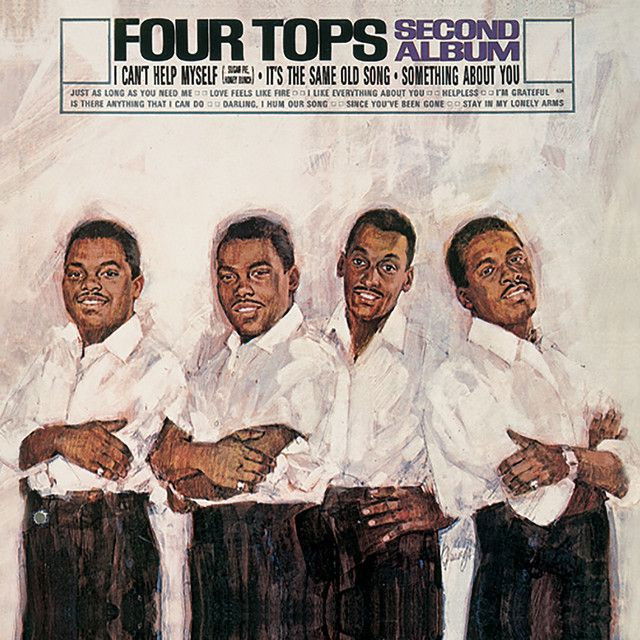
Why 'Sugar Pie, Honey Bunch' Still Wins Every Time
The meaning of I Can't Help Myself (Sugar Pie, Honey Bunch) Four Tops lives in a single admission: love can overtake reason. In 1965, Motown’s Four Tops turned that rush into a 2:46 blaze of harmony, handclaps, and confession. The result topped the Hot 100 and dominated the R&B chart for nine weeks, cementing it as one of the label’s defining hits.
"I Can't Help Myself (Sugar Pie, Honey Bunch)" - Four Tops
Sugar pie, honey bunch
You know that I love you
Loading lyrics...
Unable to load lyrics
We're unable to display the lyrics at this time. Please try again later.
The Confession at the Song’s Core
At heart, the narrator can’t control his devotion. He repeats I can't help myself
like a mantra, admitting that logic has no power over his heart. When he calls his partner sugar pie, honey bunch
, the pet names soften the plea. They make the confession sound tender, not pathetic.
Interpretation: The song frames need as affection. By shrinking the language to sweet nicknames, the pain feels approachable—and memorable.
Watch the official I Can't Help Myself (Sugar Pie, Honey Bunch)
music video
Who’s Talking, and To Whom?
It’s a first-person address. He speaks directly to a woman who drifts in and out, acknowledging the mixed signals with the line in and out my life
. He also admits wounded pride—he’s weaker than a man should be
—but refuses to hide it. That candor is the point: vulnerability becomes its own kind of strength.
A Simple Story, Told in Loops
The plot is small and circular, which fits pop perfection:
- She leaves pictures behind; he kisses them and waits.
- She snaps or winks; he comes running.
- He vows to end it, then melts when he sees her.
That loop mirrors the record’s hook cycle. The chorus returns almost compulsively—as if the song itself can’t help repeating the feeling it describes.
When I call your name girl, it starts to flame No matter how I try my love I cannot hide
Those lines show desire as a physical spark. He burns, he tries to resist, and he fails—again.
The Hook That Won’t Let Go
Why does the chorus land so hard? Because it turns confession into celebration. Declaring a fool in love
could sound sad, but the Four Tops sing it like victory. The rush of major-key melody and stacked voices reframes weakness as joy. Each return of the hook restores energy, not doubt.
Sweet Talk and Burning Imagery
Food-and-pet-name metaphors—sugar pie, honey bunch
—are classic R&B comfort language. They signal closeness, home, and indulgence. The apron-strings image hints at dependence. Photos, snaps, and winks are fast snapshots of a stop-start romance. And the “flame” image, paired with the inability to hide love, turns emotion into heat you can feel.
Interpretation: The song bathes messy attachment in sweetness. The surface is candy; the center is compulsion.
How Motown’s Sound Sells the Feeling
Holland–Dozier–Holland wrote and produced the track at Hitsville U.S.A., channeling Motown’s hitmaking engine. The Funk Brothers drive it: James Jamerson’s dancing bass anchors the groove, Benny Benjamin’s drums push the backbeat, and Mike Terry’s baritone sax adds grit. Strings from Detroit Symphony players give it lift. The Andantes bolster the backgrounds, and the other Tops weave call-and-response around Levi Stubbs’ urgent lead.
Crucially, the arrangement feels like motion. Tambourine and handclaps make it sound like a party; the tempo is quick but not frantic. Stubbs doesn’t croon—he pleads with power. That “joyous desperation” is why it feels both ecstatic and aching at once.
Why It Endures and Other Readings
It’s more than nostalgia. The song captures a universal bind: knowing better but loving anyway. Its cultural impact supports that staying power—No. 1 pop hit in ’65, and later named among the 500 greatest songs of all time. Decades of covers and commercials keep its hook alive.
Interpretation: Two credible reads can sit together.
- Devotion as virtue: He chooses love over ego, wearing his heart proudly.
- Dependence as warning: He admits loss of control, which hints at imbalance.
Both readings work because the music smiles while the lyric sighs.
Echoes, Influences, and Craft Notes
HDH’s craft leans on proven pop DNA. Critics have noted its kinship to earlier Motown hits in chord feel and hook logic—familiarity that helps the melody lodge in memory fast. The lyric’s everyday sweetness likely had real-life roots; “sugar pie” and “honey bunch” came from family endearments in Lamont Dozier’s orbit, grounding the song in lived language.
Takeaway: The Feeling Outruns the Facts
The meaning of I Can't Help Myself (Sugar Pie, Honey Bunch) Four Tops is simple and sticky: when love takes over, you move toward it, even when you shouldn’t. The record makes that truth feel like a dance.
Disclaimer: Song meanings are interpretive and may differ from the writers’ or artists’ stated intentions.
Sources
- https://en.wikipedia.org/wiki/I_Can%27t_Help_Myself_(Sugar_Pie_Honey_Bunch)
- https://au.rollingstone.com/music/music-lists/best-songs-of-all-time-30065/the-four-tops-i-cant-help-myself-sugar-pie-honey-bunch-30084/
- https://americansongwriter.com/look-at-that-old-codger-the-hilarious-story-behind-no-1-motown-hit-i-cant-help-myself-sugar-pie-honey-bunch/









