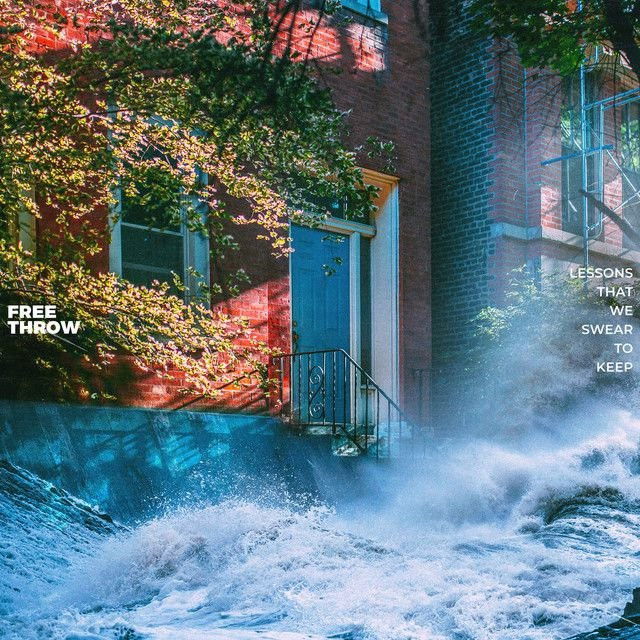
A Part Is Better Than Zero by Free Throw, Hot Mulligan, Tades Sanville
They called the track “A Part Is Better Than Zero,” and the title is the compass: progress over perfection. As the opener of Free Throw’s 2023 album Lessons That We Swear to Keep, with guest vocals from Hot Mulligan’s Tades Sanville, it stages a confrontation with the habits that keep someone stuck. Reportage at the time noted Tades’s feature and drummer Zach Hall’s return, which helps explain the song’s punchy, re-centered feel.
"A Part Is Better Than Zero" - Free Throw, Hot Mulligan, Tades Sanville
Things become so complicated
But you water it down and saturate it
Loading lyrics...
Unable to load lyrics
We're unable to display the lyrics at this time. Please try again later.
Progress Beats Perfection, Even When Fear Is Loud
The first verse admits how adulthood complicates life, then narrows to a single dread—dying alone
. That fear turns music into a coping tool, a way to fill the silence and avoid spiraling.
But avoidance has a cost. The narrator confesses they moved both the posts
, shifting their own standards to protect themselves from failure. Interpretation: the song argues that self-sabotage often masquerades as self-protection. The fix isn’t grand; it’s accepting partial wins, not zero.
The Voice in the Mirror: A Confession Without a Witness
The track speaks in first person, almost like a journal entry read aloud. Midway, it reaches the clearest self-assessment:
Yes, I am selfish
I’m only human at best
I just hope that I myself can mend my imperfections
This isn’t a brag; it’s accountability. They admit harm to themselves and others, but pair it with a hope to improve. The plea for a breath of fresh air
reads as a call for grace—space to heal without judgment.
A Quick Timeline of the Downward Spiral—and the Turn
- Realization: Growing up adds weight; fear dominates.
- Coping: Noise replaces silence to keep thoughts at bay.
- Self-critique: Goals get warped; the goalposts are moved.
- Burnout: They’re
pouring myself out
and ignoring the bruises. - Reframe: Self-worth should be the measure; small steps count.
Interpretation: The song traces a loop of pressure, avoidance, and shame—then breaks it by affirming worth and choosing action over paralysis.
Symbols That Sting and What They Say
- The phone and songs: constant input to dodge intrusive thoughts, a stand-in for unhealthy coping.
- Goalposts: changing standards to avoid failure, a sports image turned inward.
- Bruises/welts: the body keeps score; emotional stress lands physically.
- Scales: the narrator says their worth should outweigh every scale—rejecting external metrics.
- The
ghost of what I once was
: fear of becoming a faded version of past potential.
Together, these images build a map of stress that feels tactile and real.
What Passes for a Chorus—and Why It Matters
Instead of a traditional sing-along hook, the song circles back to the reminder about goals and shifting posts. Interpretation: the “hook” is a mental rut the narrator keeps returning to, which makes the final resolve more cathartic when they start to step out of it.
How the Sound Makes the Case
Free Throw lean into urgent emo-punk: bright, overdriven guitars and a tight snare push the song forward. As an album opener, it plants the flag—direct, confessional, high-energy. Tades Sanville’s guest vocal adds a second viewpoint inside the same headspace, heightening the internal argument. With Zach Hall back on drums, the band’s attack feels locked-in; the tempo surges mirror the narrator’s rising anxiety, then ease when the perspective shifts toward self-worth.
Production-wise, the dynamics do the emotional lifting. Verses leave room for the voice to sound raw; the ensemble tightens on the refrains about goals, as if the whole band is bracing against the same pressure.
Two Plausible Readings, Both Valid
- Interpretation 1: Mental health and self-forgiveness. The imagery of welts, scales, and ghosts points to anxiety and self-punishment, resolved by granting oneself compassion and accepting partial progress.
- Interpretation 2: Artistic burnout. References to moving goalposts and being a “ghost” evoke a musician worried about repeating themselves and losing identity. Taking “a part” could mean writing honestly, even if it’s not perfect or new.
The Bottom Line They’re Reaching For
At heart, the meaning of A Part Is Better Than Zero Free Throw, Hot Mulligan, Tades Sanville listeners respond to is simple: don’t wait to be flawless before you start healing. Claim small wins now. The song admits the mess, then argues that self-worth isn’t something you earn by suffering—it’s the ground you start from.
Disclaimer: Song meanings are interpretations based on lyrics, context, and public information; the band has not provided an official line-by-line explanation.








