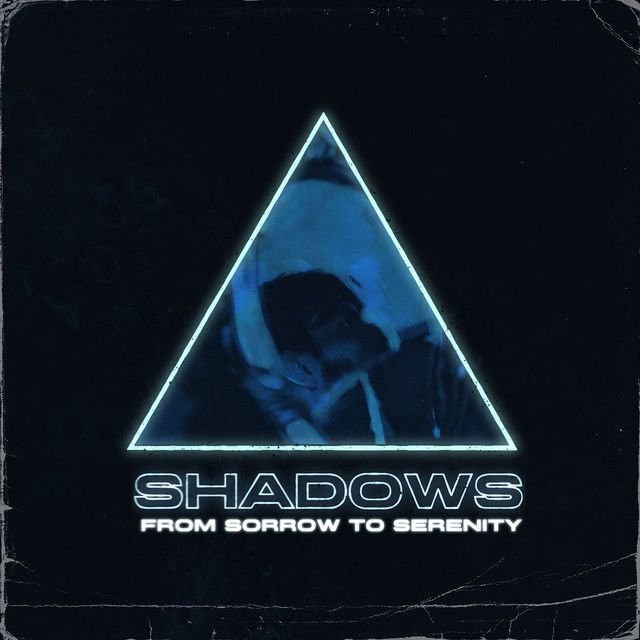
Shadows by From Sorrow To Serenity
Why This Song Feels Like a Descent
The meaning of Shadows From Sorrow To Serenity centers on a person losing their grip on hope. The lyrics describe fear, insomnia, guilt, and a growing attraction to emotional darkness. Rather than telling a story with outside action, the song stays inside one mind as it moves from distress to surrender.
"Shadows" - From Sorrow To Serenity
Born of desolation
Fear has become my only friend,
Loading lyrics...
Unable to load lyrics
We're unable to display the lyrics at this time. Please try again later.
That makes the track feel intense even before any deeper interpretation begins. The speaker is not fighting a visible enemy. They are fighting their own thoughts, and the song suggests that those thoughts are starting to win.

Watch the official Shadows
music video
The Core Meaning at the Center
At its heart, “Shadows” is about inner collapse. The opening idea of being lost in a cycle
sets up the song’s main tension: this pain is not a one-time event. It repeats, and repetition is what makes it feel inescapable.
They describe fear as a companion and darkness as something that slowly closes in. The image of shadows creeping up suggests depression or intrusive thoughts that do not arrive all at once. Instead, they build over time, especially during sleepless nights.
Interpretation: The song frames suffering as both emotional and spiritual. The speaker does not just feel sad. They feel cut off from their own ability to heal, change, or even see clearly.
A Voice Trapped Between Identity and Erasure
One of the song’s strongest ideas is its crisis of self. The line I think, therefore I am
borrows a famous philosophical statement associated with René Descartes, who used it to argue that thought proves existence. In this song, though, that idea is turned into something bleak.
The speaker seems to say: yes, they exist, but existence alone offers no comfort. The next question is what they are supposed to be, and that question goes unanswered. Instead of self-knowledge, thought leads to confusion.
The mind as both proof and prison
That twist matters. The song presents thinking not as liberation, but as a trap. Their thoughts keep returning to tragedy, to the past, and to distorted self-perception. So the mind becomes the very place where suffering grows.
This gives the track a philosophical edge, but it still stays emotionally direct. It is not abstract for its own sake. It uses a familiar idea about identity to show how badly the speaker feels disconnected from themselves.
The Chorus Turns Pain Into Surrender
The chorus is where the song becomes most revealing. When the speaker says they resent the light within me
, the conflict sharpens. There is still some trace of goodness, hope, or compassion inside them, but they no longer welcome it.
That is a darker idea than simple sadness. It suggests they are angry at the part of themselves that could heal, perhaps because healing feels weak, painful, or impossible. The next phrase, giving in to these shadows
, confirms that they are not just surrounded by darkness. They are yielding to it.
Interpretation: This is the emotional key to the whole song. The shadows matter because they offer a harsh kind of relief. If they stop resisting, they no longer have to carry the burden of recovery.
Images of Night, Sleep, and False Peace
The song repeatedly returns to nighttime imagery. Gloom, sleeplessness, torment, and illusion all create a world where rest never truly comes. That matters because sleep is usually linked with healing. Here, it becomes something stranger.
Near the end, the speaker says when I finally sleep
and believes they will then be at peace. On the surface, that sounds like a wish for rest after mental suffering. But within the song’s darker language, that peace feels uneasy, almost like the speaker wants total escape rather than recovery.
Illusion and delusion
Another important image is the idea of staring into illusion and asking whether freedom from delusion is possible. The speaker knows their perception may be broken, yet that awareness does not save them. They can recognize distortion without escaping it.
That tension makes the song feel honest. It does not present pain as ignorance. It presents pain as something that can persist even when someone knows they are trapped in it.
How the Sound Likely Carries the Message
From Sorrow To Serenity work in a heavy style that fits these themes well, drawing from modern metal and metalcore textures. Songs in that lane often use crushing guitars, dramatic dynamic shifts, and harsh-to-melodic vocal contrast to mirror emotional conflict.
Interpretation: In “Shadows,” the most effective production choice is likely contrast. Dense, low-tuned riffs can evoke pressure and dread, while more open melodic moments can represent the “light” the speaker keeps rejecting. If the vocals move between controlled clarity and more desperate force, that would deepen the sense of a mind splitting between reflection and collapse.
The repetition in the lyrics also suggests a repetitive musical structure may be part of the effect. Cyclical riffs or recurring rhythmic patterns would reinforce the feeling of being unable to break free.
Songwriting Details That Add Context
The song was written by Beau William Karnaghan, David Glenn Jones, and Markus Mikael Saastamoinen, according to the information provided. That matters because the lyrics feel carefully shaped, especially in how they return to a few core ideas: fear, shadows, light, compassion, and identity.
There is no need for ornate language here. The writing is direct, and that directness fits the song’s emotional goals. The speaker is not hiding behind metaphor alone. Even when the images are symbolic, the distress is plain.
Final Take on the Meaning
The meaning of Shadows From Sorrow To Serenity is the story of a person being pulled away from hope and toward emotional annihilation. Its most powerful idea is not just that darkness exists, but that the speaker starts to prefer it over the difficult work of healing.
That is why the song hits hard. It captures the moment when pain stops feeling like an enemy and starts feeling like an identity.
Disclaimer: This interpretation is based on the lyrics provided and general musical context. Song meaning can remain open, and listeners may hear different emotional or spiritual layers in it.









