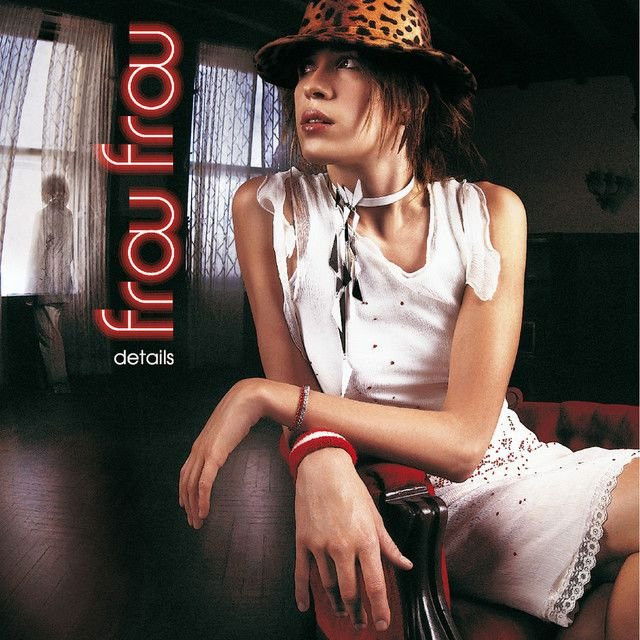
Psychobabble by Frou Frou
The meaning of Psychobabble Frou Frou starts with a simple idea: two people are talking constantly, but neither one feels truly heard.
"Psychobabble" - Frou Frou
Provided by LyricFindHow did you get this number?
I can't get my head 'round you
Of course you're not coming overLoading...Loading lyrics...
Unable to load lyrics
We're unable to display the lyrics at this time. Please try again later.
A Love Song Built From Mixed Signals
Frou Frou, the duo of Imogen Heap and Guy Sigsworth, released “Psychobabble” on the album Details, their only studio album as a pair. That project helped define their blend of electronic pop and alternative texture, with Heap’s expressive vocals set against Sigsworth’s polished, detailed production.
At its core, the meaning of Psychobabble Frou Frou is about emotional confusion inside a relationship that is neither fully over nor fully safe. One person keeps trying to create distance, but they also keep exposing how hard that distance is to maintain.
The opening lines establish the problem fast. The speaker is shocked by contact, denies inviting it, and insists the other person is reading everything wrong. Phrases like snap out of it
show frustration, but they also sound defensive. This is not calm communication. It is panic wrapped in control.

Watch the official Psychobabble
music video
What the Title Adds to the Story
The title matters a lot here. Outside the song, “psychobabble” usually means psychological language that sounds meaningful but may be vague, overused, or empty. That common definition has been discussed widely in popular psychology and criticism of “therapy speak.” In that sense, the title suggests language itself has become part of the problem.
Interpretation: the song may be mocking the kind of relationship talk where people explain, label, and analyze everything, yet still fail to connect. Instead of honesty, they produce rehearsed emotional language.
That reading fits the lyric’s pattern. The speaker keeps arguing about intention, meaning, and misunderstanding. They sound articulate, but not clear. Even direct requests turn into verbal smoke. The title hints that all this talking may be covering the truth rather than revealing it.
The Push-Pull at the Center
One of the sharpest lines asks, If love is surrender
, then whose battle is being fought. That image turns romance into conflict. Love should mean trust, but here it feels like strategy, resistance, and losing ground.
This is the song’s main contradiction:
- they want space
- they still feel pulled in
- they distrust the other person
- they cannot fully let go
That tension becomes clearest in the repeated warning language. The speaker says Do just what I tell you
and warns that no one will get hurt
. On the surface, it sounds almost playful in its melodrama. But emotionally, it turns intimacy into a hostage scene.
Interpretation: those lines are probably not literal threats. They dramatize how dangerous closeness feels when someone is trying not to fall back into a relationship. The real thing at risk is emotional self-control.
A Chorus About Fragile Boundaries
The chorus is the song’s emotional key because it admits what the verses try to hide. The speaker tells the other person not to come closer because they do not know how long they can keep their heart in two
.
That is a vivid image of division. They are split between caution and desire, anger and attachment, self-protection and surrender. Earlier, the speaker sounds sure of themself. In the chorus, that certainty breaks.
Here is the one moment where the song says its feeling most plainly:
Don't come any closer
'Cause I dunno how long
I can keep love and distance apart.
The exact drama of the song lives there. They are not pushing the other person away because they feel nothing. They are doing it because they feel too much.
Who Is Winning This Argument?
Another striking feature is how often the speaker tries to manage the conversation. They accuse, interrupt, correct, and demand to be heard. At one point, they ask to be allowed to finish speaking, which suggests the argument has become a messy overlap of voices.
That matters because the song never presents one clean villain. The other person may be pushy or intrusive, but the speaker also sounds unstable and reactive. Even the line What do we do now?
drops the commanding tone and reveals uncertainty.
Interpretation: the song may be showing a mutual communication breakdown, not just one person’s bad behavior. Both people seem trapped in a pattern where every attempt to clarify things makes them less clear.
How the Sound Carries the Meaning
The production is a big reason the song works. Frou Frou were known for combining electronic programming, pop melody, and a soft-but-restless atmosphere, a style documented in coverage of Details and the duo’s work. “Psychobabble” uses that contrast well.
The arrangement feels sleek and controlled, but the emotional content is anything but stable. Heap’s vocal performance moves between poise and strain, which mirrors the lyric’s shifting power. The music glides; the relationship does not.
That contrast supports the meaning of Psychobabble Frou Frou. The song sounds beautiful, almost delicate, while the words describe emotional deadlock. The polished surface becomes part of the point: the conversation may sound sophisticated, but underneath it is fear, longing, and confusion.
Why the Song Still Connects
The song remains relatable because it captures a very modern kind of romantic conflict. People have more language than ever for boundaries, feelings, and self-protection, but language alone does not guarantee understanding.
“Psychobabble” turns that problem into pop drama. It shows how people can explain themselves endlessly and still fail to say the one thing that matters most. In this case, that hidden truth seems to be simple: they still care, and that is exactly why they are afraid.
The Bottom Line on Its Meaning
The meaning of Psychobabble Frou Frou is less about madness than miscommunication. It portrays a relationship where emotional analysis, commands, and arguments all mask the same vulnerable fact: separation is harder than either person wants to admit.
That is the song’s sting. It is about talking too much, saying too little, and realizing that love can sound most chaotic when it is closest to the truth.
Disclaimer: This interpretation is based on the released lyrics, title, and known artist context. As with many songs, different listeners may reasonably hear different meanings.







