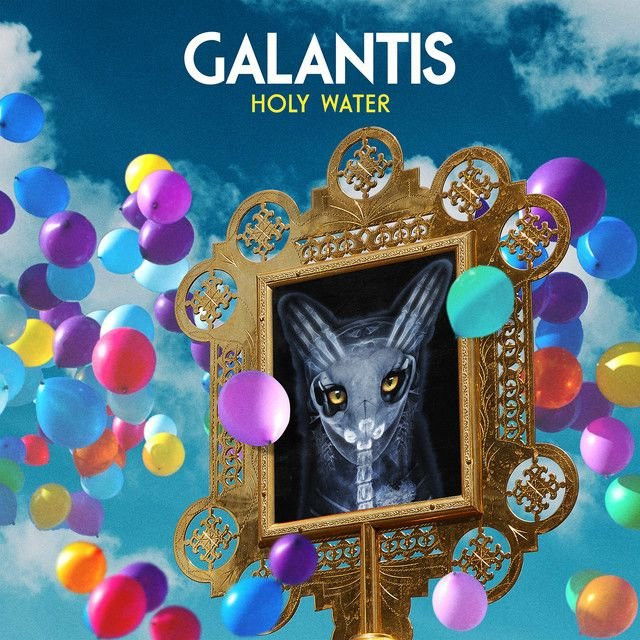
Why 'Holy Water' Turns Desire Into Worship
The meaning of Holy Water Galantis comes down to one striking idea: the song describes romantic desire as something so intense that it starts to feel sacred. But it also knows that kind of feeling can be reckless. That mix of pleasure, devotion, and danger is what gives the track its spark.
"Holy Water" - Galantis
Down from this high
High as a waterfall
Loading lyrics...
Unable to load lyrics
We're unable to display the lyrics at this time. Please try again later.
Released on September 27, 2019, “Holy Water” is a standalone single from Galantis’ Church era, with uncredited vocals from Cathy Dennis. It was written by Cathy Dennis, Christian Karlsson, Henrik Jonback, and Jimmy Koitzsch, and produced by Bloodshy, Svidden, and Jonback, according to widely cited release information from Wikipedia and fan documentation. Those credits matter because the song feels built from both pop precision and festival-sized emotion.
A Love Song Dressed in Sacred Language
At its core, the song is about surrender. The speaker is overwhelmed by attraction and cannot come back down from that feeling. Early lines compare the rush of love to a dizzying height, then to something fluid and immersive. Even before the chorus, the imagery suggests a person who does not want control so much as closeness.
That is why the central phrase, holy water
, matters so much. The song uses a religious symbol associated with purity and blessing, then places it inside a sensual love song. Right away, that creates tension. The speaker wants to be cleansed, consumed, and comforted all at once.
Interpretation: this is less about religion itself and more about how people often describe overwhelming love in sacred terms. When feelings seem bigger than logic, everyday language can feel too small.

Watch the official Holy Water
music video
When Pleasure and Guilt Collide
The chorus sharpens the song’s theme by putting desire next to moral language. The line sin never felt so good
makes the conflict clear. The speaker knows this connection feels risky, forbidden, or at least overwhelming, but that danger seems to heighten the attraction instead of reducing it.
That is a classic pop move, but Galantis gives it a glossy EDM lift. The idea is not heartbreak. It is temptation. The singer is not warning themself away from the relationship; they are moving further into it.
A short lyric passage captures that push and pull:
I wanna drown in your holy water
A-amen
Paraphrased, the chorus frames love as a kind of willing submersion. The word A-amen
sounds playful and dramatic at once, as if the speaker is half-praying and half-celebrating the loss of restraint.
The Verses Build a Fever Dream
The verses keep raising the emotional temperature. Phrases like caught in this lullaby
suggest seduction through softness, not force. The lover’s presence feels hypnotic, almost like a spell. Then the song shifts into brighter, hotter images, comparing the pair to flickering light and burning color.
One of the strongest lines is you are my church tonight
. That line turns a person into a place of faith, safety, and reverence. It is one of the clearest clues to the song’s emotional logic: the speaker is not simply attracted to this person; they are centering their whole world around them.
Interpretation: this can be read two ways:
- as a celebration of all-consuming desire
- as a subtle warning about idolizing another person
Both readings fit the lyrics. The song sounds thrilled by devotion, but the language is so absolute that it also hints at obsession.
Why the Sound Feels So Uplifting
Part of the meaning of Holy Water Galantis comes from its production. Critics at Dancing Astronaut and EDM.com described the track as catchy, buoyant, and anthemic, with upbeat ascending chords and a deliberately dance-floor-ready drop. Those qualities are easy to hear in the song’s structure.
The intro starts with chords and voice in a way that quickly sets an emotional tone. Then the chorus opens up into a brighter, bigger space. Distorted vocal touches and chopped textures make the hook feel urgent rather than gentle. That matters because the lyrics are about surrender, and the production mimics that rush.
Instead of sounding solemn, the song sounds ecstatic. That keeps the sacred imagery from becoming heavy-handed. Galantis turns it into motion, light, and release.
The Video Extends the Water Symbol
The official video, released the same day and directed by Jason Lester, features synchronized swimmers from Aqualillies in a pool washed with changing colors. According to coverage summarized on Wikipedia and the Galantis fan wiki, the visuals were praised for fitting the title and honoring synchronized swimming.
That concept works because water is already the song’s main symbol. In the video, bodies move in unison, dip below the surface, and rise again. It visually echoes the song’s emotional idea of immersion. Love here is not something they observe from the shore. It is something they dive into.
Final Take on the Song's Message
So, what is “Holy Water” really saying? The song presents desire as a near-religious experience. It is euphoric, cleansing, intoxicating, and maybe a little dangerous. By mixing images of worship with lines about temptation, Galantis captures how intense attraction can feel both pure and forbidden at once.
That blend is why the song sticks. It is not just a dance-pop hook about wanting someone. It is about what happens when wanting someone starts to feel like belief.
Disclaimer: This interpretation is based on the song’s lyrics, production, and public release context. Like most pop songs, “Holy Water” can support more than one valid reading.









