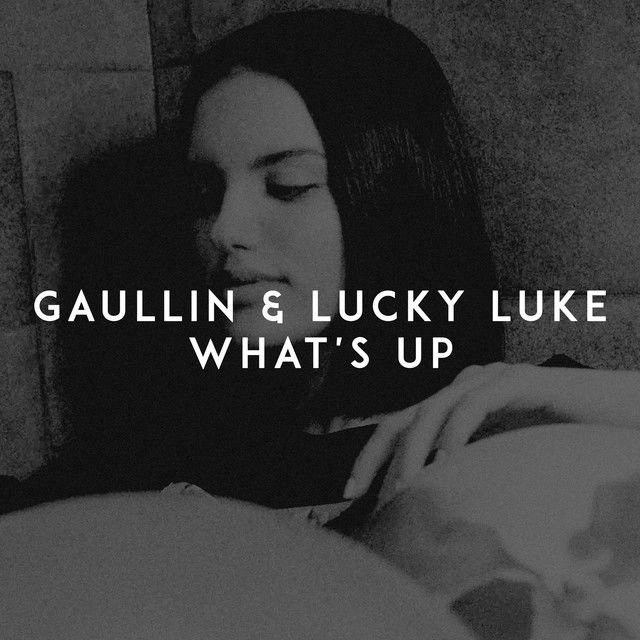
Why 'What's Up' Turns Shade Into Swagger
The meaning of What's Up Gaullin, Lucky Luke is simple on the surface and sharper underneath: it is a victory song aimed at people who doubted, mocked, or ignored them before success arrived. Instead of asking for respect, the narrator shows that status, money, and confidence have already changed the relationship.
"What's Up" - Gaullin, Lucky Luke
Text me, I won't hit reply, I'll fill up my cup
Now I'm living your dreams, I'm turnt up
Loading lyrics...
Unable to load lyrics
We're unable to display the lyrics at this time. Please try again later.
This makes the track feel less like a confession and more like a comeback. Its attitude is direct, catchy, and a little cold by design.
The Core Message Hiding in Plain Sight
At its heart, the song is about social reversal. Someone who once spoke badly about the narrator now comes back acting casual and friendly. The opening idea, summed up by what's up?
, is not really a greeting in context. It is a sign of hypocrisy.
The response is not emotional repair. It is distance. When the song says I won't hit reply
, it frames silence as power. They are no longer trying to win approval from the same people who once looked down on them.
Interpretation: that is why the track feels satisfying to listeners. It turns an everyday experience—fake friendliness after success—into a blunt anthem of self-protection.
Watch the official What's Up
music video
A Narrator Who Measures Growth in Public
The voice in the song speaks in first person, but the story is built for an audience. They list signs of progress so everyone can see the new reality.
Brand new cribice all on my wristTwo more whips
These details are not subtle, and they are not supposed to be. They act like trophies. The point is not only that they have succeeded, but that success is visible enough to force old critics to notice.
That is also why the song uses modern flex language such as money moves
and goin' up
. In plain terms, the narrator says they are rising financially and socially while former haters stay stuck watching.
Why the Hook Feels So Catchy and So Cutting
The chorus works because it repeats the same social drama in a very compact way: disrespect, sudden friendliness, no reply, then celebration. That sequence gives the song its emotional engine.
The repeated phrase lookin' for clout
matters here too. It accuses the other person of using proximity to success for attention. So the track is not just about revenge. It is also about spotting people whose loyalty changes when fame or money appears.
Interpretation: this is why the song lands with younger listeners and social-media-era audiences. It speaks the language of public image, influence, and fake support without needing much story detail.
Swagger as Defense, Not Just Bragging
A lot of listeners will hear pure boasting first. That reading is fair. The song is full of luxury images, self-hype, and winning talk.
But the bragging has a purpose. It functions like armor. The lines about being unstoppable, stylish, and larger than life push back against earlier disrespect. Even a phrase like feel like a rockstar
is less about music fame than emotional elevation. They are reclaiming their worth in the loudest way possible.
This is where the title idea becomes ironic. “What’s up” usually sounds friendly. Here, it becomes proof that success changes how people behave. The song treats that shift with suspicion, not gratitude.
How the Sound Carries the Meaning
Gaullin and Lucky Luke are known for dance-driven production, and this track uses that strength well. Even without a complex narrative, the beat gives the song momentum. The rhythm turns irritation into movement.
The repeated na, na, na
sections are especially important. They strip the message down to pure mood. Instead of explaining more, the production lets the listener sit inside the triumph. It becomes less about argument and more about energy.
That matters because club-oriented songs often need emotional clarity more than lyrical complexity. Here, the sharp beat, chant-like repetition, and short hooks support the idea of confidence that no longer needs approval.
The Song’s Main Themes and Symbols
Several motifs shape the meaning of "What's Up":
- Status symbols: house, jewelry, cars, designer clothes
- Silence: refusing to text back becomes a power move
- Elevation: success is framed as upward motion
- Performance: winning is something others can witness
Together, these images create a song about social hierarchy. People once had the upper hand by talking down to the narrator. Now the narrator has the stronger position and does not need to explain it.
A Useful Way to Read the Attitude
There are two strong ways to hear this track.
First, it can be heard as a simple flex anthem. In that reading, it is about money, lifestyle, and brushing off haters.
Second, Interpretation: it can be heard as a song about boundaries. The refusal to respond, the calling out of clout-chasers, and the emphasis on visible growth suggest someone who learned that not every old connection deserves access.
Both readings can be true at once. That mix is part of what gives the song replay value.
Why the Song Connects
The meaning of What's Up Gaullin, Lucky Luke comes down to this: success has changed the social script, and the narrator refuses to act humble about it. They answer disrespect with distance, style, and public confidence.
For some listeners, that will feel cocky. For others, it will feel earned. Either way, the song knows exactly what it wants to say.
Disclaimer: This interpretation is based on the released lyrics and musical presentation. As with any song, meaning can vary from listener to listener.







