Why Singin' in the Rain Still Feels Joyful
The meaning of Singin' In The Rain Gene Kelly starts with a simple idea: happiness can survive ugly weather. In the song, the singer does not deny that life looks dark. Instead, they answer that darkness with movement, humor, and love.
"Singin' In The Rain" - Gene Kelly
I'm singin' in the rain
Just singin' in the rain
Loading lyrics...
Unable to load lyrics
We're unable to display the lyrics at this time. Please try again later.
That is why the number still lands so strongly with American audiences. It turns a rainy street into a stage for emotional freedom, and Gene Kelly’s performance in the 1952 film makes that freedom look effortless even though the production was anything but easy.
A Cheerful Song About Defiance
On the surface, the lyrics are very direct. The singer says they are singin' in the rain
and feels a glorious feeling
. Those words sound light, but the contrast matters. The sky is gloomy, yet the inner mood is bright.
That tension is the song’s whole point. The outside world may be messy, disappointing, or unstable. The inside world does not have to match it. When the lyric says the sun's in my heart
, it reframes joy as something self-made, not something borrowed from perfect conditions.
Interpretation: This is why the song often feels bigger than romance. It can be heard as a personal motto about staying open to delight when life gives reasons not to.
Watch the official Singin' In The Rain
music video
How the Film Deepens the Message
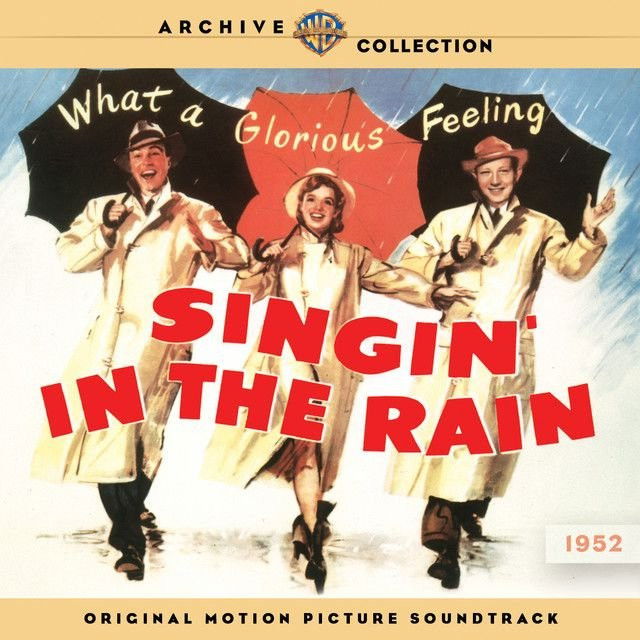
The song was written by Arthur Freed and Nacio Herb Brown before the movie, but it became permanently tied to Gene Kelly through Singin’ in the Rain (1952), the MGM musical directed by Kelly and Stanley Donen. The film is set during Hollywood’s shift from silent movies to sound, and it follows Don Lockwood’s career and growing love for Kathy Selden. Those production details are well documented in major film histories and standard references such as Singin' in the Rain's archival record and release history.[1]
In the movie, Kelly sings the title song after a romantic turning point. That context matters. They are not just enduring the storm. They are so overwhelmed by love and relief that even bad weather feels beautiful.
So the number works on two levels:
- literally, as a man walking home in the rain
- emotionally, as someone too happy to be bothered by the world
That is why the line happy again
matters so much. It suggests recovery. Joy here is not shallow; it comes after confusion and longing.
The Key Images That Carry the Song
The imagery is simple, but it is carefully chosen. The singer notices clouds, rain, a lane, and a smiling face. Nothing is grand. The song uses ordinary things to show a major emotional shift.
Rain as Pressure, Not Defeat
The lyric about dark up above
acknowledges trouble without dwelling on it. Rain usually symbolizes sadness in popular music and film. Here, the song flips that tradition. The storm is real, but it loses power when the singer refuses to fear it.
The Heart as Weather Maker
When the song places sunlight inside the heart, it suggests that mood can transform reality. The world has not changed. The person has. That is the emotional trick at the center of the number.
Let the stormy clouds chase
Come on with the rain
This is the song’s boldest move. Instead of escaping discomfort, the singer invites it in. They are no longer negotiating with hardship. They are dancing through it.
Why the Sound Feels So Uplifting
Part of the meaning of Singin' In The Rain Gene Kelly comes from how the song sounds. The melody is buoyant, repetitive, and easy to follow. Its swing-era warmth helps the message feel natural rather than preachy.
The arrangement supports the lyric’s confidence. The rhythm has a light bounce, and the vocal delivery is conversational rather than dramatic. That matters because the number does not beg the audience to believe in joy. It behaves as if joy is already obvious.
In the film sequence, choreography does even more of the storytelling. Kelly’s splashes, spins, and playful use of the umbrella make happiness look physical. According to widely repeated production accounts, the famous sequence took days to shoot, and Kelly performed it while ill with a high fever.[1] That offscreen strain only sharpens the scene’s meaning: the performance sells ease, even though it came from hard labor.
Why the Song Became an American Classic
The film itself was a success and later became one of the most celebrated musicals ever made. It has been ranked by the American Film Institute among the greatest movie musicals, and the film was selected for preservation in the National Film Registry.[1] Critics from The New York Times and Variety praised its energy and good humor at release.[1]
That legacy feeds back into the song’s meaning. For many listeners, it no longer represents just one character. It represents classic Hollywood optimism at its finest: polished, witty, romantic, and determined to find grace in chaos.
Interpretation: There is also a deeper reading. Because the film is about an industry surviving massive change, the title song can be heard as a statement about adaptation itself. Rain becomes disruption. Singing becomes survival.
The Lasting Takeaway
So what is this song about? It is about choosing delight when the world offers discomfort. It is about emotional weather beating literal weather. And in the movie, it is also about love making even a soaked city street feel enchanted.
That is the lasting power of the number. It does not promise that storms disappear. It suggests people can meet them with rhythm, humor, and a full heart.
Disclaimer: This interpretation combines documented film context with critical reading of the lyrics and performance. Meaning can vary from listener to listener.








