Why 'I Can Still Make Cheyenne' Still Hurts
For many country fans, the meaning of I Can Still Make Cheyenne George Strait comes down to one painful idea: sometimes a person realizes what matters only after the relationship is already gone.
"I Can Still Make Cheyenne" - George Strait
She heard his voice on the other end of the line
She wondered what was wrong this time
Loading lyrics...
Unable to load lyrics
We're unable to display the lyrics at this time. Please try again later.
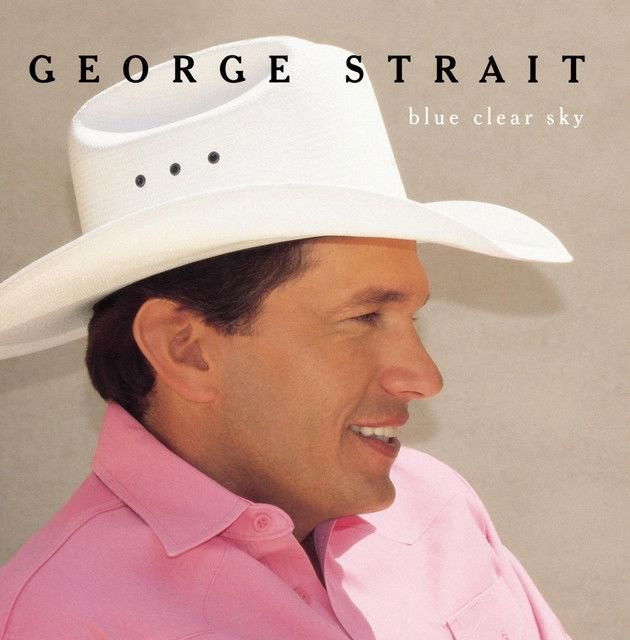
Released in 1996 as a single from Blue Clear Sky, the song was written by Aaron Barker and Erv Woolsey and produced by Tony Brown and George Strait, according to its release history and credits (Wikipedia). It reached No. 4 on Billboard’s country chart and later earned Platinum certification in the United States (Wikipedia). Those facts matter because this was not just another Strait hit. It became one of his clearest story songs.
A breakup song disguised as a road song
At the surface, the plot is simple. A rodeo cowboy calls home after another stretch away. He sounds tired, apologetic, and ready to come back. But before he can repair anything, she tells him not to bother.
The line about someone new, summed up in "ain't no rodeo man"
, explains the deepest wound. She is not just leaving him for another person. She is leaving the whole unstable life that came with him.
Interpretation: The song is really about divided loyalty. He loves her, but he also loves the rodeo life. By the time he tries to choose home, home has already chosen someone else.

Watch the official I Can Still Make Cheyenne
music video
The phone call that changes everything
The opening verse sets up dread with everyday detail. The song starts with a late-evening call, and her reaction shows this is not a healthy relationship. She expects trouble before he even speaks.
That matters because the breakup did not begin on this call. It has been building for a long time through missed chances, silence, and uncertainty. When he says he is "coming home"
, it sounds like a fix. In reality, it is too late.
Why her answer hits so hard
Her response is brutal because it is calm and final. She tells him not to come back, and the song makes clear she has already emotionally packed her bags.
Here is the emotional center of the lyric:
"Don't bother comin' home"
"By time you get here"
"I'll be long gone"
Those words are short and plain, which makes them sting more. There is no big speech. She simply closes the door.
What Cheyenne really means
Cheyenne is not just a city on a map. In country and rodeo culture, it points to Cheyenne Frontier Days, one of the best-known rodeo events in America. Research on the song’s background notes that going on to Cheyenne signals the cowboy’s return to the highest level of the rodeo world (Wikipedia; Songfacts).
So when he says "I can still make Cheyenne"
, he is doing more than changing travel plans. He is accepting the life he knows best.
Interpretation: The phrase carries two feelings at once:
- defeat, because he has lost the relationship
- survival, because he keeps moving instead of falling apart
- self-protection, because work becomes his shelter
That tension is why the chorus feels so strong. It is a heartbreak line, but it is also a pride line.
A cowboy torn between love and identity
One of the smartest things about the song is that it does not make the cowboy a villain. He is careless in some ways, but not cruel. He apologizes. He sounds worn down. He seems ready to sacrifice an important rodeo stop.
Song background reported by Songfacts says Erv Woolsey brought in the central idea of a cowboy calling home to say, briefly, "I'm coming back!"
before the story turned tragic (Songfacts). That origin helps explain the song’s structure: it begins with hope, then flips into resignation.
Still, the lyric also does not condemn the woman. She has been living with uncertainty for a long time. The repeated sense that she never knew what his calls might bring suggests a relationship built on anxiety rather than trust.
How the sound carries the loneliness
George Strait’s vocal is key to the song’s meaning. They do not oversing it. Instead, they deliver the lines with control and distance, which fits a man trying to keep his emotions from breaking through.
The arrangement supports that restraint. The production stays clean and open, letting the story lead. Fiddle, in particular, plays a big role; even summary sources note the closing fiddle passage as a signature feature (Wikipedia). That sound gives the track a wide, windswept feel, like empty highway and open plains.
Why the final image lasts
After the call, he leaves the phone hanging and turns his truck toward Wyoming. That visual matters because it shows action replacing argument. There is nothing left to discuss.
In story terms, that is the point of no return. In emotional terms, it shows a man converting heartbreak into motion.
Why the song still resonates
The meaning of I Can Still Make Cheyenne George Strait lasts because it speaks to a common problem: people often try to balance love and calling, only to learn that one has quietly pushed out the other.
The song also respects its audience. It does not explain every motive. It leaves room to ask whether he failed her, whether she gave up too soon, or whether both were trapped by the life they had built.
That ambiguity is a strength, not a weakness. Like many of Strait’s best recordings, it trusts small details, plain language, and emotional truth.
The lasting takeaway
In the end, this is a song about choosing the road after the heart has already been broken. Cheyenne becomes the place where disappointment turns into identity.
Interpretation: He does not sound happy to keep going. He sounds like someone who no longer has another place to go.
Disclaimer: This article offers an interpretation of the song based on the lyrics, recording context, and documented background. Different listeners may hear its meaning differently.







