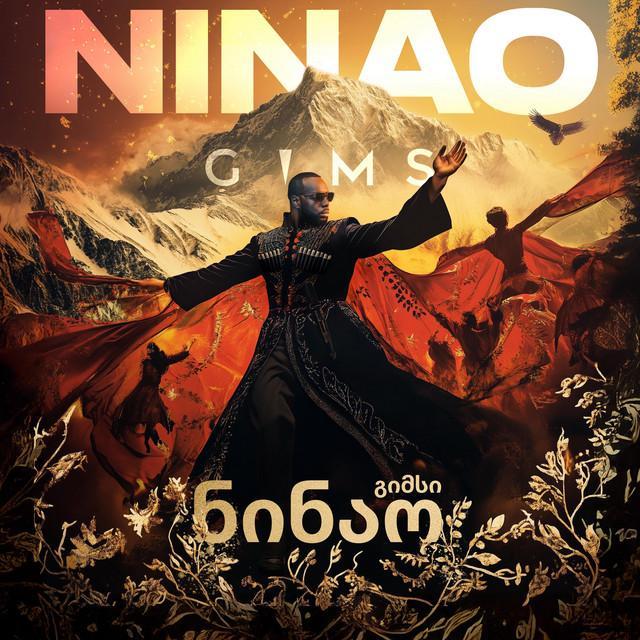
Why 'NINAO' Feels Bigger Than Its Words
The meaning of NINAO Maître Gims lies in a tension: it sounds carefree and huge, but its verses hint at pressure, regret, and distance.
"NINAO" - Maître Gims
Provided by LyricFindDès, dès, dès- (Maximum Beats)
Dès, dès, dès qu'j'arrive, ça regarde de travers
Capuché parce que j'suis trop craméLoading...Loading lyrics...
Unable to load lyrics
We're unable to display the lyrics at this time. Please try again later.
A Pop Hit Built on Motion and Image
Gims released "Ninao" on February 20, 2025, as a single tied to the EP Le Nord se souvient. According to available release data, the track runs 2:47, was produced by Maximum Beats, and reached No. 1 in France for seven weeks, showing how quickly it connected with a mass audience (Wikipedia).
That success matters because the song is designed to feel immediate. It is short, chant-heavy, and built for replay. The title hook does not explain itself in plain language. Instead, it works like a sound the listener can live inside.
What the Song Is Really About
At its core, the meaning of NINAO Maître Gims is about life at full speed. The narrator moves through fame, nightlife, luxury, and threat while trying to keep control. They present themselves as watched, armored, and always in demand.
But the song is not only a victory lap. It also admits damage. When the narrator says they have done regrettable things and speaks like someone who barely stops moving, the song opens a second layer. Beneath the confidence is a person shaped by excess and fatigue.
Interpretation: The track suggests that celebrity power can feel exciting and empty at the same time.
The Verses Paint a Hard Shell
Early on, the narrator says that when they arrive, people look at them strangely. That image turns attention into suspicion. They are visible, but not fully safe.
Short phrases sharpen that mood: ça regarde de travers
and équipe armée
. Even without long explanation, those details make the world feel hostile. The narrator responds by staying covered up and organized, as if survival requires planning.
Another key phrase, j'm'organise comme si j'mourrais jamais
, sounds bold on the surface. Paraphrased, it means they plan like life will keep going forever. Yet it also carries denial. People who live intensely often speak that way when they do not want to face limits.
Fame, Desire, and Emotional Debris
The song briefly turns intimate when the narrator says, in effect, that they will be home late. That line is simple, but it changes the emotional frame. Suddenly there is another person waiting somewhere outside the spotlight.
The song also mentions seeing someone for only one evening and leaving behind un petit cœur à réparer
. Paraphrased, that means another heart may need healing after a short encounter. This is one of the clearest clues that the lifestyle in the song has consequences.
Interpretation: Gims may be contrasting public power with private damage. The same charisma that draws people in can leave them hurt.
Why the Hook Matters More Than Its Literal Meaning
The repeated "na-ni-na" refrain is the song's center of gravity. It does not move the plot forward. Instead, it creates atmosphere.
Na-ni-na-na-ni-ni-na-oh
Na-ni-na-ni-na-ni-na-oh
This brief chant works like a loop of adrenaline. It feels close to a crowd chant, a dance refrain, or even a memory fragment. Because it is abstract, listeners can project their own meaning onto it.
Interpretation: The hook may represent a state of mind more than a statement—an endless cycle of nightlife, performance, and momentum.
The Guitar, the Beat, and the Feeling of Control
One lyric says people take small steps when they see la guitare
. In context, that image can suggest performance power. The instrument becomes a symbol: when music starts, the room changes.
Production helps sell that idea. Maximum Beats is credited as composer and producer, and the track's sleek pop structure supports a hypnotic effect (Wikipedia). The beat is tight, the chorus arrives fast, and the repetition makes the song feel larger than its runtime.
Another reported detail gives the song extra cultural texture: its melody draws heavily from the Georgian folk song "Gandagana" from the Adjara region (Wikipedia). That borrowing helps explain why the hook feels both familiar and unusual. It carries a folk-like circularity inside a modern pop frame.
A Story of Movement, Not Resolution
If listeners map the song as a timeline, it looks something like this:
- The narrator enters under scrutiny.
- They move with protection and status.
- They confess regret and nonstop nightlife.
- They drift through a brief romantic connection.
- They return to the chant, as if motion never ends.
That structure matters because nothing gets resolved. There is no apology, no rest, and no real homecoming. The song ends inside the same cycle it began with.
Final Take on the Meaning of NINAO Maître Gims
The meaning of NINAO Maître Gims is less about one clear plot than one vivid condition: being powerful, watched, restless, and emotionally unavailable all at once. Its verses give flashes of danger and regret, while its chorus turns that unstable life into pure sound.
That is likely why the song traveled so well on the charts. It is catchy enough for casual listening, but there is just enough tension underneath to keep it interesting.
Disclaimer: This interpretation is based on the released lyrics, production details, and public chart context. As with any song, some meanings remain open to listener interpretation.








