Why Godsmack's 'I Fucking Hate You' Hits So Hard
The meaning of I Fucking Hate You Godsmack is not hard to spot on the surface: it is a blunt song about betrayal, resentment, and emotional overload. But what gives it staying power is how direct that anger feels. Rather than hiding behind vague poetry, they present hatred as the final stage of feeling used too many times.
"I Fucking Hate You" - Godsmack
And everyday I'm gonna blame you
Even if you justify every fucking bullshit lie, it only makes me want to break you
Loading lyrics...
Unable to load lyrics
We're unable to display the lyrics at this time. Please try again later.
Godsmack, led by Sully Erna, built much of their early identity on heavy riffs, hard-edged vocals, and songs that turn inner conflict into something physical and loud. According to the band's official history and major discographies, Erna is the group's founder and primary songwriter, and he is credited with writing this track. That matters here because the song feels intensely personal, even when it speaks in broad terms.
The Core Meaning Beneath the Outburst
At its heart, the song is about reaching a breaking point with someone seen as dishonest and manipulative. The speaker does not sound confused or sad anymore. They sound finished. That is the key emotional shift.
Early lines set up a relationship poisoned by blame and falsehood. When the song points to someone who will justify every lie, it suggests a pattern, not a one-time mistake. The anger comes from repetition. This is why the track feels less like a sudden explosion and more like the last word after a long cycle of disrespect.
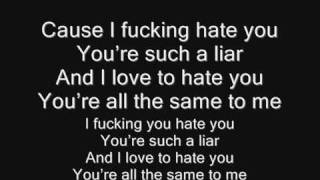
A short phrase like you're such a liar
captures that theme. It is not just an insult. It sums up the speaker's belief that the other person has no real honesty left. In that sense, the song is about moral disgust as much as personal hurt.
Watch the official I Fucking Hate You
music video
How the Verses Build the Grievance
The verses describe damage in social and emotional terms. One of the sharpest ideas is that this person has tried to ruin the speaker's reputation. The phrase crucify my name
turns ordinary conflict into public humiliation. That image matters because it makes the attack feel severe, almost ritualized.
Another important idea is exploitation. The song suggests the target keeps taking what they can, again and again, until even thinking about them becomes sickening. That detail broadens the emotion from anger to revulsion. The speaker no longer just disagrees with this person; they feel contaminated by the whole relationship.
Interpretation: This helps explain why the language is so absolute. The song is not asking for apology or repair. It presents the bond as broken beyond use.
Why the Chorus Feels So Final
The chorus is one of the most direct in Godsmack's catalog. The repeated line I fuckin' hate you
works like a release valve. It takes everything hinted at in the verses and strips it down to one ugly truth.
That hook also tells listeners something important about the song's perspective. This is not a balanced account. It is a rage statement. The speaker is not trying to be fair; they are trying to purge emotion. In hard rock, that kind of bluntness can be the point.
I fuckin' hate you
You're such a liar
Even in this brief section, the chorus pairs hatred with dishonesty. The emotion is extreme, but the song keeps tying it back to a cause: lies, exploitation, and repeated harm.
The Sound Turns Anger Into Motion
Part of the meaning of I Fucking Hate You Godsmack comes from its musical attack. The arrangement is built to feel like confrontation. The guitars hit with a blunt, chugging force rather than a delicate melody. The drums push the song forward in a way that feels like stomping rather than flowing.
Erna's vocal delivery is especially important. He does not sing these lines with heartbreak or distance. He spits them out. That gives the song a physical quality, as if the words are being thrown at the target.
This matters because the production keeps the message simple and muscular. There is little softness to complicate the mood. Instead, the band creates a tight, aggressive frame where every riff and accent reinforces the central feeling: enough is enough.
Artist Context Helps Explain the Tone
Godsmack emerged in the late 1990s hard rock scene, a period when many bands mixed metal weight with radio-ready hooks. Their music often turned personal conflict into anthems, which helps place this track in context. It fits a style where emotional honesty is measured not by subtlety, but by force.
That context also explains the song's reception. Fans who connect with Godsmack often respond to the sense of unfiltered release. A song like this is easy to understand in a live setting or on a bad day: it gives listeners a loud container for feelings they may not want to express in real life.
Two Strong Ways to Read It
Reading One: A toxic relationship ending
The most obvious reading is a breakup or a close personal fallout. The target lies, takes advantage, and damages the speaker's sense of self. In this view, the song is about finally cutting ties with someone destructive.
Reading Two: A broader enemy figure
Interpretation: The lyrics can also describe any person who exploits trust: a fake friend, a rival, even a public critic. When the song says you're all the same to me
, it widens the target from one individual to a whole type of person. That turns the track into a general anthem against phoniness.
Why the Song Still Connects
What keeps this song memorable is not complexity. It is clarity. Godsmack take a feeling many people know but rarely say out loud and give it volume, rhythm, and repetition. The result is harsh, even uncomfortable, but it is also honest about how anger can sound at its peak.
For listeners searching for the meaning of I Fucking Hate You Godsmack, the simplest answer is still the best: it is a song about betrayal turning into total rejection. Its power comes from how completely it commits to that emotion.
Disclaimer: This article offers interpretation based on the lyrics, performance, and known artist context. Song meaning can vary from listener to listener.